Welcome to Bouncia - Your Expert in Inflatable Water Parks and Diverse Sports Equipment

Bienvenue chez Bouncia - Votre expert en parcs aquatiques gonflables et en équipements sportifs divers.

Bienvenido a Bouncia - Tu Experto en Parques Acuáticos Hinchables y Equipamiento Deportivo Diverso

Floating Water Park Equipment: When to Repair or Replace?

A damaged module can interrupt a busy operating season. After a repair, the same area may develop another problem, leaving the operator to decide whether to repair it again or order a replacement. Floating water park equipment replacement starts with understanding the condition of the affected module and how it fits into the wider park. Before making a decision, consider the damage, previous repairs, time out of service and availability of a suitable replacement. The best choice depends on the equipment and operating situation.
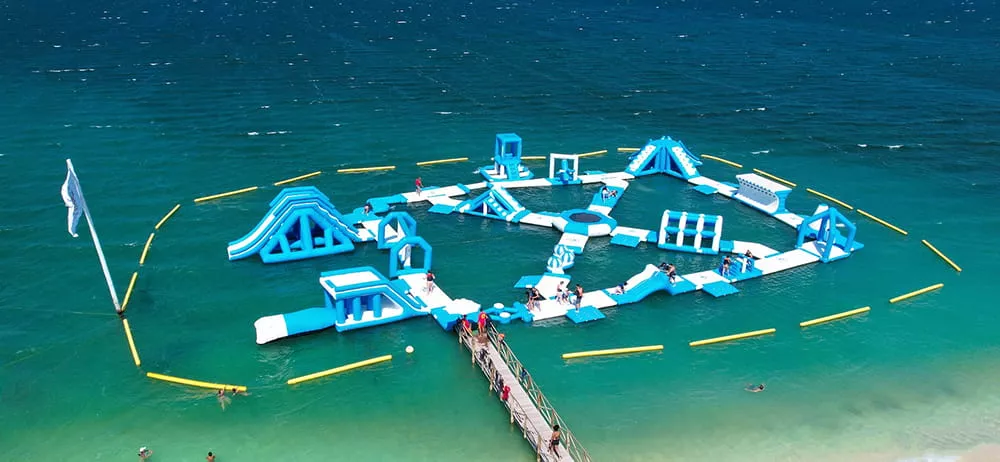
floating-water-park-equipment-arranged-in-a-connected-modular-layout
Floating water park equipment forms a connected modular layout

Quick Answer

An old module may be repaired or replaced individually, depending on its condition and compatibility with the existing park. If damage is localized and the manufacturer confirms that a reliable repair is possible, repair may be practical. Repeated failures, damage to critical areas or excessive downtime can justify evaluating replacement. Remove unsafe equipment from use and confirm the solution with the manufacturer before reopening.

What Should You Check Before Deciding?

Start with the facts about the affected module. Photos and operating records can help a manufacturer understand the problem and recommend the next step. If there is a safety concern, remove the module from use while it is assessed. Follow the manufacturer’s instructions and your site procedures for closing the affected area.

Damage Location and Extent

Identify where the damage is and whether it is limited to one area. A cut on a flat surface may need a different assessment from damage near a connection, a weld or a handle attachment. These areas can experience repeated forces during use, so the location matters as much as the visible size of the damage.
Take one photo showing the module and the location of the problem, then take clear close-ups. Note any air loss, changes in shape or movement at the affected area. Share the photos with the manufacturer rather than assuming that a small mark is harmless or that damage in a particular location always means the module must be discarded. For more context, see our guide to high-stress areas and durability.
floating-water-park-equipment-damage-photo-example
Example of photographing floating water park equipment damage

Repair History and Repeated Downtime

Review whether the same area has been repaired before. Record when each problem appeared, what work was carried out and how long the module remained in use before the problem returned. If available, include the repair provider’s notes and photographs from before and after the work.
Also record how many operating hours or days were lost. An isolated issue and a recurring failure may lead to different recommendations. Share the repair history even if some details are missing; a manufacturer can advise what additional inspection is needed. A repeated problem may have several causes, which cannot be established from the repair count alone.

When Might Repair Be the Better Option?

Repair may be a practical option when the damage is localized, the rest of the module is in suitable condition and the manufacturer confirms that the proposed repair can address the problem. Ask who should carry out the work, how long it is expected to take and what checks are required before the module returns to service.
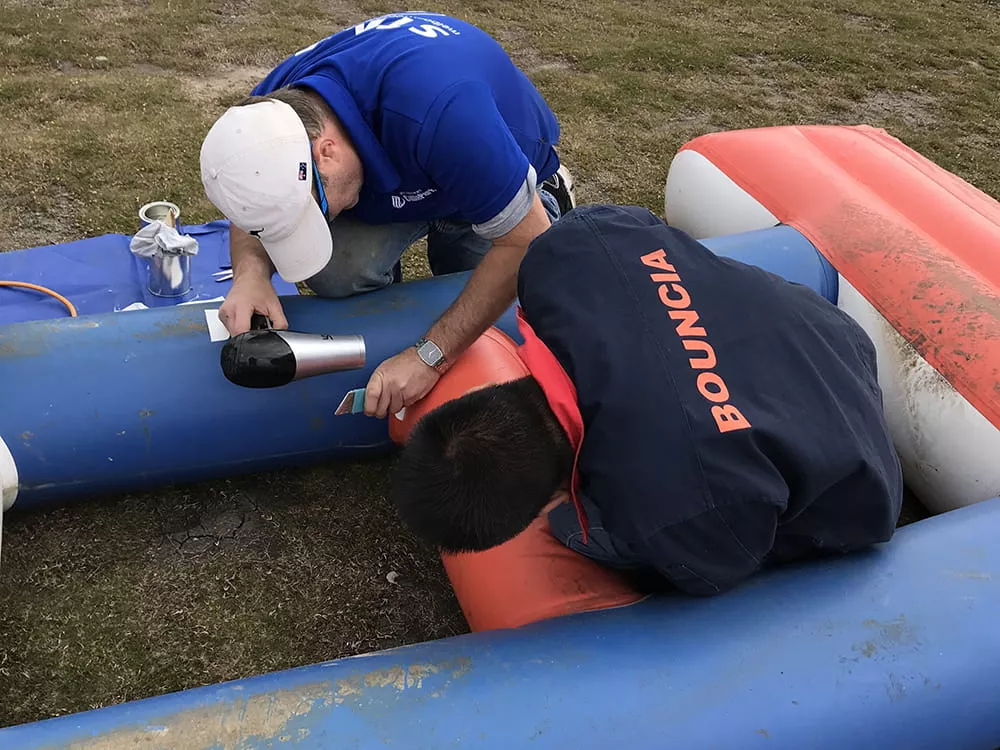
staff-repairing-floating-water-park-equipment-on-land
Staff carry out repairs on floating water park equipment
Compare the repair quotation with the likely operating impact. Include removal, transport or on-site labour if applicable, as well as the time needed for the work and any required checks. If the repair can be completed before the next operating period and the manufacturer considers it appropriate, it may allow the operator to retain the existing module.
Do not treat a temporary patch or a low quotation as proof that a module is ready for visitors. Follow the manufacturer’s instructions and complete the recommended checks before reopening. Our inflatable aquapark maintenance guide provides further maintenance and repair information.

When Should You Consider Replacing a Module?

Replacement deserves closer consideration when the same area fails repeatedly, a repair cannot reliably restore the required function, or the manufacturer advises that the damaged module should not return to use. Damage around connections, welds or other important working areas may require particular attention, although the location alone does not determine the outcome.
Repeated closures can also affect the decision. For example, a module that connects two busy sections may cause more disruption than its repair invoice suggests. Ask whether the module can be repaired to the manufacturer’s requirements, what evidence or inspection is needed, and whether a suitable replacement is available.
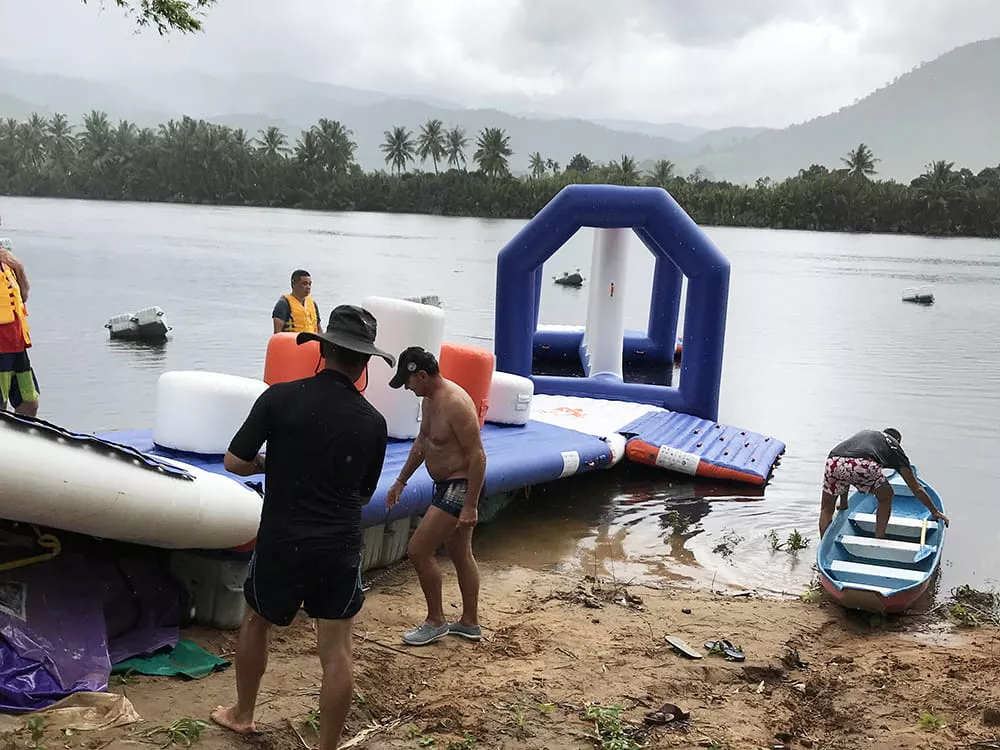
floating-water-park-equipment-module-being-handled-at-the-shore
Floating water park equipment module handled on shore.
There is no universal replacement age or repair count for every park. Usage, exposure, handling and repair history differ. Keep an unsafe module out of use while the manufacturer or a suitably qualified professional assesses the condition and the options.

How Do Repair and Replacement Compare for Your Park?

Once the available options have been assessed, compare them over the same period. A repair may cost less initially, but repeat work and lost operating time can change the total. A replacement may require a larger purchase and a longer wait. The figures should reflect your own quotations and operating plans.

Compare Total Costs and Downtime

For repair, include the assessment, labour, materials, transport and any removal or reinstallation. For replacement, include the module price, shipping, installation and any approved changes needed to connect it. Ask each provider to explain what is included and whether applicable taxes or other charges are separate.
Next, estimate how long the affected attraction or area would be unavailable under each option. Consider staff time, changes to visitor flow and possible lost revenue. If part of the park can remain open, base the estimate on the actual restriction rather than assuming that the entire park will close. Label uncertain costs as estimates and review them when quotations and schedules are confirmed.
For example, compare the cost of one proposed repair plus its expected closure period with the cost of a replacement plus its delivery and installation period. If repeat failures are a concern, discuss the uncertainty with the manufacturer; avoid presenting an unverified future repair cost as a guaranteed outcome.
Consider the Operating Season

Timing matters when an attraction has a short season or the module forms an important part of the visitor route. Ask for repair availability, replacement stock status, production and shipping estimates, and the time needed for installation and checks. Confirm whether the dates are estimates or commitments.
An operator might schedule a suitable repair before opening or arrange a replacement for a planned closure. Where the module must remain closed, review the remaining layout and capacity with the appropriate professional before allowing visitors into the affected area. A busy season does not change the need to resolve safety concerns.

Can You Replace One Module in an Existing Park?

Often, replacing one module can be explored without purchasing an entire park. Whether it is feasible depends on the existing equipment and the proposed replacement. The manufacturer must review how the new module will connect and function within the full layout before confirming a solution.

Check Connections, Dimensions and Layout

Provide details of the connection system, including the type, position, spacing and dimensions of the attachment points. Check the replacement module’s length, width and height, as well as how visitors move between it and adjacent elements. A module that appears to fit may still create an unsuitable gap or transition.
The supplier should also consider the existing anchoring arrangement, the available water area and depth, the park’s design capacity and applicable requirements. A change in one module can affect the wider layout. Do not assume cross-brand compatibility because connection points look similar; request written confirmation of the proposed connection and any necessary changes.
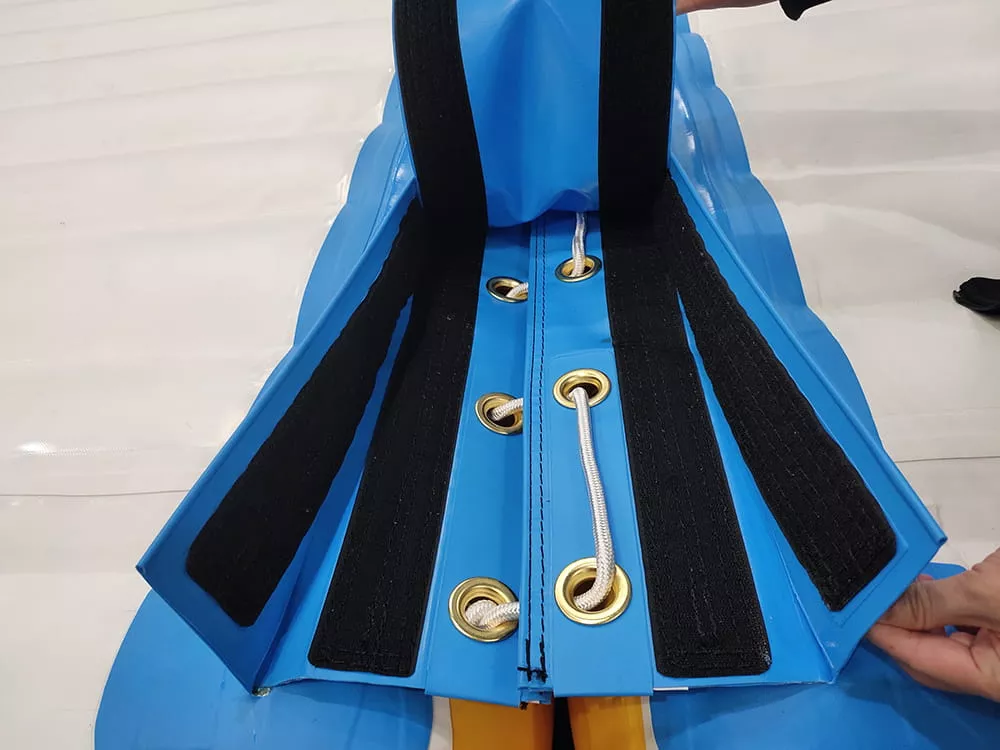
floating-water-park-equipment-module-connection-system-close-up
Connection system for floating water park equipment modules
When discussing floating water park equipment, share the current layout and ask whether an individual replacement can be assessed for your park. A product listing alone does not establish compatibility.

Prepare Information for Your Supplier

A clear request helps the supplier assess the existing module before preparing a recommendation or quotation. Gather the information you have, including:
  • The original manufacturer, model, approximate age and module dimensions.
  • A park layout showing the module’s position and neighbouring elements.
  • Photos of the full module, connections and anchor points, plus close-ups of the damage.
  • The repair history, recurring problems and periods out of service.
  • The operating season, preferred installation date and relevant site conditions.
Ask whether repair or individual replacement is feasible, what compatibility checks are required, and what the quotation includes. Request the expected lead time, installation requirements and applicable warranty terms in writing. If original drawings are unavailable, tell the supplier and ask what measurements or additional photos are needed.

Conclusion

A sound repair or replacement decision starts with the module’s condition and its role in the park. Review the damage, previous repairs and downtime, then compare confirmed options over the same period. If replacement is being considered, check the connections, dimensions, anchoring and overall layout before ordering. Keep equipment with safety concerns out of service until the appropriate assessment is complete. To discuss possible solutions with Bouncia, share your layout, module details, damage photos and operating schedule so the team can review your requirements.

FAQ

Can I replace one module without replacing the whole water park?

Potentially, yes. A single-module replacement may be possible if a suitable unit can be connected and the revised park layout meets the relevant requirements. Ask the supplier to assess the existing connections, dimensions, anchoring and route before ordering. The answer depends on the specific park and proposed module.

Can a replacement module from another manufacturer fit my existing park?

It may be possible, but compatibility should not be assumed. Manufacturers may use different connection systems, dimensions and design requirements. Provide photos, measurements and the park layout to the relevant suppliers, and obtain confirmation of the proposed connection and any required adjustments before installation.

What information should I send a supplier before requesting a replacement?

Send the module’s manufacturer, model and dimensions if known, together with a layout showing its location. Include photos of its connections, anchor points and damage, plus any repair history. Your operating season and preferred installation date will help the supplier discuss availability, timing and a possible solution.
error: Content is protected !!