Welcome to Bouncia - Your Expert in Inflatable Water Parks and Diverse Sports Equipment

Bienvenue chez Bouncia - Votre expert en parcs aquatiques gonflables et en équipements sportifs divers.

Bienvenido a Bouncia - Tu Experto en Parques Acuáticos Hinchables y Equipamiento Deportivo Diverso

What Affects Floating Inflatable Obstacle Course Durability?

Two floating obstacle courses can look similar in a quotation but perform differently after repeated commercial use. For buyers, the useful question is how climbing surfaces, handles, connections and other working areas are built to handle that use. Floating inflatable obstacle course durability depends on both construction and operating conditions. A course used through a busy outdoor season faces different demands from one used occasionally. Before ordering, examine the areas that receive repeated contact and ask for evidence linked to the equipment you are buying.
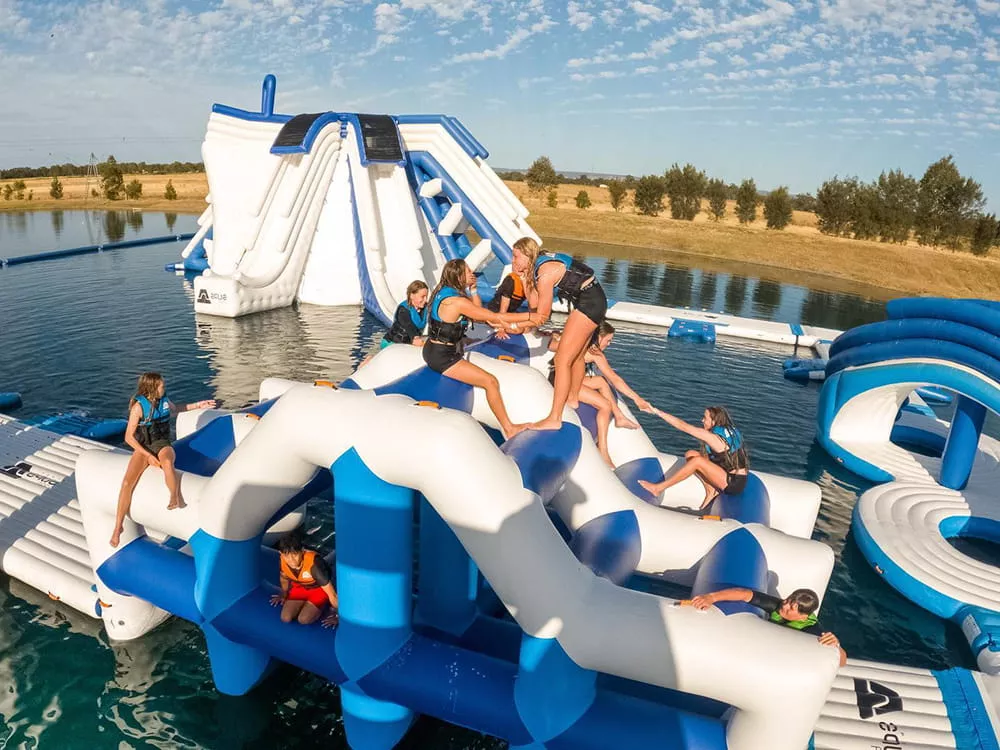
floating-inflatable-obstacle-course-supporting-multiple-users-during-climbing
Multiple users climb a floating inflatable obstacle course.

Quick Answer

Floating inflatable obstacle course durability depends on material performance, reinforcement at high-use areas, handle and foothold attachment, module connections, weld quality and operating conditions. Buyers should request close-up photos, specifications and relevant inspection records for the quoted model, especially for climbing, landing and reboarding areas. Material thickness alone does not establish overall durability.

Which Areas Face the Most Repeated Wear?

Start with the places users repeatedly step, grip, slide across or climb onto. These are useful inspection priorities, although the actual wear pattern depends on the obstacle and how people use it.

Climbing and Landing Surfaces

Climbing faces and landing platforms receive repeated foot and body contact. Look beyond the main flat surface to edges, transitions and nearby seams. Ask where additional reinforcement is used and why those locations were selected.
Request close-up photographs of these areas on the proposed model. A wide photograph of an inflated course can show its shape, but it rarely provides enough detail to assess surface construction. Match reinforcement to actual contact areas when comparing proposals.

Reboarding Areas

Reboarding areas let users climb back onto the course after entering the water. Hands pull on grips while knees, feet and bodies contact the surface and edge. This combines repeated pulling with rubbing at a concentrated location.
Ask for photographs showing the boarding surface, its edge and the surrounding attachments. Confirm how these parts are constructed together. Do not assume that every boarding platform has the same reinforcement simply because the overall dimensions match.
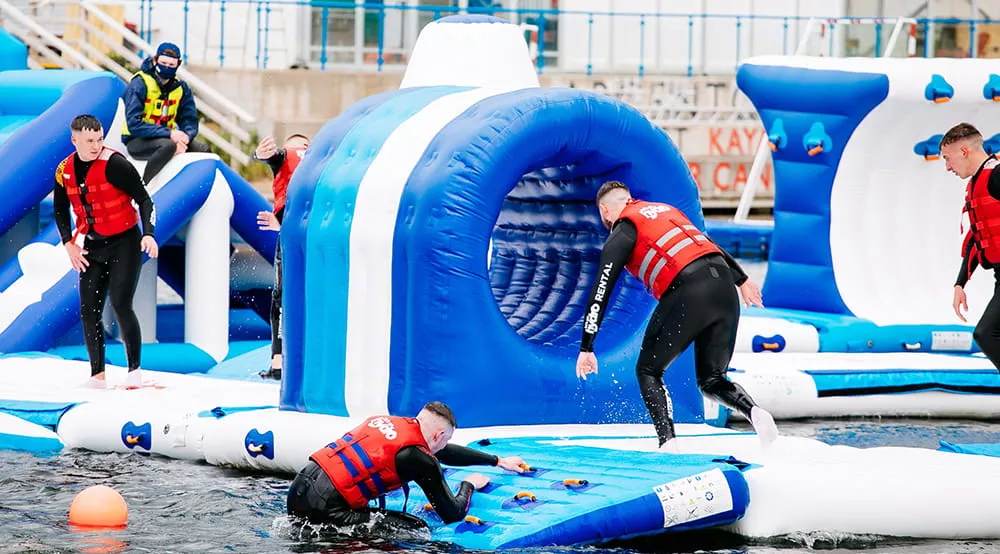
user-gripping-handles-on-a-floating-inflatable-obstacle-course-reboarding-ramp
Reboarding handles and surfaces on a floating inflatable obstacle course

How Do Handles and Footholds Affect Durability?

Handles and footholds need secure attachments as well as suitable materials. Each pull or step transfers force through the attachment into the surrounding structure. A strong-looking grip tells buyers little about the strength of its base.
Ask the supplier to show the attachment and surrounding base. Useful details include how the part is fixed, where reinforcement extends and how the reinforced area joins the main surface. For a climbing obstacle, request images that show the complete handle or foothold arrangement as well as individual attachments.
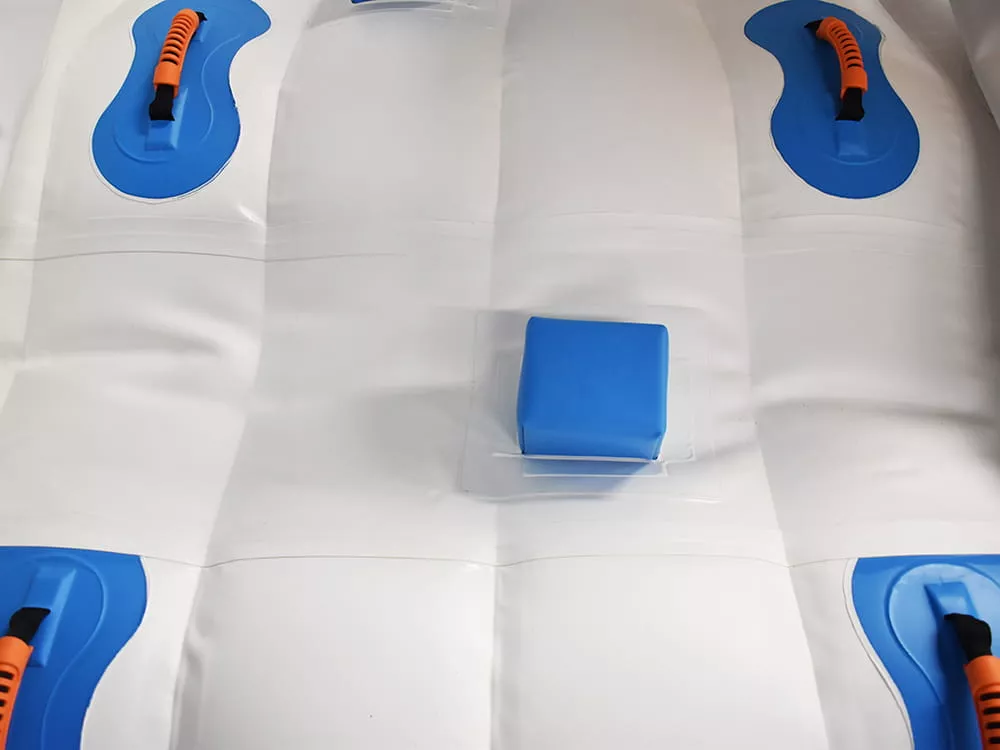
floating-inflatable-obstacle-course-handle-and-foothold-attachment-bases
Handle and foothold reinforcement on a floating inflatable obstacle course
A visible reinforcement patch confirms that an extra piece is present. Its appearance alone cannot establish attachment strength. Ask what inspection or testing supports the design, which model it covers and whether the quoted product uses that same construction. This makes comparison more useful than counting handles or comparing patch sizes.

What Makes Module Connections Durable?

Module connections must work as a complete system. Users moving between obstacles and movement on the water create repeated loads at the connecting parts and their attachment bases. Examine both sides of the connection, including areas where components can rub against each other.
Distinguish module connections from anchoring points. Module connections join floating elements together. Anchoring holds equipment in its intended position. They have different roles, and evidence about one does not automatically explain the other.
Request a connection diagram, close-up images and the relevant inspection information. Ask which connectors and attachment details are specified for the proposed modules. Confirm that replacement connecting parts are compatible with that system. A photograph of two modules joined together helps explain the arrangement, but it does not establish how the assembly performs under repeated loading.
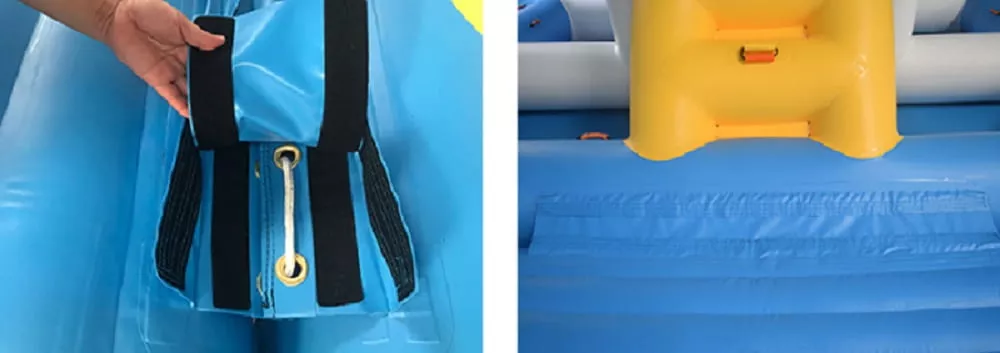
floating-inflatable-obstacle-course-module-connectors-and-attachment-details
Module connection details on a floating inflatable obstacle course

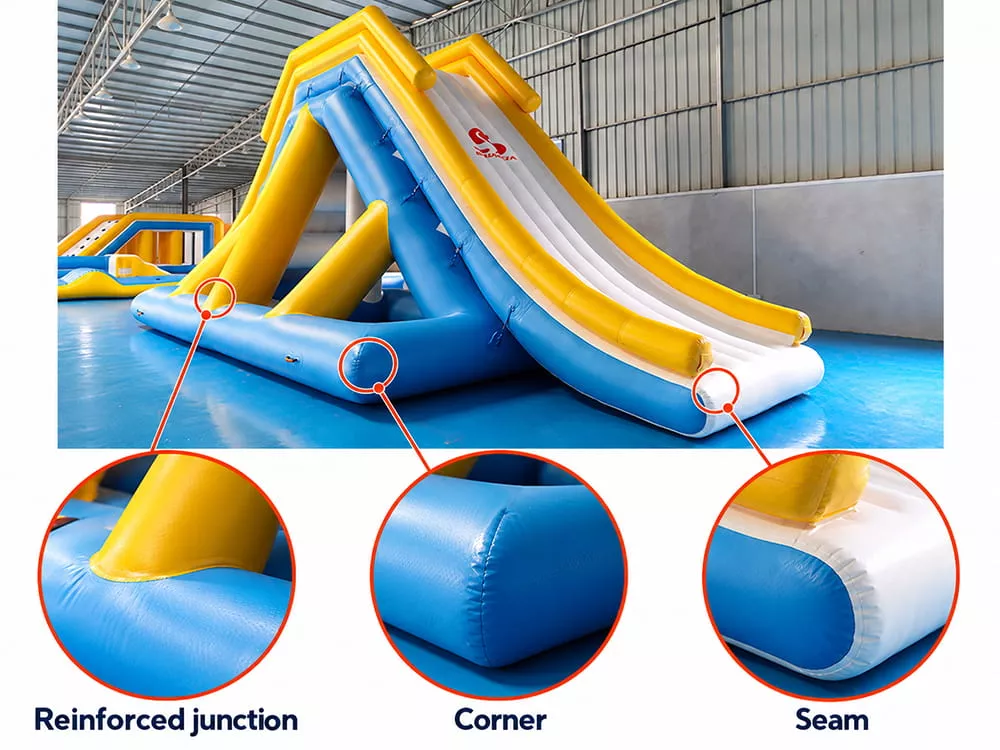
Why Do Welds, Corners and Reinforcement Details Matter?

Welds and joints connect the material into a working structure. Corners and transitions also deserve attention because the shape and direction of loading change at these locations. Buyers should ask how the supplier controls these details during production.
Look for clear photographs of seams, corners and reinforced junctions. Ask which checks are performed during assembly and before shipment. Where test records are supplied, confirm the material, joint construction, test conditions and relevance to your order.
floating-inflatable-obstacle-course-construction-details
Workmanship details of a floating inflatable obstacle course
Separate airtightness from strength evidence. An inflation or leak check can identify certain air-retention problems under the conditions checked. It does not, by itself, demonstrate resistance to years of repeated loading. Likewise, a tidy weld photograph cannot reveal every internal bonding issue.
Material performance remains part of this assessment. For the underlying specifications, see our guide to floating water park equipment material. Then connect those specifications to the actual welded and reinforced areas in the proposed course.

How Do Operating Conditions Affect Service Life?

Construction needs to be assessed against the conditions in which the course will operate. Similar equipment can develop different wear patterns when usage, exposure and handling differ.

Frequency of Use and Outdoor Exposure

Give the supplier a realistic picture of operating days, daily use and expected activity. Repeated climbing sessions create different demands from occasional supervised play. Calendar age alone does not describe how much use a course has received.
Outdoor exposure also matters. Ask about the material’s suitability for the expected sunlight and temperature conditions, together with the manufacturer’s operating requirements. Compare projects with similar operating conditions when reviewing customer examples. An older installation is useful context only when its usage and care history are reasonably understood.

Handling and Storage Between Seasons

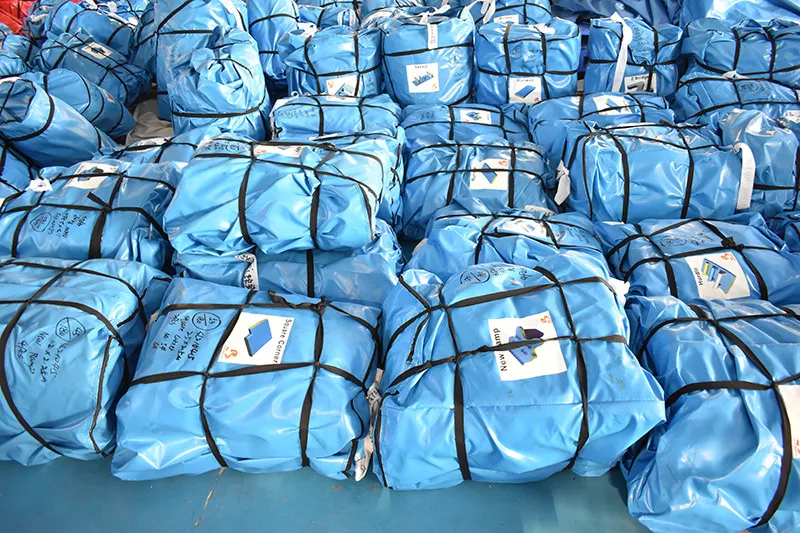
Durability is also affected by what happens during removal, transport and storage. Dragging equipment over abrasive ground, trapping grit between folded surfaces or storing it while damp can create avoidable problems.
Follow the manufacturer’s instructions for handling, cleaning, drying and storage. Before purchase, confirm that your team has suitable handling arrangements and enough protected storage space. Ask for packing and storage guidance for the proposed modules, rather than assuming that every unit can be folded or moved in the same way.
floating-inflatable-obstacle-course-modules-packed-in-protective-bags-for-storage
Packaged floating inflatable obstacle course modules ready for storage

What Durability Evidence Should Buyers Request?

Request evidence for the quoted model and check that the specification matches the actual order. General marketing claims can introduce a product range, but purchasing decisions need details about the equipment being supplied.
Use the following table to prepare a focused request. If records are unavailable, identify that gap before treating a durability claim as established.
Area
Main concern
Photos or documents to request
What this evidence cannot prove alone
Main material
Suitability for use and exposure
Material specification and relevant test information
Whole-course durability
Climbing and landing surfaces
Repeated contact and edge wear
Model-specific close-ups and reinforcement details
Performance under every usage pattern
Handles, footholds and reboarding areas
Pulling, stepping and attachment loads
Base photographs, construction details and relevant checks
Strength from appearance alone
Module connections
Repeated loads and rubbing
Connection diagram, component details and inspection records
Performance in every water condition
Welds and corners
Joint consistency and air retention
Production checks, applicable joint tests and leak-check records
Long-term fatigue resistance from a leak check
Comparable installations
Performance during actual operation
Dated project records with use and care history
An identical lifespan at your site
When reviewing a test report, check what was tested and how the result relates to the finished product. A material sample, a welded joint and a complete module provide different evidence. Keep those distinctions clear when comparing suppliers.

Conclusion

Assess durability by linking each working area to its construction and supporting evidence. Check climbing surfaces, attachments, connections and welds against your expected operating conditions. For broader decisions about site, visitors and layout, use our floating inflatable obstacle course selection guide. If you are comparing commercial equipment options, explore our aqua park for sale range to find a suitable solution for your project. When discussing a purchase with Bouncia, share your expected operating frequency, outdoor exposure and storage arrangements. Request the material specifications, structural details and relevant inspection information for the proposed course so you can review the quotation with clear questions and a consistent basis for comparison.

FAQ

Is thicker PVC enough to make an inflatable floating obstacle course more durable?

No. Thickness is one material characteristic. Overall durability also depends on material performance, local reinforcement, handle and foothold attachment, welds, connections and operating conditions. Compare thickness alongside these details. Two courses with the same stated thickness may still use different materials or construction methods.

Can buyers judge weld durability from product photos alone?

Photos help buyers examine visible seam placement and finishing, but they cannot independently establish joint strength. Ask for the relevant construction information and inspection or test records. Confirm that the evidence applies to the material and joint design in the proposed equipment.

How long should a commercial floating inflatable obstacle course last?

There is no single reliable lifespan for every commercial course. Ask suppliers to explain the usage, exposure, handling and storage conditions behind their estimate and provide comparable project records. Warranty length and expected service life are different: read the warranty’s coverage and conditions separately from any longevity claim.

GET IN TOUCH WITH US

If you want to learn more about us or our products, welcome to leave a message below.

error: Content is protected !!