Welcome to Bouncia - Your Expert in Inflatable Water Parks and Diverse Sports Equipment

Bienvenue chez Bouncia - Votre expert en parcs aquatiques gonflables et en équipements sportifs divers.

Bienvenido a Bouncia - Tu Experto en Parques Acuáticos Hinchables y Equipamiento Deportivo Diverso

Floating Inflatable Obstacle Course Selection Guide for Water Parks

Choosing a course for a commercial water park is not only about appearance. It must fit the available water area, suit your visitors and support smooth daily operation. You also need enough space for staff supervision, anchoring and future changes.
This guide explains how to compare different course designs based on your site, visitors, capacity, layout, safety needs and expansion plans.
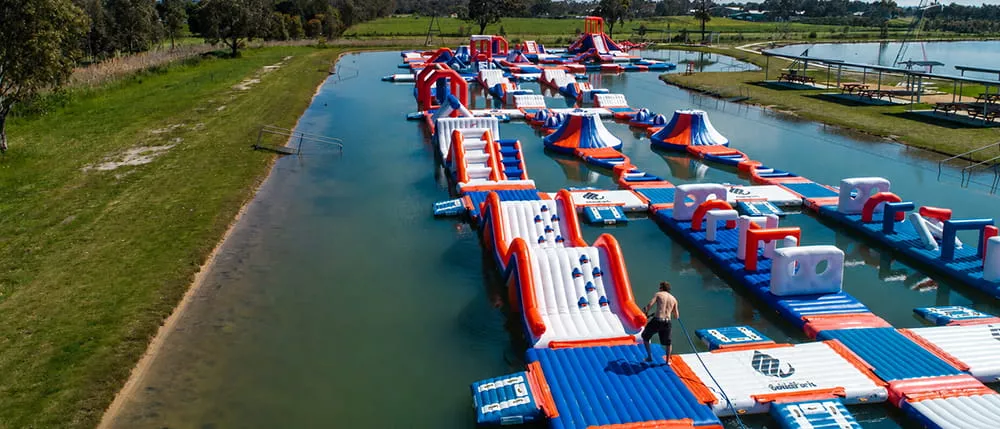
floating-inflatable-obstacle-course-in-a-lake
A floating inflatable obstacle course overview

Quick Answer

First, measure the usable water area and leave space for entry, exit, visitor movement and anchors. Then choose the course length, number of lanes and difficulty based on your main visitors and expected capacity. Compare straight, loop and connected layouts. Make sure staff can see the full course and that you can add more modules in the future if needed.

How Is an Obstacle Course Different From a Floating Water Park?

A floating inflatable obstacle course and a general floating water park share the same basic concept: both use connected floating inflatable modules to create commercial water entertainment. The main difference is how the visitor experience is organized.
A general floating water park for sale often combines slides, jumps, climbing features and leisure areas in a free-play layout. In this guide, “obstacle course” mainly refers to double- or multi-lane racing lanes with corresponding obstacles. Participants start together, move in the same direction and compete toward a defined finish point.
floating-inflatable-obstacle-course-versus-general-water-park
A floating inflatable obstacle course compared with a general water park

Start With Your Available Water Area

Start with the water area that you can actually use, not the total size of the lake or lagoon. Shore access, swimming zones, existing attractions, boat routes and water-depth limits may reduce the available space.

Measure Usable Length and Width

Measure the clear length and width of the area where you plan to place the racing lanes. The course must fit without blocking access to the shore or other parts of the park. A long course can create a stronger racing experience, but it may be difficult to supervise if the finish is too far away.
Width is also important. Double lanes need space for both lanes, their connections and the open water around them. More lanes allow more people to race together, but they also need more space at the start and finish.

Reserve Entry, Exit, Circulation and Anchoring Space

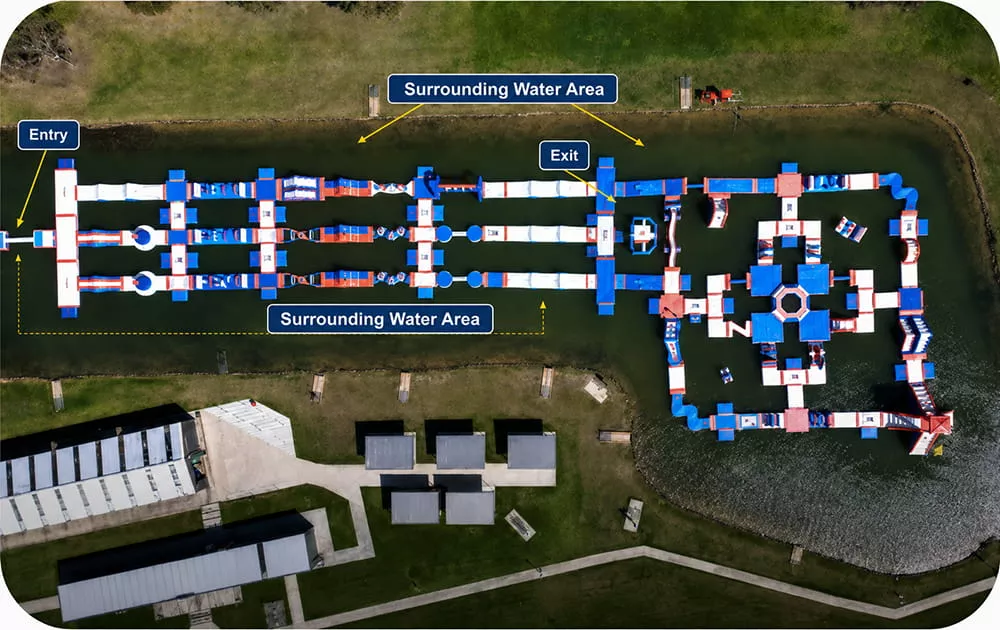
The course size is not the same as the total operating area. Visitors need space to enter, wait and leave after finishing. The exit should be clear and easy to use, so finished users do not block the last obstacle.
floating-inflatable-obstacle-course-operating-area
A floating inflatable obstacle course operating space
You also need open water around the course for safety, staff access and anchors. The exact anchoring plan depends on the site and product design. During product selection, first confirm that there is enough clear space around the proposed course.

Match the Course to Your Main Visitors

A course for children and families should not have the same obstacles as a course for teenagers. Before comparing modules, define your main visitor group. Consider height, reach, balance, confidence and physical ability, not only age.

Children and Family Groups

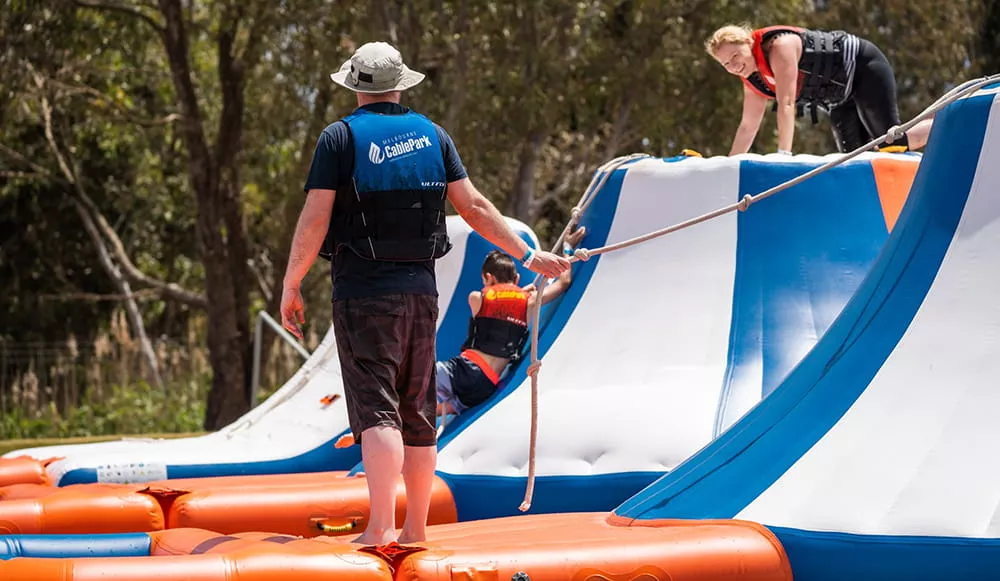
For children and mixed family groups, choose obstacles that are easy to understand and not too high. Users should be able to get back onto the course after falling without blocking the lane. An easier route, a bypass or a simple return point can help visitors with different abilities.
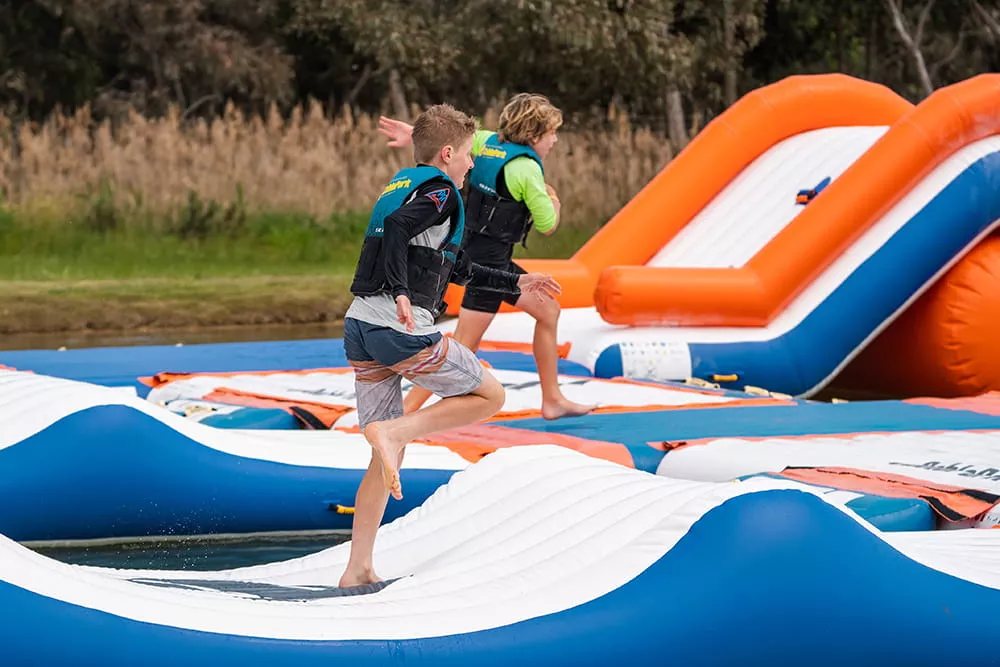
children-playing-on-low-difficulty-floating-inflatable-obstacle-course
Children enjoy a low-difficulty floating inflatable obstacle course
Family racing can still be exciting, but less confident users should not stop the whole group. Staff should also have a clear view of children on the course. If visitors have very different ages and abilities, a shorter course or separate difficulty options may work better.

Teenagers and Challenge-Focused Visitors

Teenagers and active groups may prefer longer lanes and more challenging climbing or balance obstacles. Still, the course should become harder step by step. If the first obstacle is too difficult, every group may be delayed. Several difficult obstacles together can also cause tiredness and queues.
A good racing course tests different skills and lets users continue after falling into the water. The aim is not to make every module difficult. The aim is to create a race that is active, easy to understand and enjoyable to repeat.

Choose the Right Difficulty and Obstacle Mix

After defining your main visitor group, review the full obstacle order. Do not choose each module separately. Both racing lanes should require a similar level of effort, and the course should have a smooth pace from start to finish.

Balance Speed, Skill and Recovery Points

Use a mix of fast crossing sections, climbing, balance and crawling obstacles. Easier modules near the start help the race begin smoothly. More difficult modules can come later. If a user falls, there should be a safe place to get back onto the course without moving against other users.
For a fair race, both lanes should have a similar distance and difficulty level. They do not need to look exactly the same, but one lane should not be much slower than the other unless this is part of the design.

Avoid One Difficult Module Becoming a Bottleneck

One narrow, steep or very difficult module can slow down the whole course. If users need several attempts, other participants will catch up and wait. In this case, a longer course or more lanes will not solve the problem because the slowest obstacle controls how many people can pass through.
staff-supervising-difficult-floating-inflatable-obstacle-course-module
Staff supervise a difficult floating inflatable obstacle course area
When checking a design, identify where users may stop, fall or need help. Make sure staff can see and reach these points. Also check whether users can bypass the obstacle or return to the course easily.

Plan Lane Count and Operating Capacity

Choose the number of lanes based on demand, available width and how often new groups can start. More lanes allow more people to race at the same time. However, they will not improve real capacity if the entry, exit or staffing plan is too limited.

Single, Double or Multiple Racing Lanes

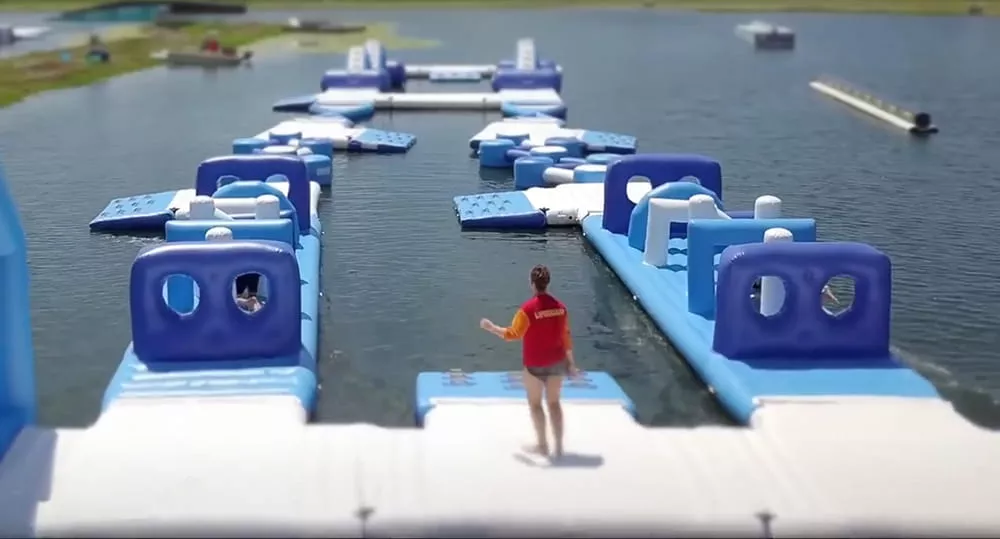
A single lane can fit a narrow site or support timed individual races, but it does not offer side-by-side competition. Double lanes are suitable for head-to-head racing and are usually easier to operate. Multiple lanes can work well for events and large groups if there is enough space and enough staff.
staff-guiding-double-lane-floating-inflatable-obstacle-course-race
Staff guide racers on a double-lane floating inflatable obstacle course
Think about how visitors usually arrive. Double lanes may suit pairs and small families. School groups, camps and company events may benefit from more lanes, but only when the waiting area and start process can handle larger groups.

Estimate Simultaneous Users and Throughput

Estimate how many people can use the course safely at one time. Also check how often a new group can start and how quickly finished users can leave. These points show your real operating capacity better than the maximum product capacity. For more details about real capacity, visitor turnover and queues, see this guide to inflatable aquapark capacity planning.
Write down the full visitor process: waiting, safety briefing, entry, start, time on the course, finish, exit and return route. If one step can handle fewer people than the course itself, that step will limit the real capacity. More active lanes may also require more staff.

Select the Overall Layout and Connections

The same modules can form a straight course, a loop or a course connected to other attractions. Choose the layout based on the shape of your site and how you want visitors to move through the park.

Straight Racing Course

A straight layout gives visitors a clear start and finish. It is easy to understand and works well for timed or head-to-head races. Staff can also supervise it more easily when both ends are visible. Placing the entry and exit at opposite ends helps separate incoming and finished users.
A straight course needs enough clear length. You also need a safe exit or return route after the finish. This route should not cross the path of the next racing group.

Loop Layout or Connection With Slides and Jumps

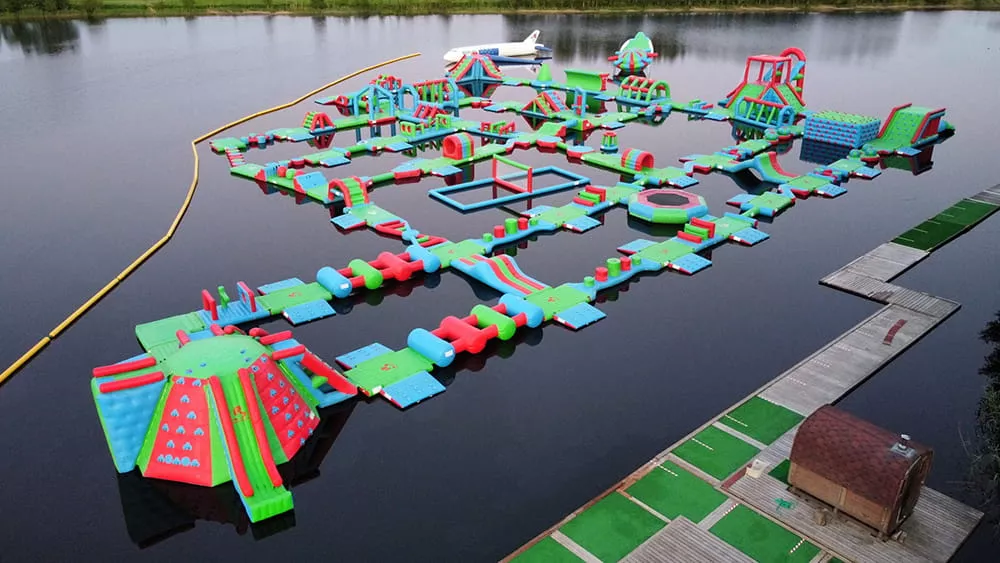
A loop supports continuous play and may fit a wider water area better than a long, narrow one. Visitors can stay inside the connected course instead of leaving after each race. However, staff need to control traffic carefully because users may move at different speeds or repeat some sections.
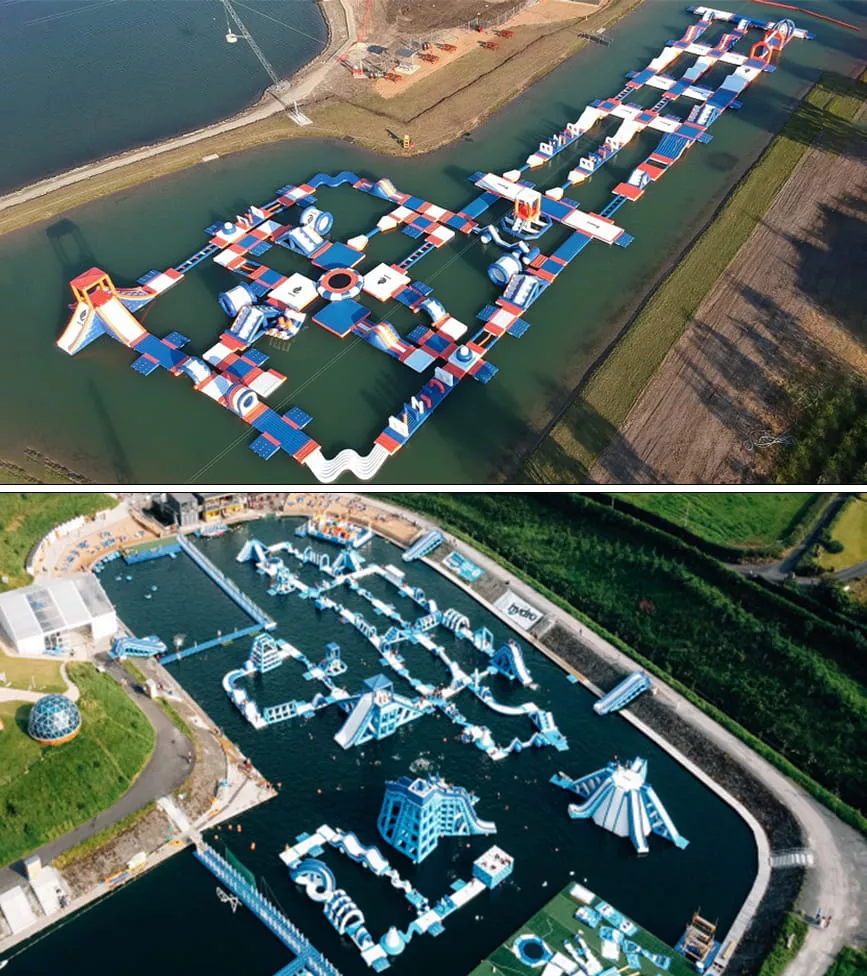
floating-inflatable-obstacle-course-connected-with-inflatable-attractions
A floating inflatable obstacle course connects with other attractions
Racing lanes can also connect to slides or jumps. This creates more variety and can link the course to an existing park. Check that visitors from the connected attraction do not cross the racing route or block an exit. The connection should make visitor movement easier, not create a new queue.

Check Safety, Anchoring Space and Future Expansion

Choose a course that works now and can also support future business needs. Before confirming the design, check staff visibility, access, module connections and available space for expansion.

Safety Spacing and Staff Visibility

Staff should be able to see the start, difficult obstacles, return points and finish. Tall modules, turns and connected attractions may block the view. Entry and exit points should be easy to identify and reach. Staff and visitors should not need to move against the main traffic direction.
staff-overseeing-floating-inflatable-obstacle-course-racing-lanes
Staff oversee the floating inflatable obstacle course racing lanes
Keep enough distance from the shore, other activities and boat routes. You also need space for anchors. These needs are different for every site, so do not calculate them from the product size alone. Ask for a site-based project assessment.

Modular Expansion and Replacement Planning

A modular design can make future expansion easier, but check compatibility before buying. Ask whether new lanes or obstacles can use the same connection system. Also confirm that the original layout leaves enough space for a larger course.
Some obstacles receive more use and may wear faster than simple connecting modules. A modular design lets you inspect, repair or replace one section without changing the whole course.

Floating Inflatable Obstacle Course Selection Checklist

Use this checklist to prepare clear information before asking a supplier for a course design or quotation.
Condition to Confirm
How It Affects Selection
Usable water area
Sets the course length and width. Include open space around the product.
Main visitor group
Helps you choose the right height, difficulty and recovery options.
Obstacle sequence
Affects the race pace, fairness and risk of queues.
Lane count
Affects how many users can start together, course width and staff needs.
Expected operating flow
Includes start times, time on the course, exit speed and queue targets.
Overall layout
Helps you choose a straight, loop or connected design.
Safety and anchoring space
Confirms staff visibility, clear water space and room for anchors.
Future expansion
Checks whether you can add more lanes or modules later.

Conclusion

There is no single racing-lane design that is best for every commercial water park. The right course must fit the usable water area, suit the main visitors and provide the capacity you need. Staff should be able to supervise it clearly, and the site must have enough space for anchors and future expansion.
Start with your operating needs. Then compare the course length, number of lanes, obstacle order and overall layout. This makes floating inflatable obstacle course selection a practical business decision, not simply a choice based on appearance.
If you are comparing an aqua park for sale, share your usable water dimensions, main visitor group and expected capacity with Bouncia. This information helps the team recommend a suitable commercial design.

FAQ

How Many Lanes Should a Floating Inflatable Obstacle Course Have?

Choose the number of lanes based on the available water width, expected users, start times and acceptable queue length. Double lanes work well for head-to-head racing. Multiple lanes may suit large groups or events. Add more lanes only if the entry, exit and staffing plan can support them.

What Size Water Area Is Needed for an Inflatable Obstacle Course?

The water area must be larger than the course itself. You also need space for entry, exit, visitor movement, safety clearance, staff access and anchors. Measure the usable water area before choosing the course size.

Is a Straight or Loop Inflatable Obstacle Course Better?

A straight course is usually better for a clear start-to-finish race. A loop is better for continuous play but needs more traffic control because users may move at different speeds. Choose the layout that best fits your site and operating plan.

GET IN TOUCH WITH US

If you want to learn more about us or our products, welcome to leave a message below.

error: Content is protected !!