Welcome to Bouncia - Your Expert in Inflatable Water Parks and Diverse Sports Equipment

Bienvenue chez Bouncia - Votre expert en parcs aquatiques gonflables et en équipements sportifs divers.

Bienvenido a Bouncia - Tu Experto en Parques Acuáticos Hinchables y Equipamiento Deportivo Diverso

Water Sports Inflatable Selection for Different Commercial Venues

Choosing a popular inflatable before checking your venue can leave you with equipment that is difficult to install or manage. A large floating park may suit one lake, while a compact attraction may fit a commercial pool better. Water Sports Inflatable Selection starts with the actual water setting, then considers your guests and operating resources. This guide helps commercial buyers compare product types for pools, lakes, beaches, resorts and camps. It focuses on creating a practical shortlist before requesting a layout or quotation from a supplier.
water-sports-inflatable-on-a-lake-near-the-shore
A lakeside venue with commercial water sports inflatables

Quick Answer

The best water sports inflatable depends on the water setting and how the venue operates. Pools often need compact attractions with clear supervision. Lakes may accommodate modular floating parks where area, depth and anchoring conditions allow. Beaches need an assessment of tides, waves and anchoring. Resorts and camps should choose according to their actual water setting, guest mix and staffing.

Quick venue-to-product comparison

Use the comparison below to identify candidates. Product suitability needs site confirmation before an order; a venue label alone cannot establish whether installation is suitable.
Venue
Main selection factors
Product types to consider
Confirm first
Commercial pool
Limited area, depth and poolside access
Compact obstacle combinations; pool-compatible single attractions
Usable area, clearances and approved fixing points
Lake
Available water area, bottom conditions and changing levels
Modular floating parks; obstacle combinations; standalone attractions
Depth across the footprint and anchoring feasibility
Beachfront
Tides, waves, wind and saltwater exposure
Floating combinations or single attractions intended for open water
Site exposure, access and installation requirements
Resort
Guest mix, appearance and existing activities
Floating parks or selected attractions suited to the actual water setting
Water conditions, guest suitability and staffing
Campground
Family guests, seasonal use and management resources
Manageable combinations with room for phased expansion
Water conditions, supervision and seasonal handling

What to confirm before choosing a water sports inflatable

Usable water area, clearances and depth

Measure the area available for the attraction, rather than the whole pool or lake. Allow for entry, exit, swimming areas and required clearances. Record depth throughout the proposed footprint, including places where users may enter the water. Ask for the requirements of each shortlisted product; there is no single depth figure that applies to every attraction.

Fixing points, bottom conditions and changing water levels

Identify possible fixing locations and collect information about the pool structure or waterbed. Note seasonal lake levels or the tidal range at a beach. Confirm anchoring feasibility before product selection with the supplier and a qualified installer or specialist. An attractive layout is only useful if it can be installed at the site.

Guests, capacity and supervision

Define who will use the equipment: children, teenagers, adults or mixed family groups. Ask about age, height and other user restrictions for each product. Compare expected simultaneous users with entry arrangements, sightlines and supervision resources. A layout with more attractions may also create more separate areas for staff to oversee.

Operating season, daily management and supporting facilities

Consider whether equipment stays installed or must be removed between sessions or seasons. Check access for handling, drying and storage. Identify where guests receive instructions and equipment, and how they reach the attraction. Arrange a site assessment and confirm relevant local requirements before finalizing the purchase.
water-sports-inflatable-layout-with-shore-access-and-surrounding-facilities
Water sports inflatable layout with shore access and surrounding facilities

Which products suit a commercial pool?

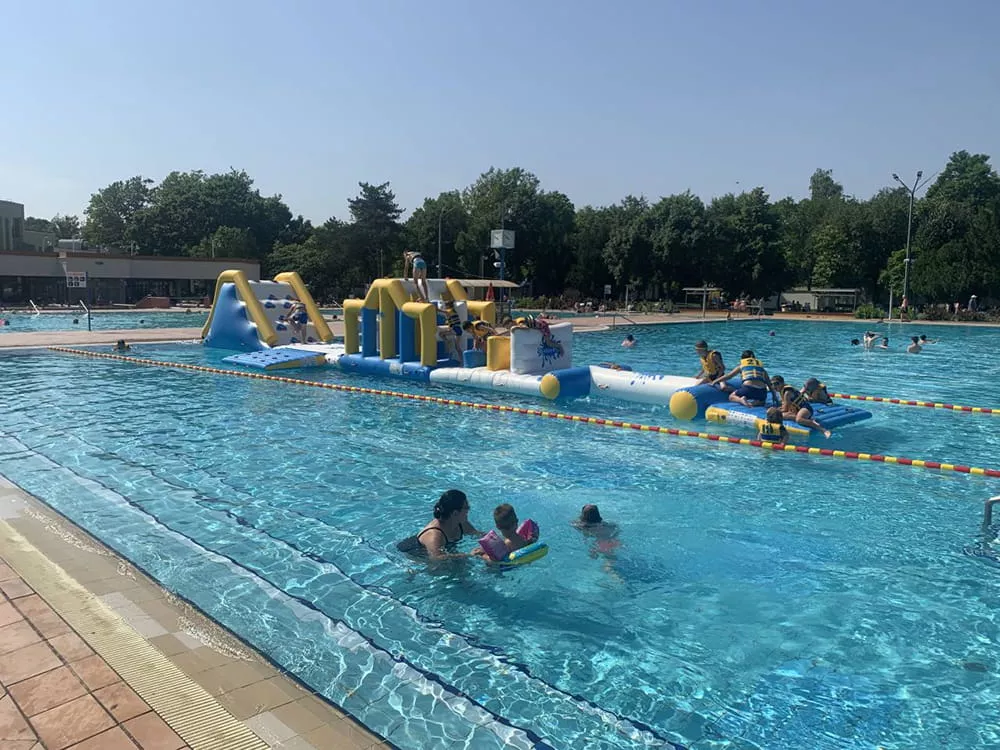
A commercial pool usually offers defined boundaries, but steps, shallow sections and existing swimming activities can reduce the space available. Start with compact attractions with clear supervision. A small obstacle combination may provide an organized activity within a dedicated area. A pool-compatible single attraction may be more practical when only one part of the pool is available.
Compare the full operating footprint, not just inflated dimensions. Users need suitable space to enter, leave and return from the water. A climbing or sliding attraction also needs product-specific depth and clearances.
water-sports-inflatable-course-in-a-pool-with-edge-steps
Pool edge steps affect water sports inflatable placement
For example, a hotel that reserves one section for organized activities should shortlist equipment that leaves other pool users and access routes separate. A larger floating park becomes a candidate only where the pool has sufficient usable area and suitable installation conditions. Ask the supplier to confirm compatibility with your pool before choosing a model.

Which products suit a lake?

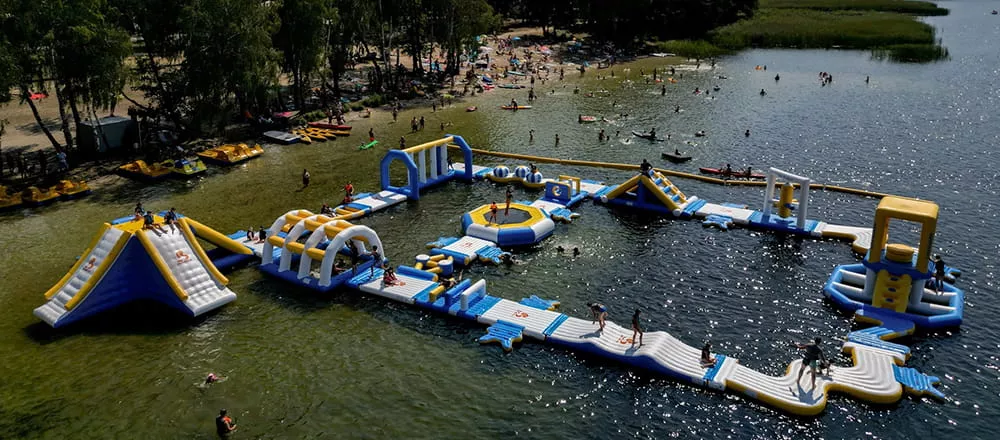
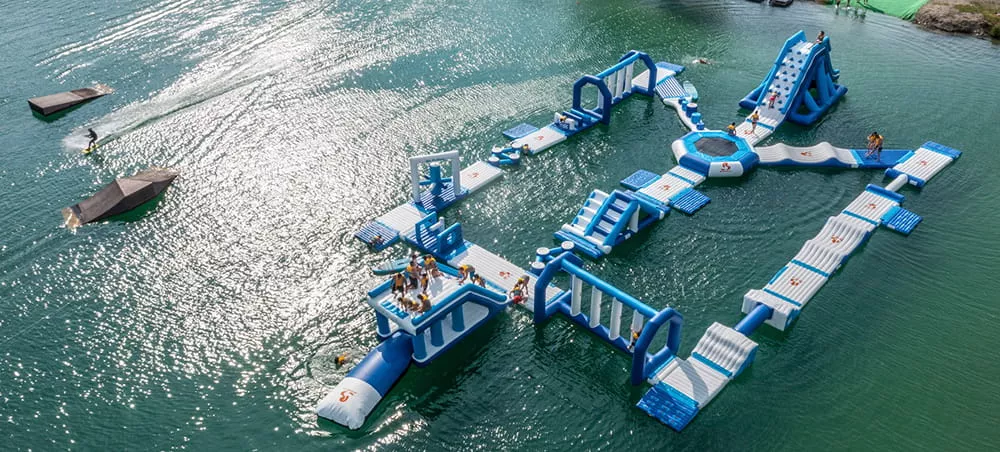
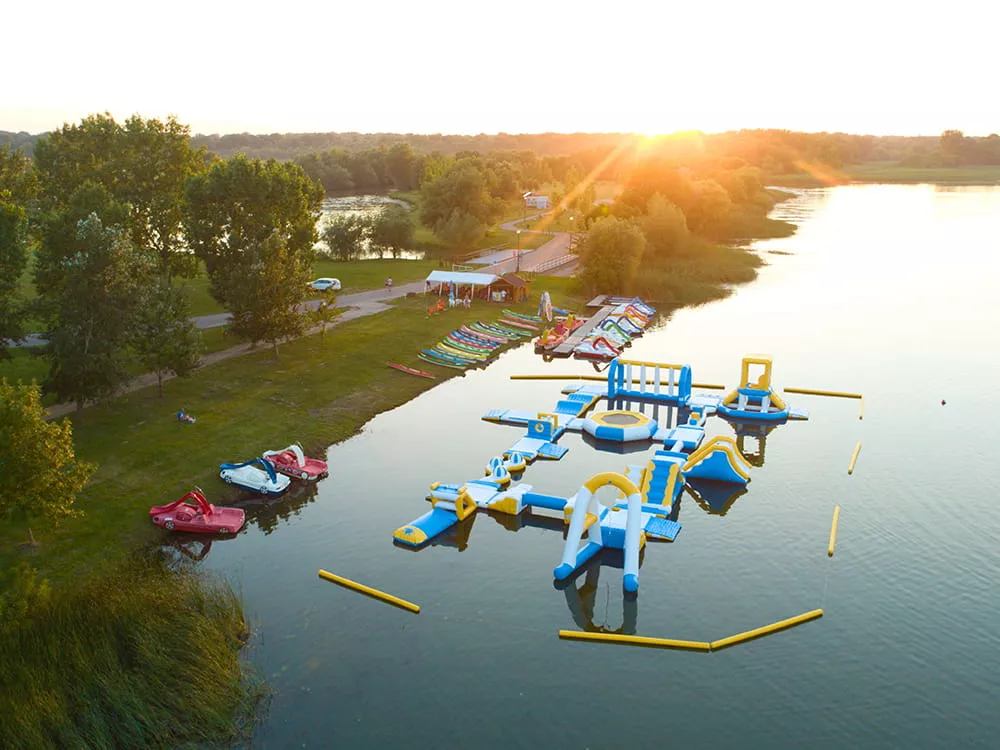
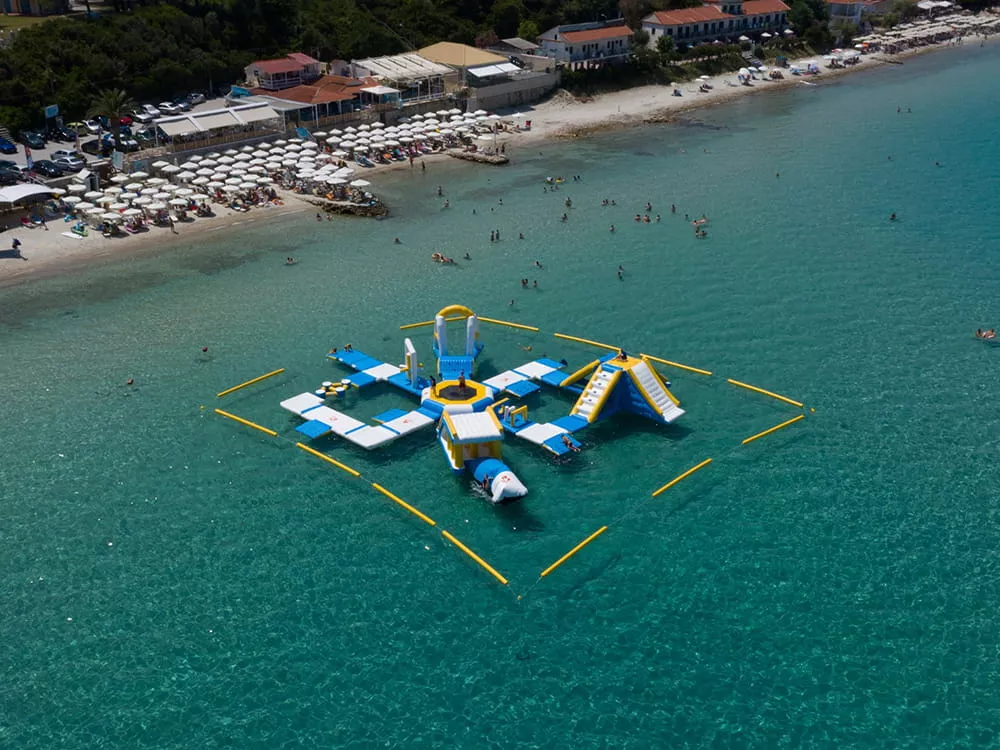
A lake may offer room for a modular floating park, an obstacle combination or independent attractions. Choose among them according to the usable waterfront, intended activity and installation conditions.
A connected park may suit a venue seeking one main ticketed attraction. A smaller combination may suit a dedicated activity zone. Standalone facilities may be worth considering where the business wants separate attractions, provided access and supervision are workable.
connected-water-sports-inflatable-modules-on-a-lake-near-shore
A connected water sports inflatable combination for a lakeside venue
Map the usable installation area first. A large lake does not automatically provide a large suitable footprint: shallow sections, bottom conditions, restricted zones and seasonal water changes can narrow the options. Keep product comparisons within the area that can realistically be assessed and managed.
When reviewing an aqua park for sale, compare candidate configurations against that footprint. Ask which products fit the verified conditions and whether later additions would remain compatible with the proposed installation.

Which products suit a beachfront venue?

For a beachfront venue, shortlist floating combinations or single attractions intended for open-water use. Then confirm suitability for the specific location. Open-water suitability is site-specific: a protected bay and an exposed shoreline can present different conditions even when both are described as beaches.
water-sports-inflatable-park-in-coastal-water-near-a-beach
A water sports inflatable installation in a coastal setting
Provide information about tides, wind exposure, waves and the proposed access route. Ask how saltwater use affects the product’s suitability and maintenance requirements. Confirm whether depth and access remain acceptable throughout the intended operating conditions.
A smaller attraction should not be assumed easier to install simply because it has fewer components. It still needs appropriate anchoring, clearances and user access. Have a qualified specialist assess the location before committing to equipment. This assessment should help determine which product types remain viable, rather than using a product catalogue as proof that the site is suitable.

How should resorts and camps choose?

Resorts and camps are business settings. Their water may be a pool, lake or coastal area. Start with the actual water setting, then apply the needs of the business.
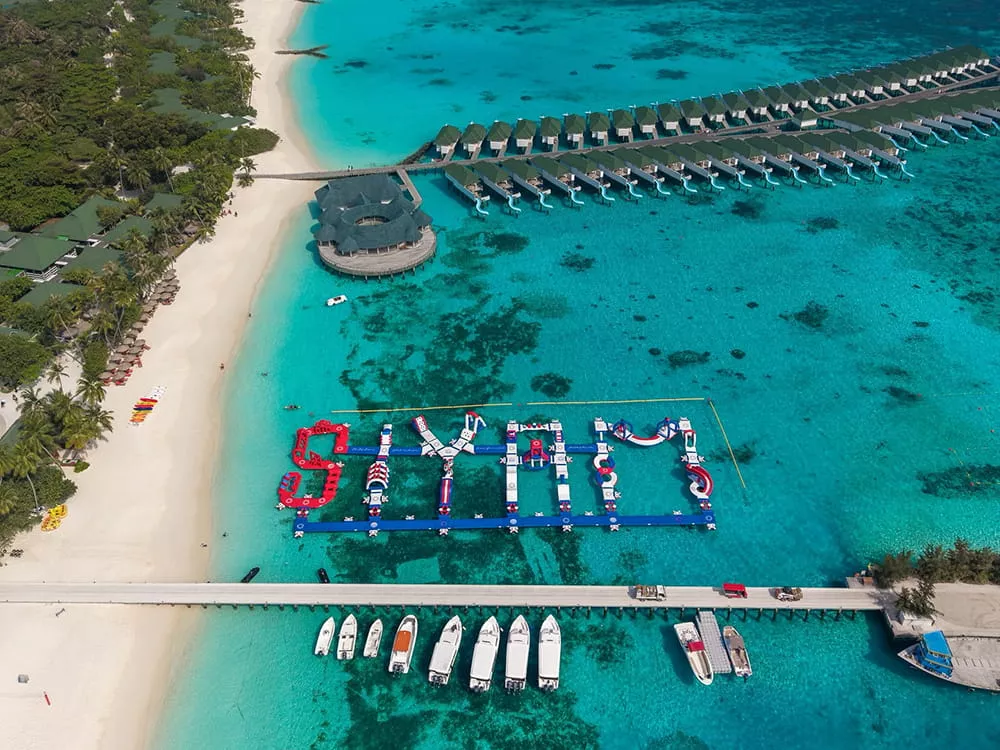
For resorts, compare guest ages, desired activity levels, visual appearance and how the attraction fits existing facilities. A family resort may consider a floating park where conditions allow, while a property with limited pool space may prefer a selected single attraction. Compare how each option supports the planned guest experience and fits supervised operating hours.
water-sports-inflatable-park-beside-resort-beach-and-overwater-villas
A water sports inflatable park within a beachfront resort setting
For campgrounds, focus on family use, seasonal installation and available management resources. A manageable opening combination may be suitable when demand is still being established. Check whether expansion is possible without creating access or supervision problems. Starting smaller does not remove installation requirements, and fewer components do not automatically mean easier supervision.
Choose the option your team can manage consistently during the intended season, including setup, daily checks and storage.

A practical shortlist for your venue

Use four steps to turn the comparison into a purchasing brief:
  1. Record water dimensions, depth, fixing conditions, water-level changes and access. Add guest profiles, intended capacity, staffing and operating dates.
  2. Remove product types that cannot meet the known site or operating requirements. Mark missing information for confirmation.
  3. Shortlist two or three feasible combinations, rather than comparing every available model.
  4. Request comparable proposals based on the same site information and intended use.
Ask each supplier these questions: Which water settings is the proposed equipment intended for? What depth and clearances does it require? What installation assumptions remain unconfirmed? How are users expected to enter and leave? What capacity and supervision requirements apply? What handling, maintenance and storage will the combination need?
For a commercial inflatable water park, review the equipment as part of the whole project. Your shortlist should connect product choice with access, personnel and operating arrangements before you compare quotations.

Conclusion

Water Sports Inflatable Selection works best when you define the actual water setting and operating goals first. Compare product types against usable space, depth, installation conditions, guest needs and management resources. Pools, lakes and beaches create different selection requirements; resorts and camps add business priorities to those requirements. To discuss a suitable Bouncia configuration, share your water dimensions, depth information, water-level changes, target guests and expected simultaneous capacity. These details provide a useful starting point for reviewing candidate products and identifying what needs further site confirmation.

FAQs

Can the same water sports inflatable work in a pool and a lake?

Possibly, if the product is intended for both settings and each site meets its requirements. Compare depth, clearances, fixing arrangements and access separately. A successful lake installation does not confirm pool suitability, or the reverse.

What should a beachfront operator confirm before choosing floating inflatables?

Confirm tides, waves, wind exposure, depth, saltwater suitability, user access and anchoring feasibility. Check local requirements and obtain a site assessment. Use that information to identify viable products before requesting a final configuration.

Should a campground start with a full floating water park or smaller attractions?

Choose according to the verified water conditions, expected family demand, operating season and supervision resources. Smaller attractions may suit an initial offering; a full park may suit an established activity business. Confirm installation requirements and future expansion compatibility for either option.
error: Content is protected !!