Welcome to Bouncia - Your Expert in Inflatable Water Parks and Diverse Sports Equipment

Bienvenue chez Bouncia - Votre expert en parcs aquatiques gonflables et en équipements sportifs divers.

Bienvenido a Bouncia - Tu Experto en Parques Acuáticos Hinchables y Equipamiento Deportivo Diverso

Inflatable Aqua Park Customization Options: What Can You Customize—and What Actually Matters?

When buyers consider a custom inflatable aqua park, colors and special shapes are often the first ideas discussed. However, customization can also involve module arrangements, product specifications, and new functions. The right approach depends on the site, target visitors, and operating needs. This guide explains the main Inflatable Aqua Park Customization Options, how to choose the appropriate level, and what commercial buyers should confirm before approving a design.
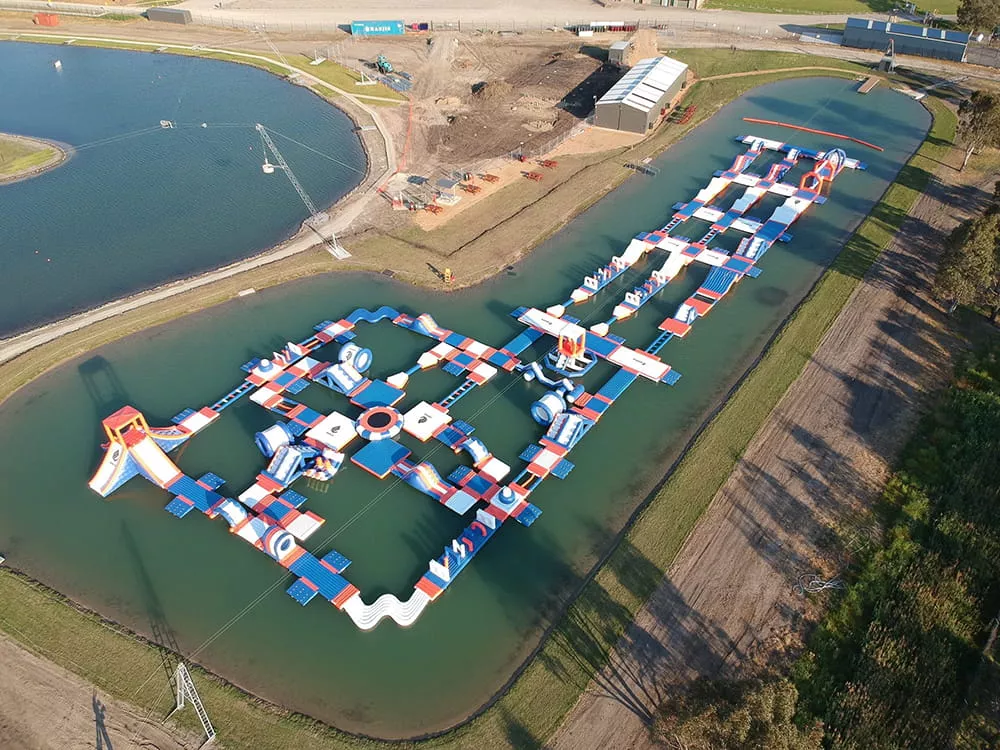
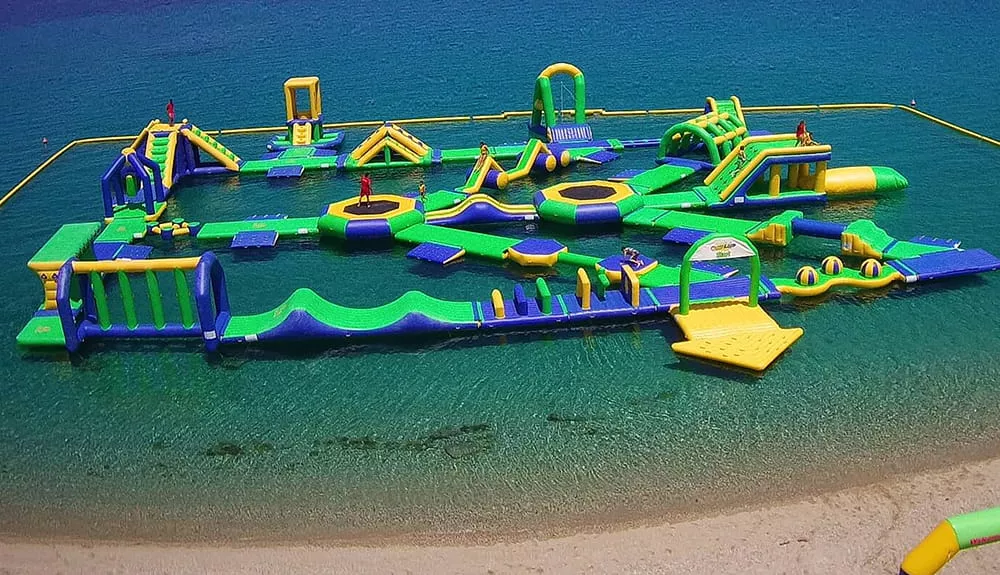
Inflatable-Aqua-Park-Customization-Options-with-modular-layout
Inflatable Aqua Park Customization Options shown in a complete layout

Quick Answer

An inflatable aqua park can be customized at three levels: by rearranging existing modules, by changing selected specifications or visual details, or by developing a new product or function. The most valuable changes solve a confirmed site, visitor or operating requirement. Before approval, verify the design response, dimensions, connection compatibility, applicable safety and certification scope, cost and lead time.

Three Levels of Inflatable Aqua Park Customization

Customization becomes easier to evaluate when requests are grouped by the amount of change involved. The table below provides a practical overview.
Customization level
Typical changes
Best used when
Key verification
Configuration customization
Park footprint, module mix, obstacle order, difficulty balance, entry and exit positions
Existing products can meet the project need in a different arrangement
Overall dimensions, capacity assumptions, routes and connection compatibility
Specification and visual customization
Colors, selected dimensions, feature positions and defined product details
A standard module is close to the requirement but needs a controlled adjustment
Technical feasibility, intended use and whether the change affects documentation
New product and function development
New shapes, new interactive functions or products outside the existing range
A required function cannot be achieved with available modules
Structural review, testing needs, certification scope, development cost and schedule

Configuration Customization Using Existing Modules

Configuration customization changes how existing products are combined to suit the specific site and operating needs. It may adjust the overall footprint, module mix, obstacle sequence, difficulty balance, entry and exit positions, or connections reserved for future expansion.
A Bouncia project at a cable park in Melbourne shows how this works in practice. Based on the shape of the purpose-built lake, required safety clearances and the operator’s activity needs, Bouncia designed a complete configuration combining a main aqua park with an obstacle course. The layout makes effective use of the available water area while providing an appropriate mix of activities and visitor routes. The image below shows the final layout developed for this project.
Inflatable-Aqua-Park-Customization-Options-with-racing-lanes-and-modular-activity-zone
Inflatable Aqua Park Customization Options for narrow and wide areas
This level is often enough when the main requirement is to fit the site or create a suitable attraction mix. The supplier still needs to confirm the complete dimensions, visitor routes, connection system and relationship between the proposed arrangement and the operating plan.
Configuration customization uses existing modules, but the final combination still requires project-specific review. Using standard modules does not make every arrangement automatically suitable.

Specification and Visual Customization

Specification customization changes selected characteristics of a product or park. It may include a coordinated color palette, a revised module dimension, a different feature position or a defined adjustment to difficulty or intended use.
Visual changes usually require a clear reference showing preferred colors, surrounding conditions and the overall project direction. Colors may also have a practical role, such as helping visitors recognize different zones, entrances or transition areas.
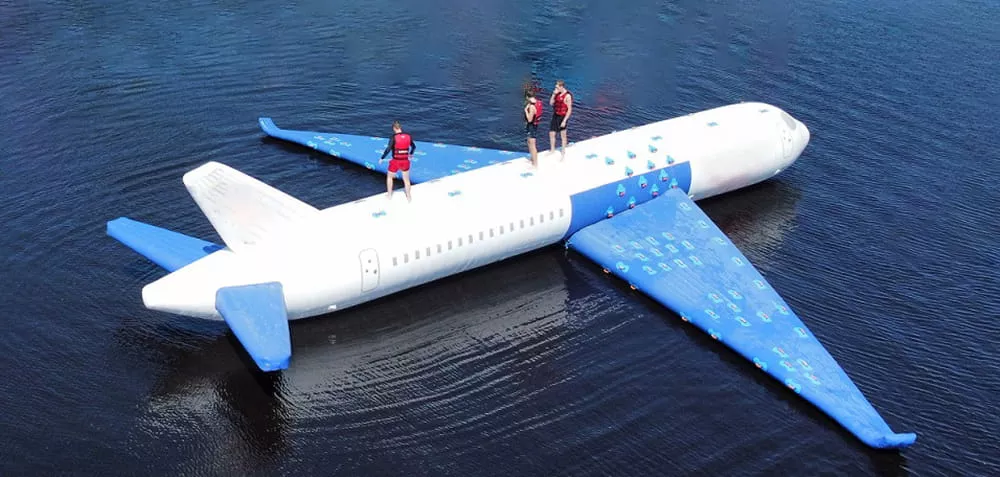
The custom airplane shown below is an example of combining visual and specification customization. The client wanted a large, eye-catching airplane feature that visitors could also climb onto, walk across, rest on and jump from into the water. Bouncia customized the design to meet both the desired visual impact and these activity requirements.
Inflatable-Aqua-Park-with-custom-airplane
Custom airplane illustrates Inflatable Aqua Park Customization Options
A dimension change requires more caution. Making an individual obstacle shorter, wider or higher is different from reducing the total park footprint by removing a module. A product-level change may affect structure, connection points, user behavior and required surrounding space.
Buyers should therefore describe the required outcome, not only the requested modification. “The complete park must fit within this usable area” gives the supplier room to consider a configuration solution. “This individual module must be 20% shorter” is a specification request that may require additional technical review.

New Product and Function Development

The highest level of customization involves a product shape, function or activity that is not available in the existing range. Examples may include a new interactive obstacle, a special racing function, a purpose-built transition platform or another element designed for a defined visitor activity.
A drawing alone is not enough to approve this type of request. The buyer should explain who will use the product, what visitors are expected to do, where it will be installed and how it must connect to the rest of the park.
The review may cover structural feasibility, dimensions, user behavior, water and surrounding space, applicable requirements, testing or certification needs, production preparation and development time.
A distinctive shape should have a clear purpose, whether functional, experiential or visual.
Buyers can review typical commercial configurations on the inflatable aqua park for sale page before deciding whether an existing module, a modified specification or a new product is required.

Which Customization Options Actually Matter?

A useful customization solves an identified project constraint. Before adding a change to the proposal, the buyer should be able to state the problem it is expected to solve and how the finished design will be checked.

Start With a Project Constraint, Not an Appearance

Site fit, target visitors and operational requirements should be defined before visual preferences. A color scheme can support a coherent destination, but it cannot correct an unsuitable entrance, an unclear route or a product mix that does not match the expected users.
Confirmed project constraint
Likely customization response
Evidence to review
Usable water area is limited or irregular
Adjust footprint, module quantity or sequence
Scaled layout using the actual usable dimensions
Visitors have different ability levels
Change module mix, challenge progression or route choice
Defined target users and a clear activity sequence
One area may become congested
Review attraction position, transition space or route options
Expected visitor movement and supervision plan
The project requires a specific activity
Add or develop the necessary function
Written use case and explanation of how visitors interact with it
Future expansion is planned
Reserve compatible connections and usable expansion space
Connection details and an identified expansion direction
A coordinated destination appearance is required
Apply a defined color and visual direction
Approved references and a clear list of fixed and flexible details

Match the Customization Level to Its Operational Value

The proposed change should improve a practical part of the project. It may help the park use the available area, serve the intended visitor group, support supervision, reduce unnecessary route conflicts, enable a required activity or make later changes easier.
The more a request moves from rearranging existing modules toward changing specifications or developing a new product, the more carefully its purpose should be defined. A new feature may be justified when it is central to the visitor experience. It is harder to justify when its only purpose is to make a drawing look different.
What will work better because of this change? This simple review question should produce a specific answer. If it does not, the request may need to be revised or removed.

When a Standard Solution Is the Better Choice

A fully custom park is not necessary for every project. Existing products may be the better choice when they already meet the usable area, visitor profile and required activities, or when the project has a limited schedule and no confirmed reason for product development.
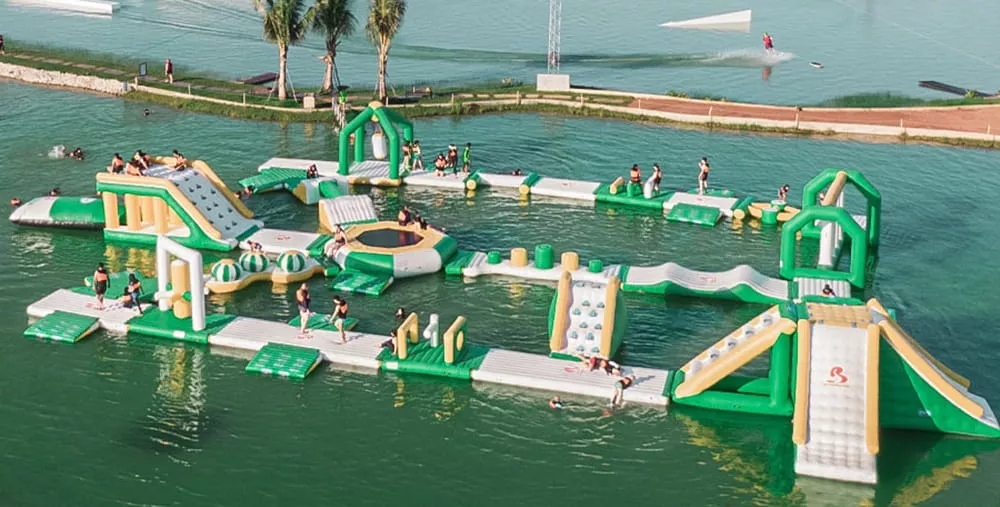
Inflatable-Aqua-Park-standard-layout-for-100-person-capacity
Standard Inflatable Aqua Park operating in a suitable water area
Standard modules can still be combined into a project-specific configuration. This allows a buyer to adapt the park without treating every element as a new product. It can also make the scope easier to define because the modules, dimensions and connections are already known to the supplier.
For a broader comparison of project routes, see floating water park packages vs custom designs. That article compares the two approaches; this guide focuses on defining and reviewing the customization itself.

What Should You Include in a Customization Brief?

A customization brief should explain the project conditions, intended users and priorities. It does not need to contain a finished solution. Its purpose is to give the supplier enough verified information to propose an appropriate one.

Site and Access Information

Provide the usable water area rather than only the total size of the lake, pool or waterfront. Where available, include:
  • Usable length, width and shape of the installation area
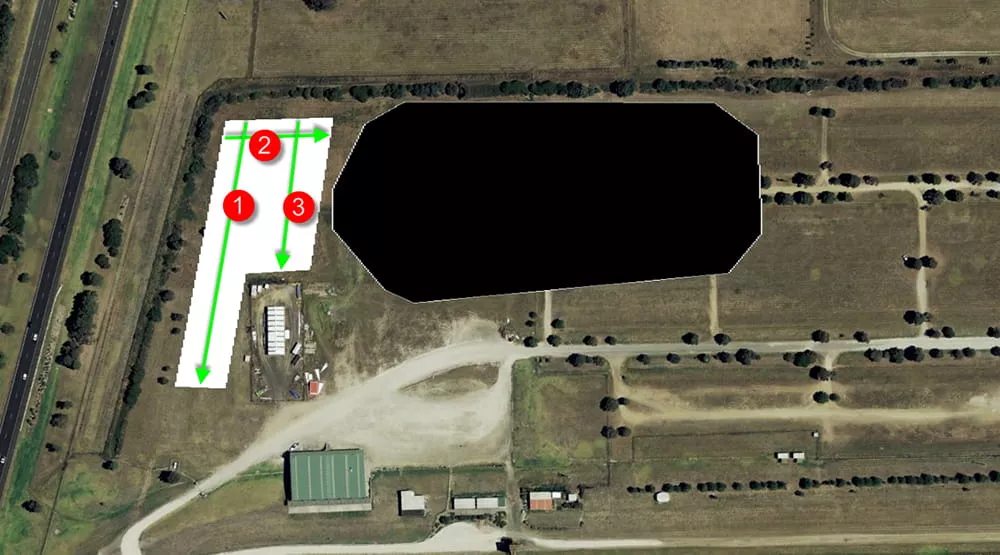
Inflatable-Aqua-Park-site-with-measured-usable-water-area
Measured water area for planning an Inflatable Aqua Park
  • Known water depth and bottom conditions
  • Shoreline, pier or floating-dock access
  • Planned entry and exit positions
  • Fixed obstacles, restricted areas or space that must remain open
  • The preferred direction for future expansion, if relevant
A scaled site drawing, marked aerial image or clear measurement plan is more useful than a general statement that the site is “large enough.” Unknown conditions should be identified as unknown rather than estimated without confirmation.

Visitor, Capacity and Experience Requirements

Describe who the park is expected to serve and what type of experience it should provide. Relevant information includes the main visitor age groups, expected ability levels, planned capacity, session format and preferred activities such as climbing, balancing, sliding, jumping, racing or group play.
The supplier also needs to understand whether the project is intended mainly for families, tourists, school or group sessions, competitive activities or active teenagers and adults. These details help shape the attraction mix and challenge progression without turning the brief into a complete operating manual.
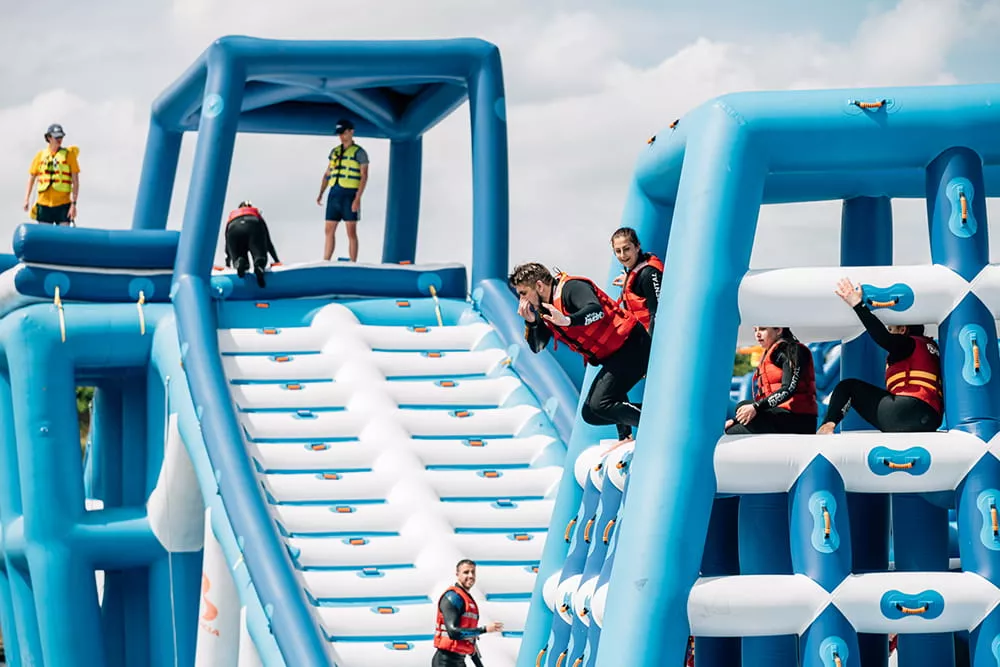
Inflatable-Aqua-Park-challenge-course-for-active-visitors
Active visitors tackle challenges at an Inflatable Aqua Park
If several visitor groups are important, state which group has priority and whether separate routes or zones are required.
A defined audience produces a clearer design brief.

Priorities, Constraints and Reference Materials

Separate the request into three categories so that essential requirements are not confused with optional ideas:
Priority category
Meaning
Example
Must-have requirements
Conditions the proposal must satisfy
Fit the confirmed water area and support the required entry position
Preferred options
Features that add value but may be adjusted
Include a balanced mix of climbing and group activities
Optional ideas
Concepts that can be considered if practical
Explore one distinctive feature after feasibility and cost review
The brief should also include the budget range, required delivery or opening date, preferred colors, reference images and any details that must remain flexible. If the new park will connect to existing equipment, provide model names, drawings, dimensions, photographs and connection information.
This structure helps the supplier decide whether the project needs configuration customization, specification changes or new product development. It also reduces repeated revisions caused by unclear priorities.

How Should You Review a Customized Design Before Approval?

A customized proposal should be checked against the original brief. Approval should not be based only on the appearance of the layout drawing.

Does the Design Solve the Original Project Need?

Review each must-have requirement and record how the proposal responds. If a site constraint led to a layout change, confirm where that change appears. If a new function was requested, confirm how visitors will use it and how it connects with the other modules.
Any new feature that was not in the brief should have a clear reason. This prevents optional visual ideas from becoming unplanned technical or commercial requirements.
A simple review record can use three columns: requirement, supplier response and outstanding question.
Approve the response, not just the drawing.

Are the Dimensions and Connections Compatible?

Confirm the complete park dimensions and the dimensions of every modified product. Check how modules connect, whether the proposed arrangement uses the specified connection system and whether any existing equipment has been verified as compatible.
Also confirm that the drawing is based on the usable installation area, not the total water area. Entry, exit, re-entry and surrounding-space assumptions should match the project information supplied in the brief.
Detailed principles for safety spacing, route planning and supervision belong in the project layout review. See the guide to inflatable water park layout for that separate design topic.

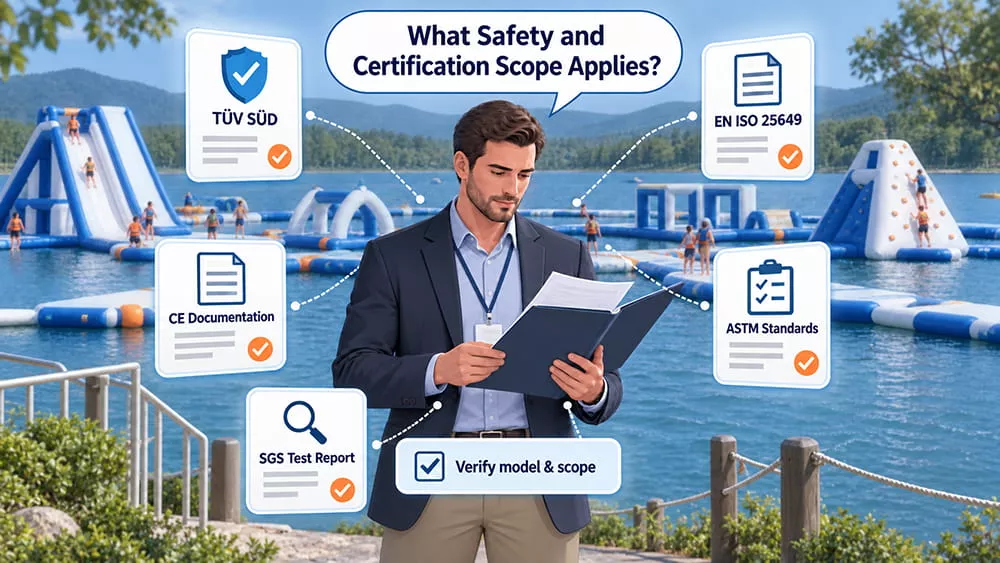
What Safety and Certification Scope Applies?

Ask which safety requirements and documents apply to the proposed products. When certification is provided, confirm the exact models and scope covered rather than assuming that one document covers every product or modification.
A newly developed or substantially changed module is not automatically covered by certification for a standard element. The supplier should explain whether the proposed change remains within existing documentation or requires additional assessment, testing or certification.
The same caution applies to intended use. A lower-looking obstacle is not automatically suitable for every age group, water depth or supervision arrangement. Product scope and actual operating conditions both need to be reviewed.
Inflatable-Aqua-Park-buyer-reviewing-safety-and-certification-scope
Buyer verifies safety documents for the Inflatable Aqua Park

What Changes Affect Cost and Lead Time?

The commercial effect depends on the level and scope of customization. Rearranging known modules is a different task from changing a product specification or developing a new function.
Before order confirmation, ask:
  • Which requested changes are included in the quotation
  • Whether design or development charges apply
  • How many design confirmations are included
  • Whether a sample, additional material preparation, testing or documentation is required
  • Which approval starts production
  • How the confirmed changes affect the planned delivery date
Record the final scope in the approved proposal. If the scope changes later, the buyer and supplier should identify the corresponding effect on price, documentation and schedule before proceeding.

Choose Customization Based on Project Needs

The most effective process begins with a verified project need and uses the lowest level of customization that can solve it. Existing modules may be sufficient in a new configuration. Selected specifications can be changed where necessary. New product development should be reserved for a function that the existing range cannot provide.
A practical decision sequence is:
  1. Confirm the usable site and access conditions.
  2. Define the priority visitor groups, capacity and required activities.
  3. Separate must-have requirements from preferences and optional ideas.
  4. Decide whether the need requires configuration, specification or product-development customization.
  5. Review how the proposal responds to every confirmed requirement.
  6. Verify dimensions, connections, applicable safety and certification scope, cost and lead time.
Every customization should have a clear reason. To discuss an appropriate solution, send the site information, visitor and capacity requirements, activity priorities, budget range and planned schedule. These details provide the basis for evaluating the right customization level for a commercial inflatable aqua park.

FAQs

Do I Need a Fully Custom Inflatable Aqua Park?

Not always. Many projects can use existing modules arranged into a project-specific configuration. A specification change or new product is more appropriate when a confirmed site, function or visitor requirement cannot be met by the available products. The decision should follow the project brief, not a general preference for “more customization‘’.

Can Changing a Module’s Size Affect Its Certification?

It may. Certification normally applies to defined products or a stated scope. A material change to dimensions, structure, connection points or intended use may require additional review, testing or certification. Ask the supplier to identify the exact model and documentation that apply to the modified product.

What Information Does a Supplier Need Before Preparing a Custom Design?

Provide the usable site dimensions, water and access conditions, target visitors, planned capacity, preferred activities, required functions, budget range, schedule and visual references. If existing equipment will be connected, include its model, dimensions, drawings, photographs and connection details. Separate must-have requirements from preferred and optional ideas.
error: Content is protected !!