Welcome to Bouncia - Your Expert in Inflatable Water Parks and Diverse Sports Equipment

Bienvenue chez Bouncia - Votre expert en parcs aquatiques gonflables et en équipements sportifs divers.

Bienvenido a Bouncia - Tu Experto en Parques Acuáticos Hinchables y Equipamiento Deportivo Diverso

How to Choose a Water Obstacle Course Inflatable for Seasonal Operations

A seasonal water obstacle course must work for more than its busiest summer weekend. The same modules may be installed, removed, stored and brought back year after year. That repeated cycle changes what a sensible purchase looks like. Start by estimating how many days the course can reliably open, then choose a complete opening layout that your team can operate and manage each season. Before placing an order, check the annual handling work, storage needs, local conditions, peak-season use and options for the following year. This guide turns those questions into a practical purchasing brief.
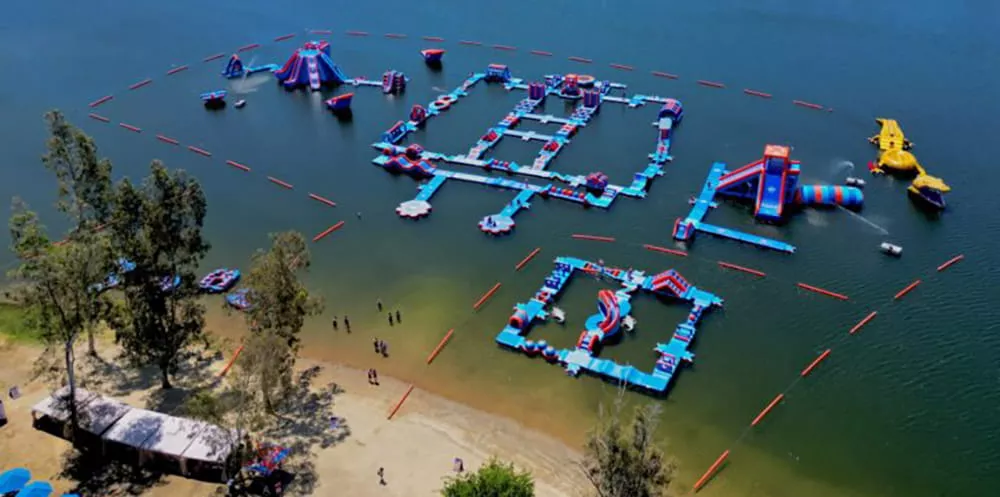
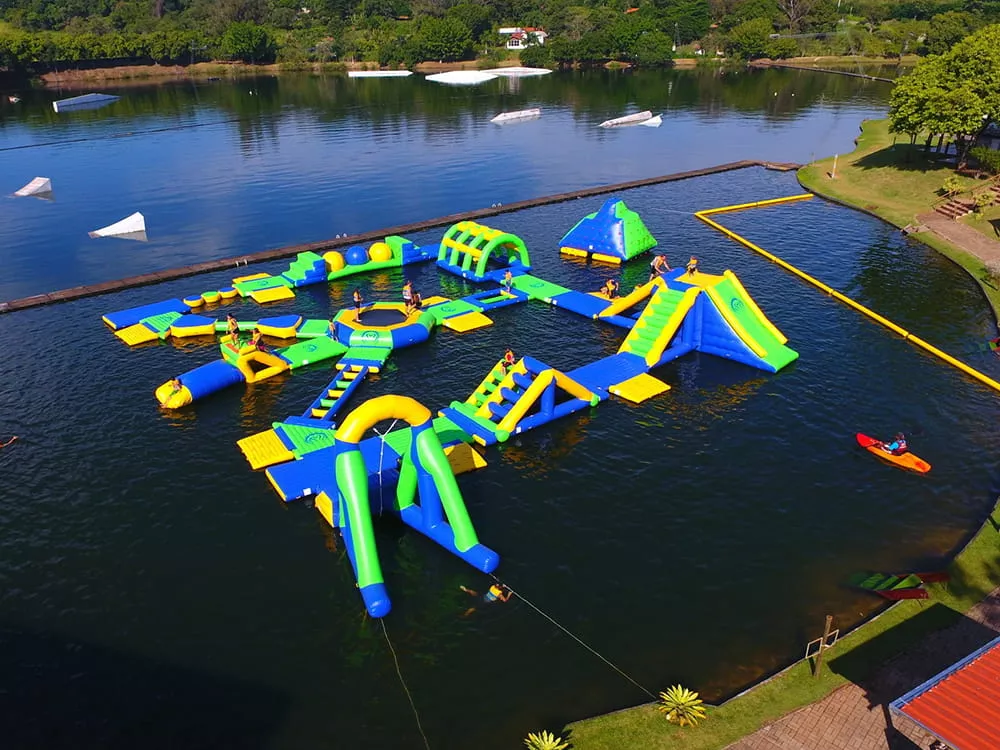
water-obstacle-course-inflatable-with-visitors-on-a-lakeside-course
Visitors explore the water obstacle course inflatable near shore

Quick Answer

To choose a water obstacle course inflatable for seasonal operations, estimate your reliable operating days and begin with a complete core course that fits opening demand and budget. Confirm the work required for annual installation and removal, the packed volume and storage conditions, suitability for local weather and frequent peak-season use, spare-part support, and whether the same modules can be reinstalled or expanded next year.

Start With Your Reliable Operating Season

Estimate Realistic Operating Days

A three-month summer window does not mean the course will operate every day in that period. Water temperature, severe weather, local permissions, staffing and visitor demand may shorten the practical season. Record the dates when opening is permitted, then estimate the days when the site can realistically serve visitors. Use your own site records where available; otherwise, keep the estimate provisional and test it against local conditions.
This estimate gives the supplier a useful design input. A shorter season may put more pressure on each operating day and on the initial budget. Season length mainly affects investment planning, while the required course capacity depends more directly on peak visitor demand, site conditions and available staffing. The detailed financial comparison belongs in investment planning for different operating seasons; here, the goal is to turn the estimate into a product brief.

Set an Opening Scale

Decide the opening capacity and the visitor experience you need before choosing optional obstacles. A short season does not automatically require the smallest available course. A busy resort with group bookings may need more capacity than a longer-season site with modest daily demand. Compare expected peak attendance, session length, operating hours and supervision resources, then request a layout that can run as a complete first-season course within the approved budget.
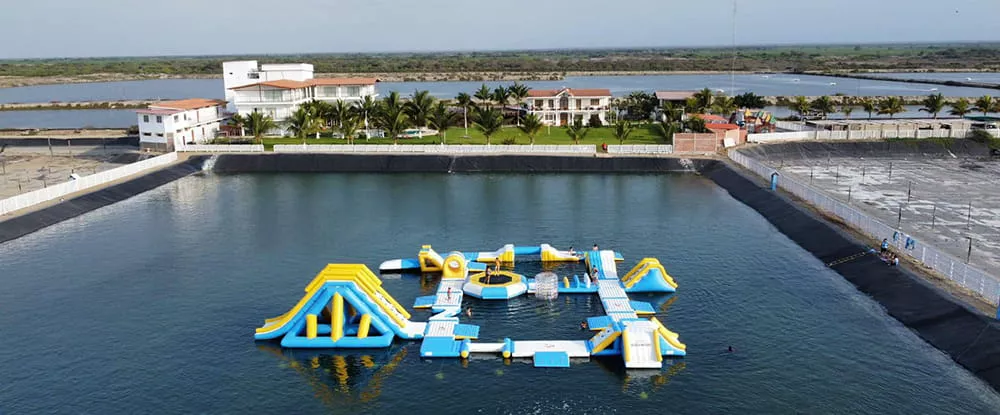
water-obstacle-course-inflatable-with-connected-modules-in-a-compact-layout
A connected water obstacle course inflatable forms a complete route

Choose a Core Course for Your Opening Season

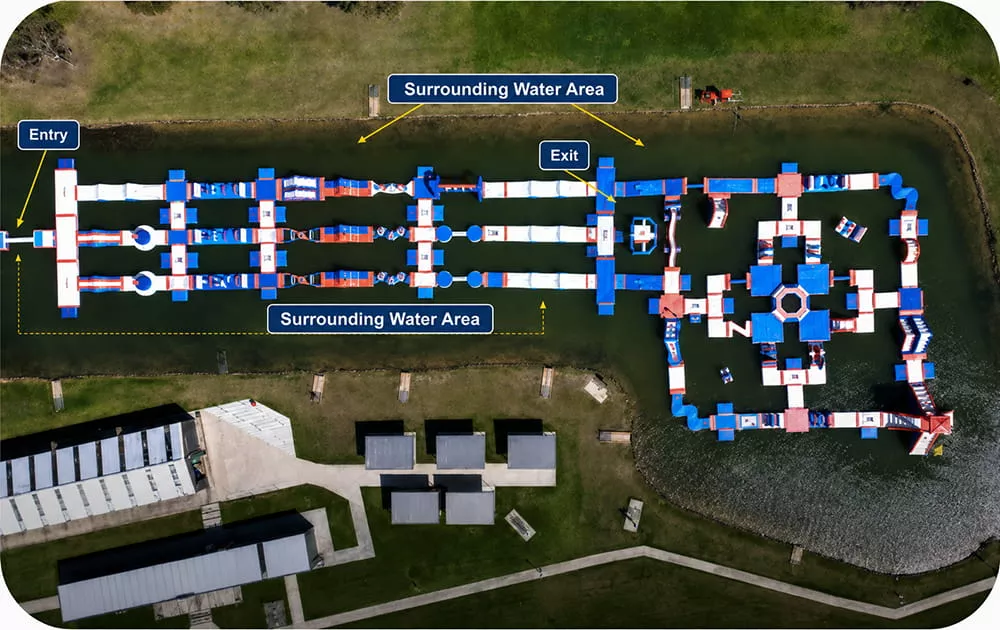
The opening configuration should provide a coherent route, suitable challenges, a clear entry and exit, and enough connected space for the intended operating flow. Ask the supplier to distinguish the modules needed for this functional core from additional attractions that can be added later. Removing too many connecting or transition sections merely to reduce the order may leave an awkward course even if the purchase price is lower.
water-obstacle-course-inflatable-layout-with-marked-entry-and-exit
The water obstacle course inflatable has marked access points
Review expected peak-season use as part of the choice. How many sessions might run on a busy day? Which sections will receive repeated climbing, jumping or foot traffic? The answers help identify heavily used modules and the support they may require. They do not establish a universal module count. For detailed guidance on water area, visitor groups, lane arrangement and capacity, see floating inflatable obstacle course selection. This article stays focused on the seasonal decision.
If future additions are likely, ask for an opening layout that leaves a plausible connection point and operating space. Record which proposed attractions are essential for opening and which depend on proven demand after the first season. Expansion should be planned, but the opening course must work on its own.

Check Annual Installation and Removal Work

Confirm the Seasonal Workload

A seasonal purchase creates a recurring job. Ask the supplier for the module list, packed units, approximate handling requirements, inflation equipment and site-specific installation and removal plan. Ask your team or contractor whether the proposed schedule, access route and available equipment are realistic at both ends of the season. A large course that looks attractive in a drawing may demand more time and handling resources than the project can provide every year.
Evaluate this workload before comparing optional modules. Adding one attraction may also add packed units, connections and handling work. The supplier should explain those changes for the proposed configuration. This is a purchasing check, not a substitute for the product-specific installation instructions and trained crew that the eventual project will require.
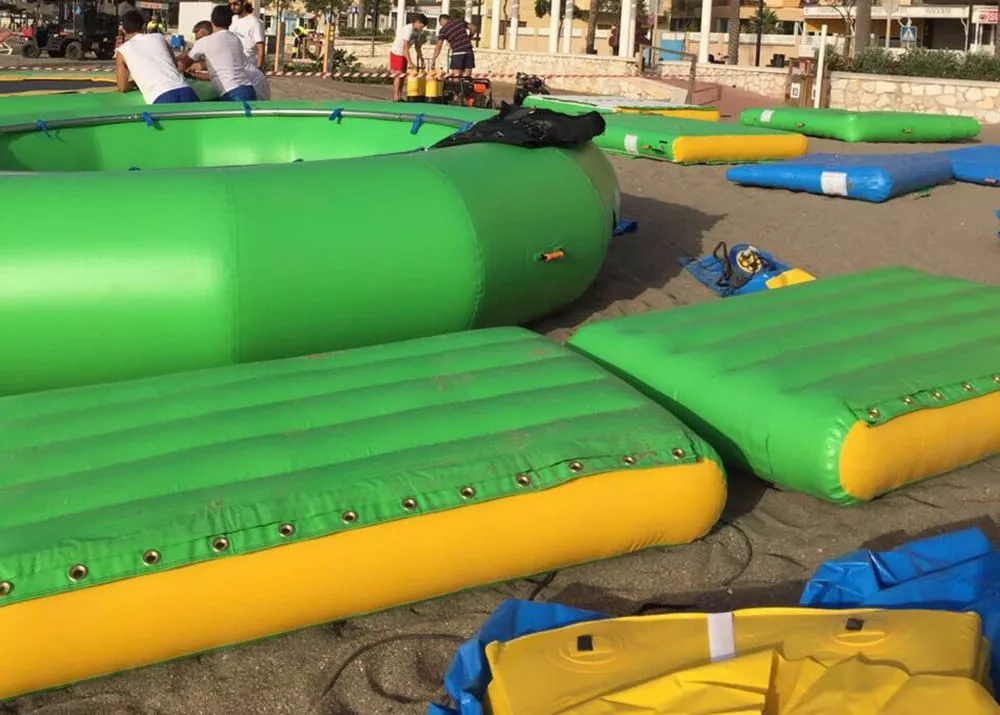
workers-prepare-water-obstacle-course-inflatable-modules-on-the-beach
Workers prepare water obstacle course inflatable modules for installation

Track Connections and Components for Next Year

Ask how individual modules, connection parts and accessories will be identified when the park is removed. A layout plan, component list and clear packing labels can help the next crew match the stored items to the intended configuration. Confirm what documentation the supplier provides and who will maintain the inventory after the first season. Traceable components make the next purchasing and reinstallation discussion more precise.

Plan Off-Season Storage Before Ordering

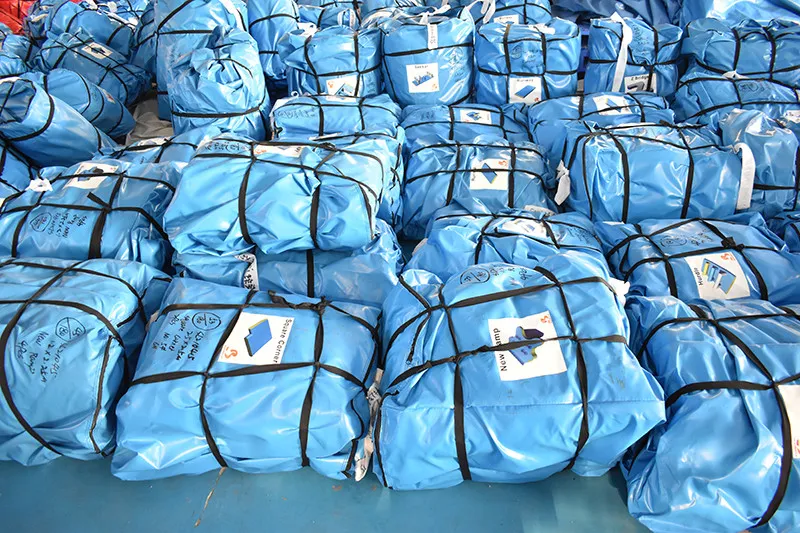
The on-water footprint does not tell you how much room the equipment will occupy once packed. Request the number of packages, their approximate dimensions and weights, and the supplier’s storage guidance for the particular products. Then compare that information with the space and handling access actually available. Include pumps, connection parts and any other supplied equipment in the inventory rather than planning around the inflatable modules alone.
labeled-water-obstacle-course-inflatable-modules
Packed and labeled water obstacle course inflatable modules
Ask whether the proposed storage location can meet the manufacturer’s requirements and whether the equipment can be organized so it is easy to retrieve before the next opening. Keep the product documentation and the final module list with the stored items. The decision point is simple: confirm packed volume before ordering. A detailed cleaning or maintenance procedure should follow the supplier’s instructions, not a general article.

Match Local Conditions and Peak-Season Use

Share Temperature, UV, Wind and Wave Conditions

Provide the supplier with the site location, expected air and water temperatures, sun exposure, prevailing wind and typical wave conditions. Include unusual conditions that could affect the operating period. The supplier can then assess the proposed materials, configuration and site requirements against that information. Do not assume that a general material claim guarantees suitability for every location or operating schedule.
Ask which conditions the proposed course has been designed and tested for, what product information supports the recommendation, and what conditions would require a change in layout or operations. Site-specific anchoring and weather decisions need a separate project assessment. For product selection, share the actual conditions early enough to influence the quotation.
water-obstacle-course-inflatable-in-a-sunny-lakeside-setting
The water obstacle course inflatable sits beside a shore

Confirm Durability, Spare Parts and Repair Support

Seasonal equipment may face intensive use during a short peak period. Ask about the materials and construction of high-contact modules and connections, the supplier’s quality checks, and the parts most relevant to the proposed layout. Request a practical spare-part recommendation, availability information and the process for obtaining repair support during the operating season. These questions are more useful than a vague promise that the course is durable.
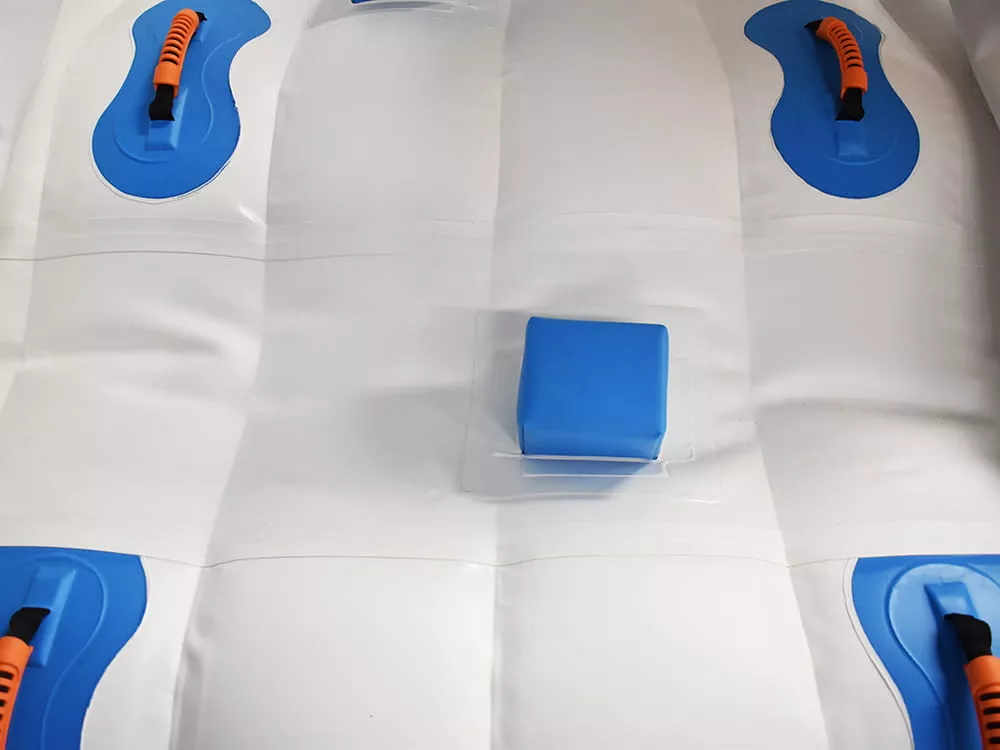
water-obstacle-course-inflatable-surface-with-reinforced-points
Reinforced points on a water obstacle course inflatable
Clarify who will assess damage, what support is available remotely or on site, and how replacement parts are identified. Keep the discussion at procurement level; repair methods depend on the product, damage and manufacturer guidance. A first-season plan should account for support during peak use, when an unavailable component can disrupt the operating layout.

Confirm Next-Season Reinstallation and Expansion

Ask whether the proposed modules can return in the same arrangement next year and what documentation or inspection is needed before reinstallation. If the project may change its layout, ask which modules can be rearranged using the same connection system. If it may grow, confirm compatibility of future modules and whether the original water area, access, anchoring plan and supervision can accommodate the larger arrangement.
Compatibility is a product question; whether expansion works at the site is also an operating question. Record the current configuration and the possible second-stage additions separately, so a future quote can be compared with the original plan. Do not buy extra modules solely because they may be useful someday. Keep the next season feasible while letting first-season demand guide the timing of expansion.

Seasonal Course Purchasing Checklist

Use the following questions when requesting a configuration and quotation. A supplier can give a more relevant proposal when the operating assumptions and seasonal handling constraints are stated together. Operators comparing product options can also review the aqua park for sale page after defining their opening requirements.
Information to provide
Effect on selection
Question for supplier
Reliable operating days
Opening scale and budget
Which core configuration suits this operating window and expected demand?
Peak visitors and sessions
Core route and heavily used modules
Which modules are essential for the complete opening course?
Annual removal schedule and access
Handling workload
How many packed units and what people or equipment will be required?
Available storage space
Packed volume and storage fit
What are the package dimensions, weights and product-specific conditions?
Local climate and water conditions
Material and layout assessment
What product evidence and site review support this recommendation?
Support needs and next-year plans
Spares, reinstallation and expansion
Which parts should be available, and which future modules are compatible?

Conclusion

Choose a seasonal obstacle course from the operating plan outward. Estimate the days you can reliably open, specify a complete first-season course, and check how the equipment will be handled and stored every year. Give the supplier your local conditions and peak-use expectations, then confirm spares, support and the options for reinstallation or expansion. These steps produce a clearer quotation and a course your team can manage across seasons. Share your expected operating days, site conditions and target opening scale with Bouncia to discuss a configuration for your project.

FAQs

Can I start with a smaller water obstacle course and add modules next season?

Yes, if the opening course works as a complete route and the supplier confirms connection compatibility for the proposed additions. Also check that the site, anchoring arrangement, access and supervision can support the expanded layout. Ask for the opening configuration and possible future modules to be shown separately in the proposal.

What storage details should I confirm before buying a seasonal inflatable obstacle course?

Request the package count, dimensions and weights for the proposed configuration, along with the manufacturer’s storage requirements. Include accessories and connection parts in the inventory. Compare the packed volume and handling access with your actual storage location before approving the order.

Does a shorter operating season always mean I should choose fewer modules?

No. Season length is one input. Peak visitor demand, the desired experience, available staff and the first-season budget also affect the right scale. Start with a complete configuration that fits realistic demand, then decide whether extra modules are justified now or can wait until the next season.
error: Content is protected !!