Welcome to Bouncia - Your Expert in Inflatable Water Parks and Diverse Sports Equipment

Bienvenue chez Bouncia - Votre expert en parcs aquatiques gonflables et en équipements sportifs divers.

Bienvenido a Bouncia - Tu Experto en Parques Acuáticos Hinchables y Equipamiento Deportivo Diverso

Inflatable Aquapark Capacity Planning: More Than Maximum Capacity

When comparing an inflatable water park layout, buyers often focus first on a number such as “350 capacity.” It is an important starting point, but it should not be treated as the number of guests a park should always host or can serve every day.
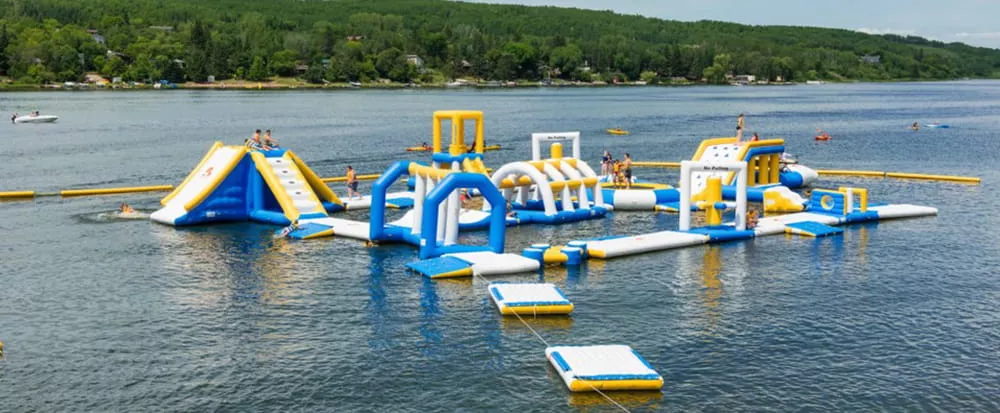
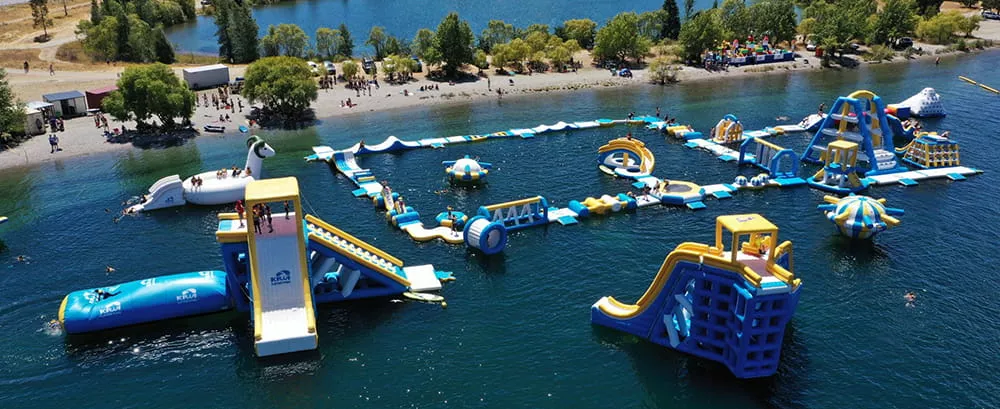
350-person-inflatable-aquapark-layout
An inflatable aquapark designed for up to 350 guests
Effective Inflatable Aquapark Capacity Planning looks beyond the maximum figure. Operators need to consider how many guests can play safely at one time, how long each session lasts, how quickly one group can exit before the next enters, and whether the park remains enjoyable during busy periods. These factors influence staffing, crowd management, visitor satisfaction, and revenue.

Quick Answer

Maximum capacity is not the best daily operating target for an inflatable aquapark. Operators should set a practical simultaneous guest limit based on the layout, water conditions, staff coverage, visitor mix, and peak-hour crowd flow. Revenue should then be planned through timed sessions and daily turnover, rather than simply operating at the highest stated capacity.

Maximum Capacity Is Not the Same as Operating Capacity

What maximum capacity usually represents

Maximum capacity generally refers to the number of users a specific park configuration is designed to support under defined conditions. It is useful when comparing layouts, selecting product size, planning the site, and discussing the project with the manufacturer.
However, this figure is not a daily operating instruction. A park designed for a higher number of users may still need to operate below that number at certain times. For example, a layout with several slides, towers, climbing attractions, and open play areas may distribute guests well when conditions are stable. But the same layout may require a lower operating limit if one attraction becomes crowded, staff coverage is reduced, or weather affects supervision.
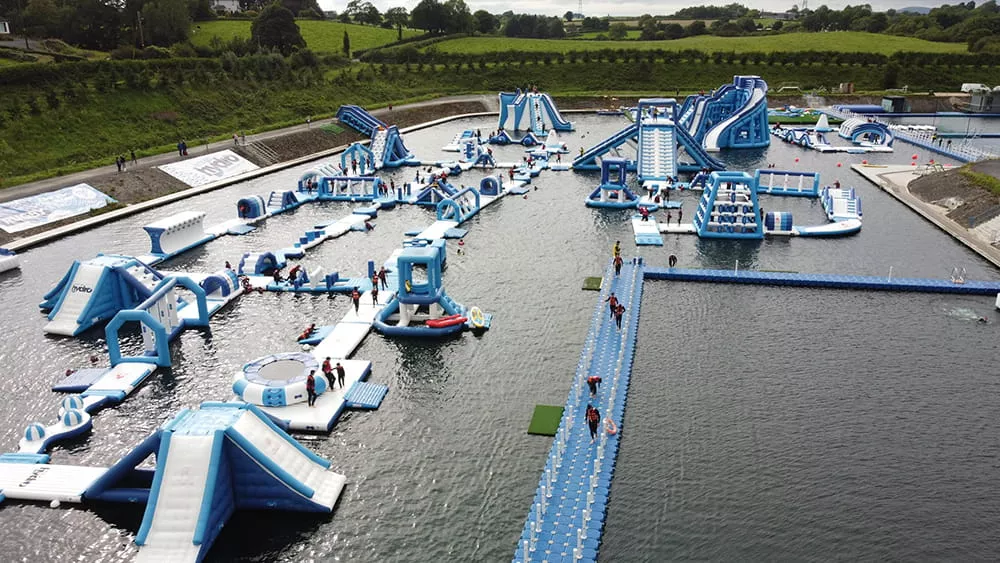
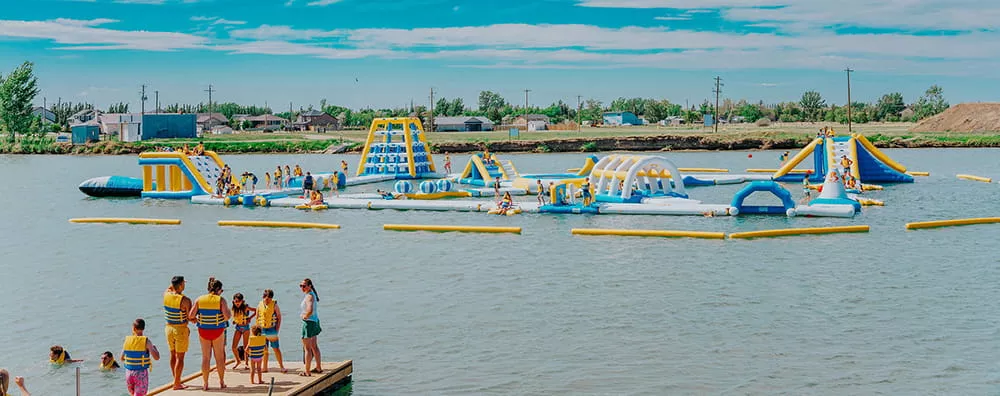
100-person-inflatable-aquapark-layout
Inflatable aquapark supports up to 100 guests
When evaluating an inflatable aquapark, buyers should therefore ask two different questions:
  • What is the maximum capacity of this configuration?
  • What simultaneous guest limit can our team operate safely and efficiently in real conditions?
The first question supports purchasing and layout planning. The second supports daily operations.

Why the practical limit may be lower on busy operating days

Practical operating capacity changes because real parks do not operate in perfect, static conditions. Visitors may arrive in groups, gather around popular slides, need extra support at entry points, or create queues at narrow access areas.
The right operating limit may be affected by:
  • The number and type of attractions in the layout;
  • The available water area and access routes;
  • Lifeguard and operating staff coverage;
  • Visitor age, swimming ability, and group behaviour;
  • Weather, wind, waves, visibility, and water conditions;
  • The number of guests waiting to enter or leave the park.
A maximum capacity number remains valuable, but it should be used as an upper planning reference. The daily operating limit should be managed dynamically by the operator.

The Four Capacity Numbers Operators Should Plan For

To avoid confusion, operators should separate capacity planning into four numbers.

Maximum design capacity

This is the maximum number associated with the selected product configuration. It helps buyers compare different park sizes and understand the scale of the project.

Simultaneous guest capacity

This is the number of guests allowed on the park at one time during actual operations. It may be lower than the maximum design capacity, depending on site conditions, staff coverage, and the current crowd situation.
For daily management, this is often the most important number. It directly affects safety supervision, queue levels, and visitor comfort.

Session capacity

Session capacity is the number of guests that can be admitted during one defined play period. A session may include a set play time plus time for check-in, safety briefing, exit, and changeover.
For example, an operator may decide that a 60-minute customer slot includes:
  • Check-in and safety preparation;
  • A defined play period;
  • A short exit and reset period before the next group arrives.
The exact arrangement should match the site, staffing plan, local requirements, and operating procedures.

Daily visitor capacity

Daily visitor capacity is the total number of paying guests the park can serve in one day. It depends on simultaneous guest capacity, the number of sessions, the actual occupancy of each session, and the efficiency of changeovers.
inflatable-aquapark-with-comfortable-operation
Comfortable guest capacity improves inflatable aquapark experience
This is the figure that links capacity planning to ticket revenue. A park with a lower simultaneous guest limit can still serve a strong number of daily visitors if sessions run smoothly and visitors move through the process efficiently.

What Determines the Right Simultaneous Guest Limit?

Park layout and attraction mix

Different configurations support guest flow in different ways. A layout with multiple activity zones can spread visitors more effectively than one where many guests are drawn to the same high-demand feature.
Slides, towers, launch points, climbing elements, balance attractions, and connecting pathways all influence how visitors move. Before opening, operators should identify where guests may gather and whether each zone can be monitored effectively.

Water conditions, access points, and usable water area

The usable operating area is not always the same as the total water area shown on a site plan. Water depth, shoreline access, entry and exit routes, water level changes, wind exposure, and wave conditions can all affect how the park is operated.
Entry and exit points deserve particular attention. If guests enter slowly, wait for equipment, or leave through the same narrow route, congestion can affect the entire session schedule.

Lifeguard coverage and operating staff

Capacity should match the operator’s actual ability to supervise the park. Staff are needed not only for lifeguarding, but also for check-in, safety briefings, queue control, equipment checks, and assisting guests at entry and exit points.
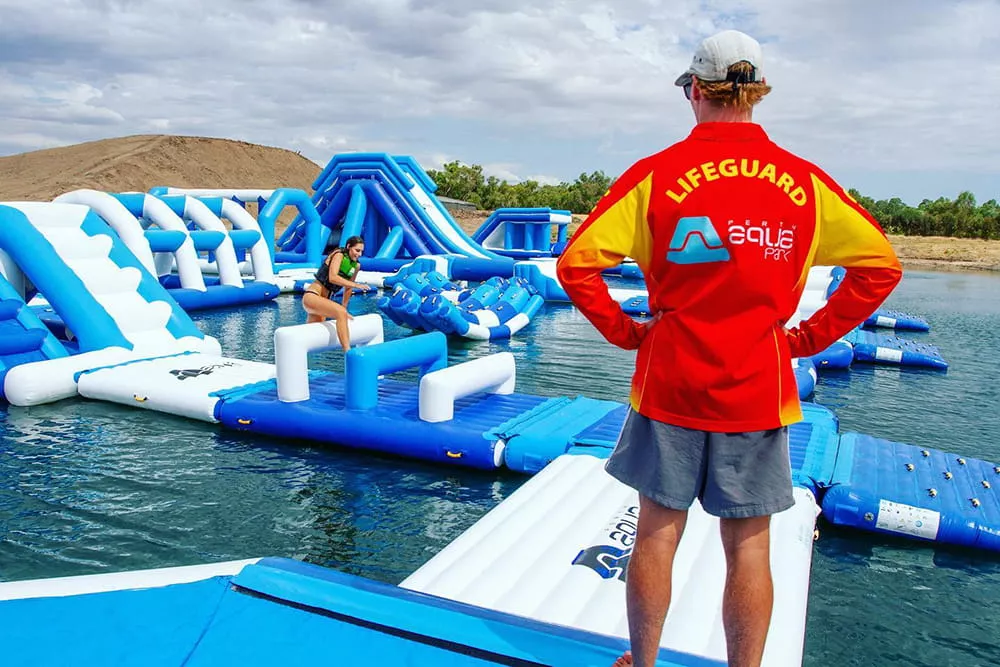
lifeguard-supervising-an-inflatable-aquapark
Lifeguard supervision supports safe inflatable aquapark
A higher guest count is not useful if it makes supervision weaker or causes staff to focus on one crowded area while another area receives less attention. Operators should set their simultaneous guest limit according to their approved staffing plan, manufacturer guidance, and applicable local safety requirements.

Guest age, swimming ability, and group mix

A group of experienced adult guests may move through an attraction differently from a large group of younger children, family visitors, school groups, or first-time users. Operators should consider the likely visitor mix when setting daily limits and session rules.
During certain sessions, a lower guest limit may provide a better experience and easier supervision. This does not mean the project is underperforming. It means capacity is being managed according to the actual operating situation.

Weather and peak-period conditions

Weather can change operating conditions quickly. Wind, rain, waves, heat, visibility, and water conditions may affect guest behaviour and staff workload. Peak periods can also create pressure at the ticket desk, equipment area, and popular attractions.
The operating limit should be adjusted when conditions require it. A flexible approach is more useful than treating one capacity number as fixed for every hour of the season.

Use Session Planning to Improve Turnover Without Overcrowding

Why timed sessions are useful

Timed sessions give operators a clear structure for controlling guest flow. Instead of allowing unlimited arrivals throughout the day, each group enters within a defined period and leaves before the next group begins.
This makes it easier to plan:
  • Staff positions;
  • Safety briefings;
safety-briefing-before-inflatable-aquapark-entry
Safety briefings for inflatable aquapark entry.
  • Equipment distribution;
  • Entry control;
  • Attraction supervision;
  • Cleaning and equipment checks;
  • Guest exit and next-session preparation.
For an inflatable aquapark, good turnover does not mean rushing visitors. It means creating a predictable operating rhythm so the park is neither empty for long periods nor overcrowded.

How entry and exit timing affects turnover

The first few minutes of a session can determine whether the entire schedule remains on track. If guests arrive late, receive instructions slowly, or enter all at once without control, congestion can develop before they reach the park.
Operators can improve turnover by separating the customer journey into clear stages:
1. Ticket validation or booking confirmation;
2. Equipment collection and safety briefing;
3. Controlled entry to the water and park;
4. Play period;
5. Announced exit time;
6. Equipment return and preparation for the next group.
A clearly communicated schedule also helps guests understand how much play time they receive and when they need to leave.

Allowing buffer time for safety checks and guest changeover

A session plan should include a short buffer between groups. This time can be used for equipment return, visual checks, staff repositioning, and preparing the next guests.
Without a buffer, a delayed exit can overlap with the next entry group. This creates unnecessary pressure at access points and reduces the quality of the visitor experience. A small amount of planned transition time can protect the whole day’s schedule.

Using reservations and walk-in allocation during peak hours

During busy periods, reservations can help operators predict demand and prepare the correct staffing level. Walk-in tickets can still be useful, but they should be allocated according to available session spaces rather than admitted without a capacity plan.
Operators can monitor which sessions fill fastest, then adjust booking availability, staffing, and promotional timing. This creates a more reliable basis for capacity and revenue planning.

How to Prevent Congestion During Peak Season

Control entry at the check-in point

Crowd management should begin before guests enter the water. Confirming session times, communicating rules, and controlling the number of guests released toward the park can prevent congestion from starting.
Guests should understand where to wait, when their session begins, and what they need to do before entry.

Spread guests across different attraction zones

Popular slides and towers can attract a large share of visitors. Staff can encourage guests to use other zones when one area becomes crowded, particularly at the beginning of a session when many guests head toward the same attraction.
The goal is not to force visitors into a rigid route. It is to avoid a situation where one bottleneck affects the flow and supervision of the whole park.

Monitor bottlenecks such as slides, towers, launch points, and exits

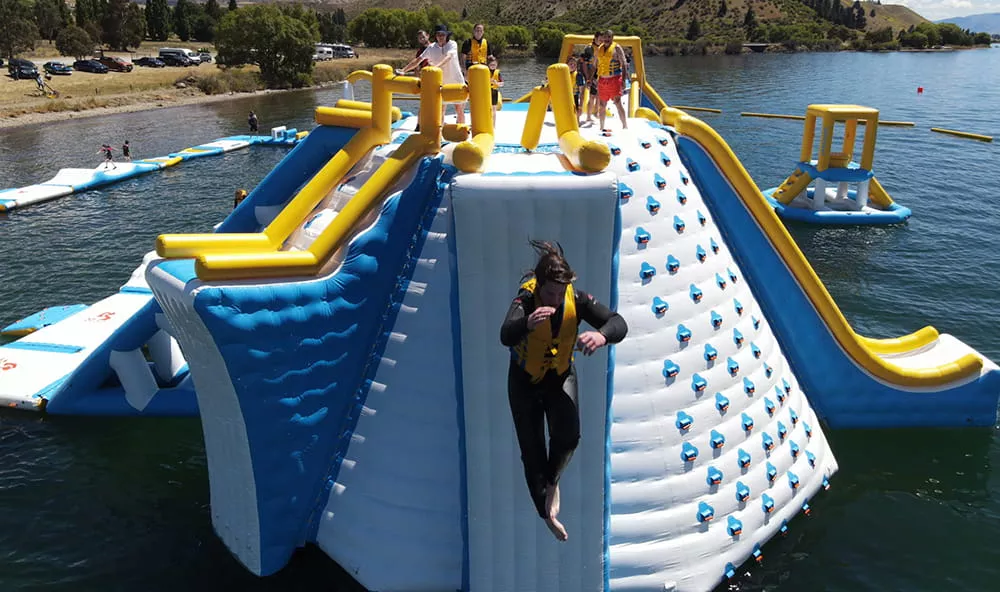
staff-monitoring-inflatable-aquapark-giant-equipment
Staff monitor important inflatable aquapark equipment
Operators should identify likely bottlenecks before launch and review them throughout the season. Common pressure points include:
  • Slide platforms and landing areas;
  • Towers and climbing entrances;
  • Narrow connections between modules;
  • Water entry points;
  • Equipment collection areas;
  • Exit routes at the end of a session.
Staff observations and daily operating data can show whether a particular zone repeatedly becomes crowded. The operator can then adjust staff positioning, session limits, guest instructions, or the layout for future upgrades.

Adjust the operating limit when conditions change

The best operating limit on a calm weekday may not be right for a windy weekend or a busy holiday period. Managers should be prepared to reduce admissions when supervision, access, or guest flow requires it.
This protects both the guest experience and the long-term reputation of the operation.

Balance Capacity, Guest Experience, and Revenue

Why running at the absolute maximum can reduce guest satisfaction

A park that is consistently too crowded may create long waits at popular attractions, less space to move, and a more difficult environment for staff to supervise. Even if the maximum capacity is technically reached, the visitor experience may be weaker.
This can affect reviews, repeat visits, group bookings, and the perceived value of the ticket.

How a better guest experience can support repeat visits and reviews

Visitors are more likely to return when they feel they had enough time and space to enjoy the attractions. Clear session organisation, manageable queues, and visible staff support can make the experience feel more professional.
For operators, this means capacity should not be measured only by how many people are admitted. It should also be measured by whether guests received the experience they expected.

Compare revenue by session occupancy and daily turnover, not maximum capacity alone

A practical revenue review should look at:
  • Simultaneous guest limit;
  • Number of available sessions per day;
  • Average occupancy per session;
  • Actual daily visitor numbers;
  • Ticket price;
  • Add-on revenue where applicable;
  • Cancellations, weather interruptions, and no-shows.
For illustration, a park does not need to operate at its stated maximum in every session to perform well. A controlled operating limit with consistently full or near-full sessions may produce more stable revenue than overcrowded sessions that cause delays and poor customer feedback.

When expansion may be a better option than increasing entry volume

If demand is consistently higher than the practical operating limit, simply admitting more guests may not be the best answer. Expansion can be considered when the existing layout repeatedly creates bottlenecks or when visitor demand exceeds the park’s ability to provide a good experience.
well-balanced-inflatable-aquapark-layout
A balanced inflatable aquapark layout
A larger or better-balanced commercial inflatable water park configuration may create more activity zones, improve guest distribution, and support future growth. The decision should be based on operating data rather than maximum capacity alone.

Capacity Planning Checklist Before Purchase and Before Launch

Questions to confirm with the manufacturer

Before purchasing, buyers should ask inflatable water park manufacturers for clear information about:
  • The maximum capacity of the proposed configuration;
  • The intended user profile and attraction mix;
  • Layout dimensions and space requirements;
  • Recommended site and water-condition considerations;
  • Entry, exit, anchoring, and operating requirements;
  • Product documentation and applicable safety guidance.
This helps ensure the chosen layout matches the project’s business plan, not just its desired capacity number.

Information to assess at the site

Before launch, operators should assess:
  • Usable water area and water depth;
usable-water-area-for-inflatable-aquapark-planning
Usable water area determines inflatable aquapark capacity
  • Shore access and customer entry routes;
  • Wind, waves, weather patterns, and water-level changes;
  • Available staff positions and supervision points;
  • Space for check-in, safety briefings, equipment, and queues;
  • Local operating, safety, and insurance requirements.

Operating data to review after launch

After opening, review actual performance regularly. Useful indicators include:
  • Guests admitted per session;
  • Session occupancy rate;
  • Daily visitor count;
  • Waiting time at key attractions;
  • Late entry or delayed exit frequency;
  • Staff observations;
  • Guest feedback and complaints;
  • Weather-related operating adjustments.
This information allows operators to refine their practical capacity limit and session structure over time.

Conclusion

Maximum capacity is an important reference for an inflatable water park project, but it is not the same as the best daily operating target. Strong Inflatable Aquapark Capacity Planning focuses on a safe simultaneous guest limit, organised sessions, reliable turnover, and active crowd management.
By balancing capacity with staffing, site conditions, guest flow, and visitor experience, operators can make better decisions about daily admissions, peak-season management, and long-term revenue growth.

FAQ

What does maximum capacity mean for an inflatable aquapark?

Maximum capacity is the upper number associated with a specific park configuration under defined conditions. It is useful for product and project planning, but operators should set their actual simultaneous guest limit based on the site, staffing, water conditions, visitor mix, and operating procedures.

How can operators improve inflatable aquapark turnover?

Operators can improve turnover by using timed sessions, controlling entry, providing clear safety briefings, allowing buffer time between groups, and managing exit routes efficiently. The aim is to create an orderly guest flow rather than increase admissions without control.

Does a larger inflatable aquapark always generate more revenue?

Not always. A larger park may support more activity zones and more guests, but revenue also depends on session occupancy, daily turnover, ticket price, operating costs, visitor experience, and repeat visits. A well-managed layout can perform better than a larger park that regularly becomes overcrowded.

GET IN TOUCH WITH US

If you want to learn more about us or our products, welcome to leave a message below.

error: Content is protected !!