Welcome to Bouncia - Your Expert in Inflatable Water Parks and Diverse Sports Equipment

Bienvenue chez Bouncia - Votre expert en parcs aquatiques gonflables et en équipements sportifs divers.

Bienvenido a Bouncia - Tu Experto en Parques Acuáticos Hinchables y Equipamiento Deportivo Diverso

Why Crowding Perception Matters More Than Size in Inflatable Water Parks

Why Do Some Water Parks Feel Crowded Even When They’re Not?

When planning a commercial inflatable water park, many investors judge experience quality by size or maximum capacity. However, in real operations, a common issue appears: even with few visitors, the park still feels crowded. This gap does not come from actual numbers, but from inflatable water park crowding perception. Understanding this is more important than simply expanding size, and it directly affects long-term profit and customer satisfaction.
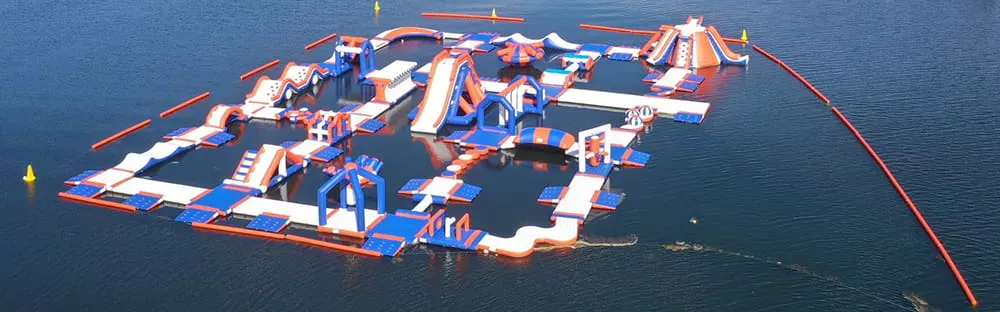
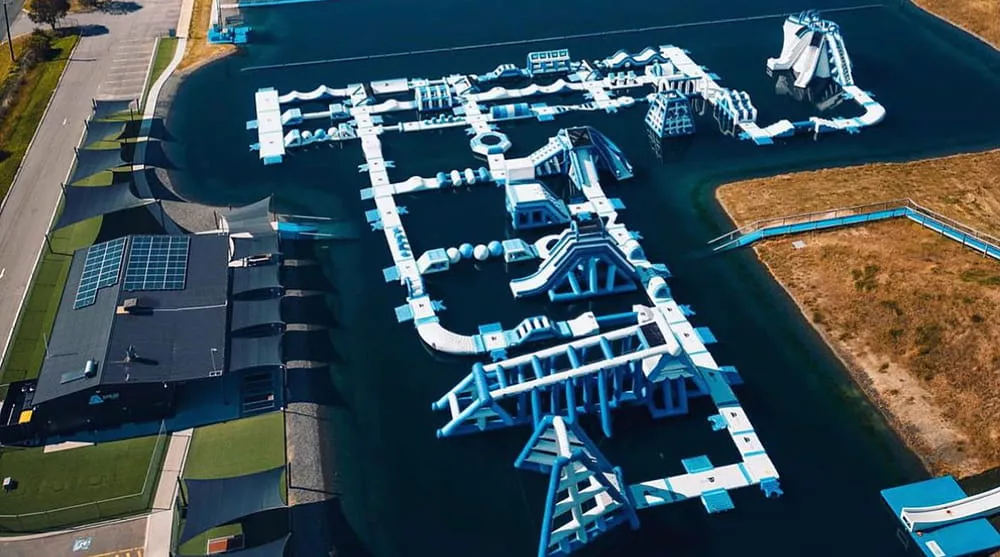
inflatable-water-park-open-layout-low-crowding-perception
Open layout design reduces crowding perception in an inflatable water park

Quick Answer

Even when visitor numbers are low, a park can still feel crowded due to perceived crowding. This is not determined by actual numbers, but by visual density, attraction distribution, and user flow. When space is not used properly, users feel restricted, which creates a sense of crowding.

What Is “Perceived Crowding”

Perceived crowding is not about real visitor numbers, but about how users feel in a space.
  • Actual number: objective data
  • Perceived crowding: psychological feeling
inflatable-water-park-crowding-perception-with-clear-user-space
A scene showing good inflatable water park crowding perception
Even with fewer visitors, users may feel:
  • Limited movement
  • Pressure in space
  • Confusing pathways
Key Conclusion: Crowding is a psychological experience, not a physical result.

Why “Perceived Crowding” Happens

1. High Visual Density

When modules are placed too closely, colors are too complex, or there is no visual space, the park looks smaller.
Common issues:
  • Small spacing between modules
  • No buffer zones
  • Blocked sightlines
User feeling: space is “compressed”

2. Concentrated Hotspots

When high-attraction elements like slides or jumping platforms are grouped together, users gather in one area.
inflatable-water-park-with-evenly-spread-attractions
Inflatable water park with spread attractions
Common issues:
  • Local overcrowding
  • Empty areas elsewhere
  • Uneven distribution
User feeling: the whole park feels crowded

3. Poor Flow

Waiting, stopping, or unclear pathways reduce overall movement.
Common issues:
  • Long waiting time
  • Players staying in one place
  • Unclear routes
User feeling: being “stuck”

4. User Behavior Amplifies Crowding

User behavior also affects space experience:
  • Long stay time
  • Photo gathering creates “crowd anchors”
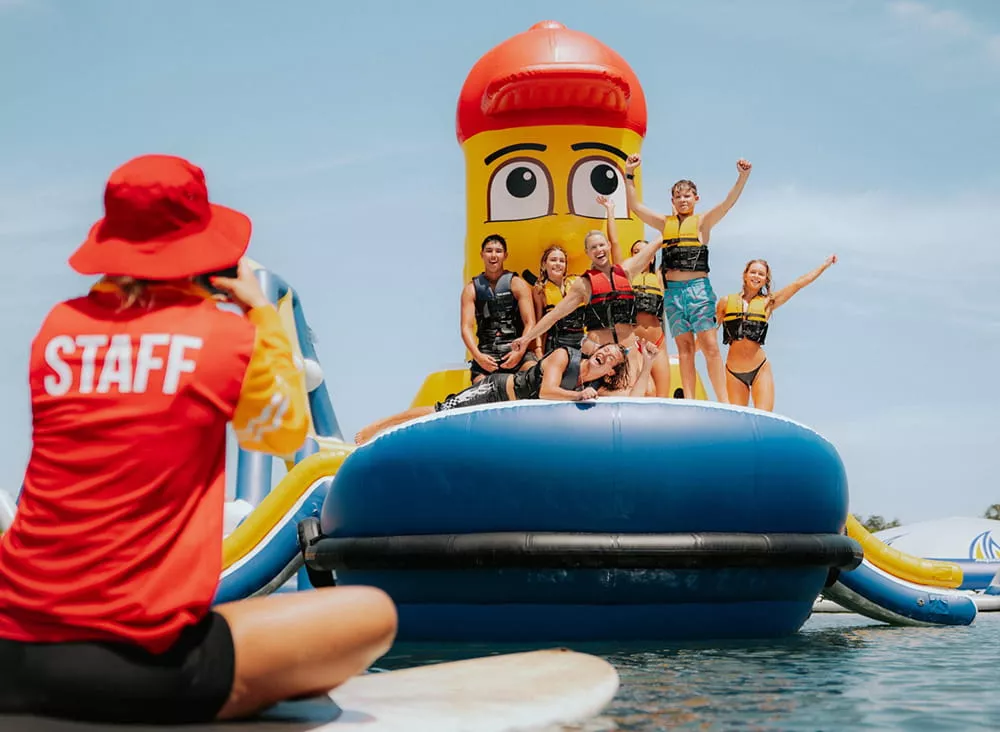
inflatable-water-park-visitors-gathering-for-photos
Visitors gather for photos on an inflatable water park attraction
  • Beginners not familiar with gameplay
Key Conclusion:
The same park can feel very different depending on user behavior.
When visual density is high, hotspots are concentrated, and flow is poor, users will feel crowded even with low visitor numbers. The core issue is not the number of people, but how the space is used and experienced.

Why Smaller Parks Sometimes Feel Better

This is a common but overlooked fact.
Smaller parks usually have:
  • Clear pathways
  • Simpler decisions
  • Easier movement
  • Better rhythm of space
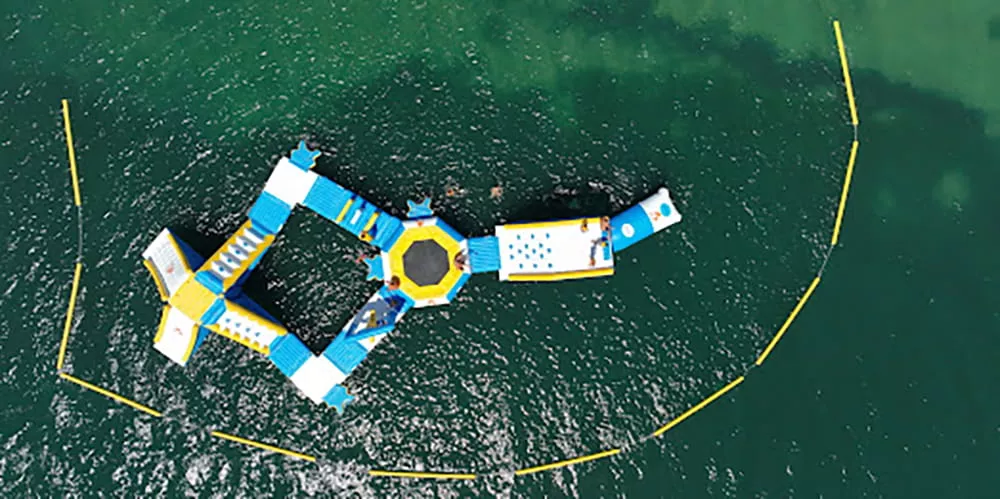
inflatable-water-park-small-layout-with-clear-and-open-pathways
A small inflatable water park with clear pathways and smooth flow
For example, a 30-person park can feel smooth, while a 50-capacity park may feel crowded due to poor layout.
Summary:
Flow matters more than size.

How to Reduce “Perceived Crowding”

Reducing crowding does not always require more space or fewer visitors. It is about improving experience.

Optimize Visual Rhythm

Control spacing between modules and keep visual gaps to reduce pressure.

Spread Attractions

Avoid placing all popular elements in one area. Guide users to different zones.

Improve Flow

Reduce stopping points and allow users to keep moving.

Reduce Waiting Anxiety

Make queues clear and predictable instead of confusing.
Core Logic:
The problem is not space, but flow.

Actual Crowding vs Perceived Crowding

Dimension
Actual Crowding
Perceived Crowding
Visitor Number
High
Not necessary
Space
Limited
May be enough
Key Factor
Number of people
Visual + flow
Solution
Expand area
Optimize experience

Common Mistakes: Why More Equipment Feels More Crowded

In many projects, investors make these mistakes:
  • Adding too many modules
  • Focusing only on maximum capacity
  • Copying other layouts
  • Ignoring user behavior
Results:
  • Space becomes full
  • Flow decreases
  • User experience worsens
Correct Understanding:
More equipment does not mean better experience.

FAQ

Q1: Is a larger water park always better?
Not necessarily. Experience depends more on layout and flow.
Q2: How to judge if a park will feel crowded?
Check hotspot distribution, queue conditions, and user stay time.
Q3: Will adding more equipment improve experience?
Not always. Too many modules can reduce space and flow.
The success of an inflatable water park is not determined by size or capacity, but by how users experience the space.
Poor layout can make a park feel crowded even with fewer visitors, directly affecting satisfaction and long-term revenue.
When planning an inflatable water park project, getting the layout right from the beginning is critical.
Many investors overlook this when evaluating an inflatable water park for sale, which often results in avoidable operational issues.
Bouncia can help you design a more efficient and attractive water park based on real project experience, improving both user experience and business performance.

GET IN TOUCH WITH US

If you want to learn more about us or our products, welcome to leave a message below.

error: Content is protected !!