Welcome to Bouncia - Your Expert in Inflatable Water Parks and Diverse Sports Equipment

Bienvenue chez Bouncia - Votre expert en parcs aquatiques gonflables et en équipements sportifs divers.

Bienvenido a Bouncia - Tu Experto en Parques Acuáticos Hinchables y Equipamiento Deportivo Diverso

How to Set Ticket Prices for an Inflatable Water Park Business

Setting the right ticket price is one of the most important decisions when developing an inflatable water park business. A ticket price that is too low may make it difficult to recover investment and operating costs, while a price that is too high may reduce visitor demand.
For operators, ticket pricing is not simply about choosing a number. It requires understanding project investment, operating expenses, visitor expectations, market conditions, and revenue goals.
a-lakeside-inflatable-water-park-business
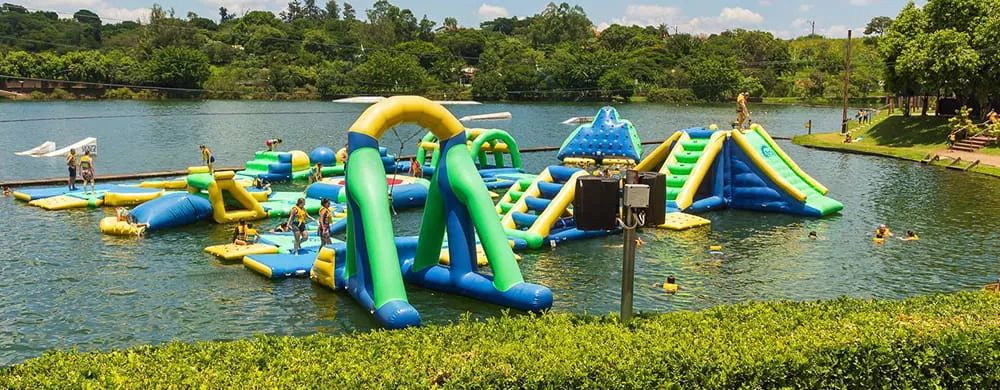
A lakeside inflatable water park business in Brazil
A well-planned Inflatable Water Park Business Pricing Strategy helps operators balance customer affordability with long-term profitability. This article explains the key factors that influence ticket prices and how operators can build a practical pricing model for their projects.

Quick Answer: How Should You Set Ticket Prices for an Inflatable Water Park?

The best way to set ticket prices for an inflatable water park business is to calculate the revenue required to cover investment and operating costs, then divide it by the expected number of visitors. Operators should adjust the final price based on location, attraction size, customer demand, and seasonal factors.

Why Ticket Pricing Matters for an Inflatable Water Park Business

Ticket sales are usually the main source of revenue for an inflatable water park. The admission price directly affects how quickly operators can recover their initial investment and maintain daily operations.
A professional pricing strategy helps operators:
  • Cover equipment investment and installation costs;
  • Pay ongoing expenses such as staff, maintenance, insurance, and marketing;
  • Reach revenue targets during the operating season;
  • Create pricing options suitable for different visitor groups.
different-age-groups-enjoying-an-inflatable-water-park
An inflatable water park attracts visitors from different age groups
For example, a large commercial inflatable water park with higher capacity and more attractions may require a different ticket strategy compared with a smaller family-oriented park. The pricing model should match the project scale, target visitors, and local market conditions.
A successful inflatable water park business does not always depend on charging the highest ticket price. Instead, profitable operators focus on finding the right balance between visitor volume and average revenue per guest.

Factors That Influence Inflatable Water Park Ticket Prices

Ticket pricing should be based on multiple business factors rather than competitor prices alone. The following elements usually have the greatest impact.

Location and Target Market

The project location strongly affects what visitors are willing to pay.
A water park located in a popular tourist destination, resort area, or premium recreation zone may support higher ticket prices because visitors are already spending money on leisure activities.
Different locations may require different strategies:
  • Tourist destinations: Higher prices may be accepted because visitors are looking for experiences and entertainment.
  • Local recreation parks: Competitive pricing may be more important to attract repeat visitors.
  • Resorts and hotels: Pricing may be combined with accommodation or package offers.
Understanding the target customer is essential before setting admission prices.

Attraction Size and Visitor Capacity

The size and design of the inflatable water park also influence ticket value.
A larger park with more attractions, longer play duration, and higher visitor capacity can usually support a higher admission price.
Operators should consider:
  • Number of attractions;
  • Available play time;
  • Maximum daily capacity;
  • Overall visitor experience.
different-sized-inflatable-water-park-businesses
Inflatable water park businesses vary in size
For example, a small inflatable park designed for families may use a lower entry price with high visitor volume, while a large commercial floating water park may focus on higher-value experiences.

Operating Costs and Investment Recovery

Ticket prices should support the financial requirements of the project.
Important cost factors include:
  • Inflatable water park price;
  • Installation and preparation costs;
  • Staff wages;
  • Safety equipment;
  • Insurance;
  • Maintenance and repairs;
  • Marketing expenses.
A common mistake is setting ticket prices only by looking at competitors. A profitable inflatable water park business should first understand its own cost structure and revenue expectations.

How to Calculate the Right Ticket Price

A practical way to estimate ticket pricing is to calculate the required average revenue per visitor.
A simple formula is:
Required Average Ticket Value = Required Annual Revenue ÷ Expected Annual Visitors
For example:
  • Annual operating target: $200,000
  • Expected visitors per year: 20,000 people
The required average revenue per visitor would be:
$200,000 ÷ 20,000 = $10 per visitor
This calculation provides a starting point for pricing decisions.
Operators should also consider additional revenue sources, such as:
  • Food and beverage;
  • Merchandise;
  • Equipment rentals;
  • Group packages;
  • Additional visitor services.
Because ticket sales are only part of the business model, the final admission price should match the complete revenue strategy.

Common Ticket Pricing Strategies for Inflatable Water Parks

Different projects may require different pricing models. Many successful operators combine several approaches instead of relying on one ticket type.

Single-Day Admission Pricing

single-day-admission-ticket-for-an-inflatable-water-park
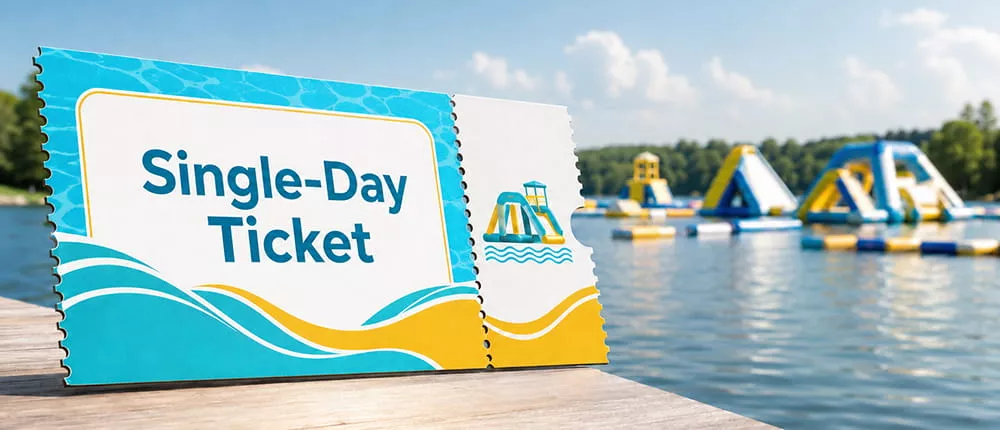
A single-day ticket offers inflatable water park access
The most common model is charging visitors a fixed admission fee for a specific play period.
This approach works well for:
  • New projects;
  • Seasonal parks;
  • Family recreation destinations.
The ticket should clearly communicate the value visitors receive, including:
  • Access duration;
  • Included attractions;
  • Safety supervision;
  • Available facilities.

Family and Group Packages

Group pricing can increase visitor numbers while improving average revenue.
Common examples include:
  • Family packages;
  • School group discounts;
  • Corporate event packages;
  • Large group reservations.
These options are especially useful because inflatable water parks often attract families, youth groups, and organized activities.
Instead of lowering individual ticket prices, operators can create packages that encourage larger bookings.

Seasonal and Dynamic Pricing

Seasonal pricing allows operators to adjust prices based on demand.
Examples include:
  • Higher prices during peak summer weekends;
  • Lower prices during weekdays;
  • Special offers during opening periods;
  • Early-season promotions.
For seasonal attractions, flexible pricing can help maximize revenue during busy periods while maintaining visitor flow during slower times.

How Operators Increase Revenue Beyond Ticket Sales

Increasing ticket prices is not the only way to improve profitability.
Many operators increase average revenue per visitor through additional services.
Examples include:

Food and Beverage Sales

Visitors often spend several hours at an inflatable water park, creating opportunities for:
  • Drinks;
  • Snacks;
  • Meals.

Additional Products and Services

Operators can offer optional purchases such as:
  • Non-slip socks;
non-slip-socks-for-inflatable-water-park-visitors
Non-slip socks for inflatable water park business
  • Locker rentals;
  • Photos;
  • Merchandise.
These additional services can increase revenue without making the main ticket price less attractive.

Longer Visitor Engagement

A well-designed attraction layout can encourage visitors to stay longer.
Longer visits may increase spending opportunities and improve customer satisfaction.

Practical Tips for Optimizing Ticket Prices After Launch

Ticket pricing should not remain unchanged forever. Operators should review performance data and adjust when necessary.
Useful indicators include:

Monitor Visitor Numbers

Track:
  • Daily attendance;
  • Peak hours;
peak-hour-visitors-at-an-inflatable-water-park
Peak-hour attendance affects inflatable water park pricing decisions
  • Seasonal changes;
  • Repeat visitor rates.
If visitor numbers are lower than expected, pricing or packages may need adjustment.

Collect Customer Feedback

Visitor feedback can reveal whether customers believe the experience provides good value.
Important questions include:
  • Was the ticket price reasonable?
  • Was the play time sufficient?
  • Would they visit again?

Test Different Pricing Options

Operators can compare different approaches, such as:
  • Weekday discounts;
  • Family packages;
  • Seasonal promotions;
  • Membership options.
Small pricing adjustments can improve both attendance and revenue performance.

Conclusion

Setting ticket prices for an inflatable water park business requires more than copying competitor prices. Operators need to consider investment costs, operating expenses, visitor expectations, and revenue targets.
A strong Inflatable Water Park Business Pricing Strategy helps create a balance between attracting visitors and achieving long-term profitability.
By using cost calculations, flexible pricing models, and additional revenue opportunities, operators can build a sustainable business model and make better decisions throughout the operating season.
For investors planning a new inflatable water park project, evaluating attraction size, capacity, and expected revenue before purchase can help create a more realistic business plan.

FAQ Section

How much should I charge for tickets at an inflatable water park?

The right ticket price depends on factors such as location, attraction size, operating costs, target customers, and expected visitor numbers. Operators should calculate required revenue per visitor and compare it with local market conditions before setting prices.

What should operators consider before setting inflatable water park ticket prices?

Before setting ticket prices, operators should consider their investment level, operating costs, expected visitor numbers, local market demand, and target customer groups.

How do I calculate the break-even ticket price for an inflatable water park?

A simple approach is to divide the required annual revenue by the expected number of visitors.
For example:
Annual revenue requirement ÷ Annual visitors = Minimum average revenue needed per visitor.
This does not represent the final ticket price, because operators should also consider additional revenue sources and profit goals.

GET IN TOUCH WITH US

If you want to learn more about us or our products, welcome to leave a message below.

error: Content is protected !!