Welcome to Bouncia - Your Expert in Inflatable Water Parks and Diverse Sports Equipment

Bienvenue chez Bouncia - Votre expert en parcs aquatiques gonflables et en équipements sportifs divers.

Bienvenido a Bouncia - Tu Experto en Parques Acuáticos Hinchables y Equipamiento Deportivo Diverso

Inflatable Water Park for Lake: Are Your Shore Facilities Ready?

Your lake may have enough room for the park layout, but can a delivery truck reach the unloading point? Where will the next group wait while the current group returns its life jackets? For resort, campground and attraction operators, these questions belong in the site review before ordering. Walk the route from the delivery point to the water, then follow the route a guest would take. The same visit can reveal where your existing facilities will work, where space is tight and which measurements your supplier needs.
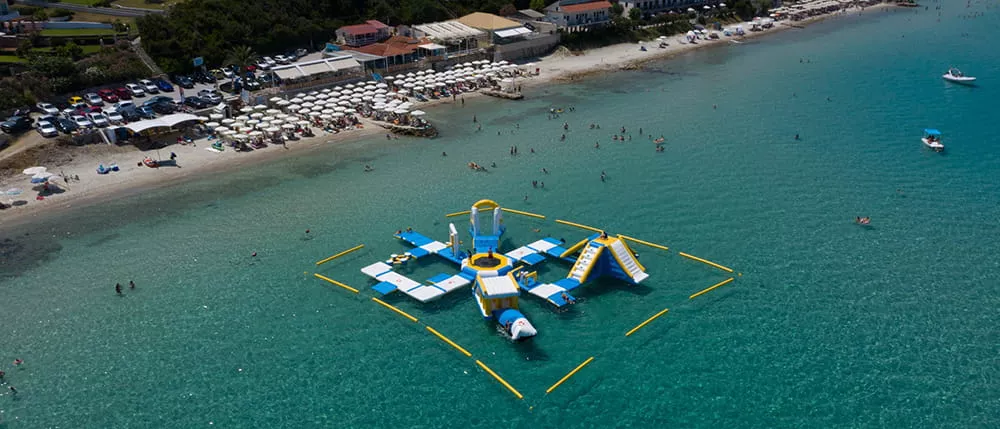
aerial-view-of-an-inflatable-water-park-and-adjacent-beach
The inflatable water park sits offshore from beach facilities

Quick Answer

A lakeside site needs a workable route for unloading and moving equipment to the water, a temporary assembly area, space for guest check-in and life jacket fitting, usable entry and exit points, and a route for seasonal removal. Mark these areas on a site plan and check them against equipment dimensions, expected session sizes and seasonal water levels.
Review the lake water depth and anchoring requirements alongside the shore plan before finalizing the layout.

Can Equipment Get From the Truck to the Water?

Truck Access and Unloading

Start at the vehicle entrance. Trace the route the delivery truck would take to the unloading point, including tight turns, gates and overhead obstructions. Measure the clear width and height at each restriction. Ask the carrier what vehicle it expects to use and compare its access needs with the route you measured. Record any delivery hours or vehicle restrictions that apply to the site.
Mark the truck stopping and unloading area on your plan. If the truck can enter but cannot turn near the shore, identify a workable stopping point farther inland. Check whether there is enough space to unload there while keeping the site’s usual vehicle and pedestrian routes available. A longer route from the unloading point changes how you move the equipment, so confirm the transfer method before delivery.
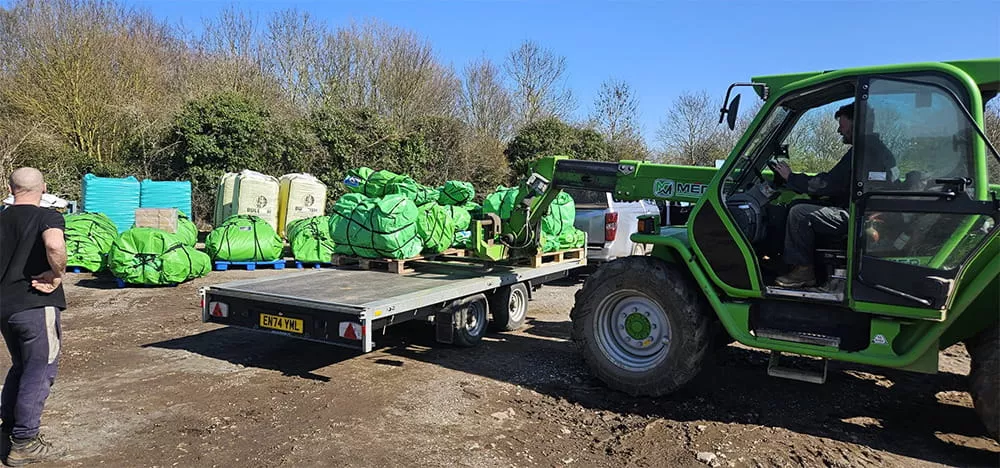
forklift-unloading-inflatable-water-park-modules-from-a-flatbed-trailer
A forklift transfers inflatable water park modules to shore

Temporary Staging and Assembly

Identify a level area where the crew can place packages and prepare modules before taking them to the water. Mark the usable area after allowing for fixed objects and paths that need to stay open. If the area also serves as a guest lawn or a service yard, confirm when the installation crew can use it and for how long.
Walk from this area to the planned launch point. Record the narrowest point on the route, any steps or slopes, and turns where a long package may be difficult to handle. Compare those measurements with the supplier’s packed dimensions and the space required by the proposed handling method. For example, a gate may be wide enough for the package itself but leave too little room for the crew or handling equipment to make the turn immediately beyond it.

Where Will Guests Gather and Get Ready?

Check-In, Waiting and Briefing

On the site plan, show where guests arrive, check in, wait and listen to instructions before heading to the water. Then walk the route in the order a first-time visitor would use it. If people waiting for the briefing would stand across the path from check-in, move the waiting area or change where the briefing takes place.
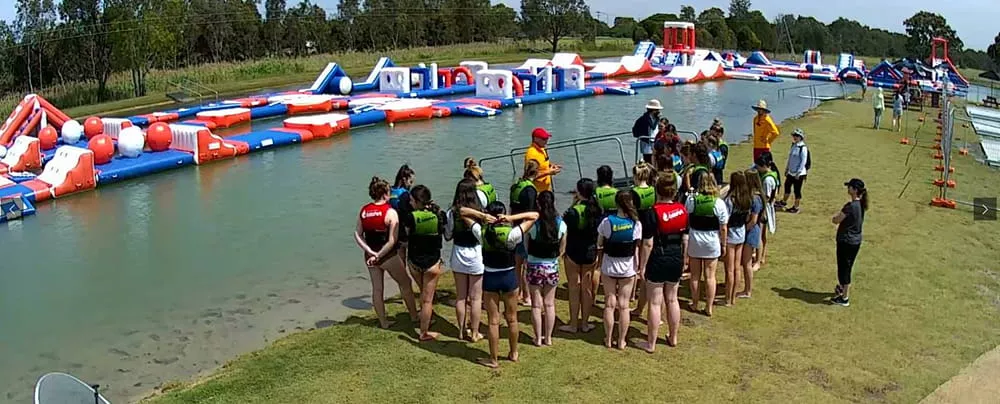
safety-staff-briefing-guests-beside-the-inflatable-water-park
Guests gather for an inflatable water park safety briefing
Use operating capacity planning to estimate how many guests will arrive per session. For shore space, estimate how many guests are ashore at once during the changeover. For example, if the next group arrives before the previous group has collected its belongings, both groups may occupy the same area. Map that overlap using the actual session schedule and check what happens on a busy day when guests arrive early or take longer to leave.

Life Jacket Issue and Return

Show where guests collect and fit their life jackets and where they return them. If both tasks use the same station, sketch the two queues on the plan and check whether staff can serve them without either queue extending across the main walkway. A separate return point or staggered session times may give both groups more room.
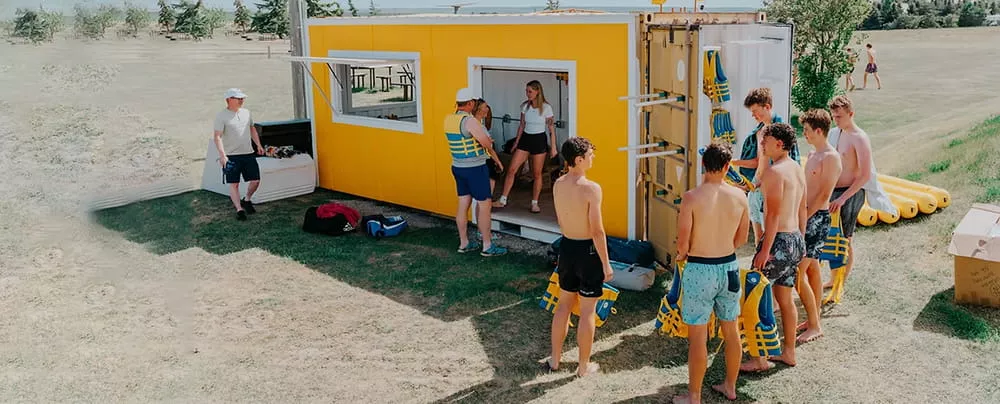
guests-collecting-life-jackets-at-an-inflatable-water-park
Inflatable water park guests pick up life jackets before entering
When the station is shared with another activity, compare operating schedules and queue locations. A resort may have space near reception in the morning, for example, but need the same space for afternoon arrivals. Confirm which area will be available during the park’s busiest session changeovers.

How Will Guests Enter and Exit the Water?

Entry and Exit Routes

Draw the guest route from the briefing area to the entry point. Then draw the return route from the exit point to life jacket return. Include the places where guests will wait before entering or pause after leaving the water. Walk both routes with the site team and mark the places where the two groups are likely to meet.
If the site has one waterfront access point, check the usable width at the shared access and consider how the area works when one session ends and the next is ready to start. The team can assess whether separate lanes fit or whether one group needs to finish using the access before the other moves through. Test the proposed arrangement against the session schedule and have the local team review it before relying on it.

Shoreline Changes and Emergency Access

Ask the site owner how the shoreline changes over the planned operating period. Compare available site photos or water-level records with what you see on the visit. At a lower level, the planned entry point may be farther from the waiting area than it appears on the first visit. At a higher level, part of the path may be covered. Record where each route would run under the expected conditions and identify any access points that need a second visit.
On the same plan, mark the emergency access route and overlay the equipment and guest routes to see where they cross. Look for places where the life jacket queue, waiting groups or temporary equipment could occupy it. Ask the local operations and safety teams to review the proposed route and how it will be kept clear under the conditions they expect at the site.

Can Equipment Be Removed at the End of the Season?

Walk the route again from the point where modules would come ashore to the location where they would be loaded. Use conditions expected on removal day, including the likely lake level, shore surface and vehicle access. The launch point used in spring may be harder to reach at the end of the season, or a service gate may have different opening hours after the venue closes.
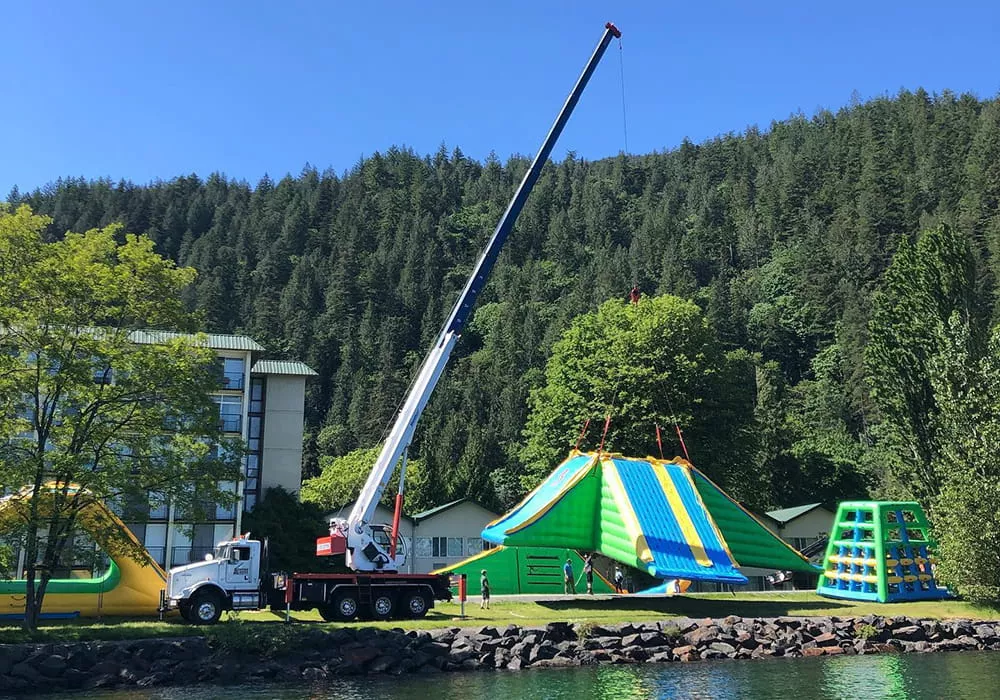
crane-lifting-an-inflatable-water-park-module-out-of-the-lake
A crane brings an inflatable water park module ashore
Mark the area where the crew can set down equipment while preparing it for transport. Check whether that area will still be available and whether the proposed vehicle can reach the loading point during the planned removal window. If any part of the route depends on a shared yard or a gate controlled by another team, record who can confirm access. Add the expected removal dates and any unresolved route questions to the site plan before you confirm the equipment layout.

Is Your Shore Site Ready to Move Forward?

Summarize the site walk in a shoreline checklist with named owners. For each area, record what you measured, any gap you found and who will resolve it. Mark each item as usable, needs adjustment or still to be verified. If you are comparing layouts for an inflatable water park for lake installation, send Bouncia your marked site plan, route measurements, shoreline photos, expected session size and installation and removal windows. These details give the supplier a basis for reviewing the proposed layout and equipment handling needs with your team.

FAQ

Can an existing marina or resort check-in area serve the water park?

Yes, if the space is available when water park groups arrive and can handle both queues. Compare the busiest periods for the two activities and agree with the venue team where each group will wait. If the queues overlap, consider a separate waiting area or adjust arrival times.

Can one waterfront access point serve both entry and exit?

It may work if the available width, lake levels and timing of session changeovers support the planned flow. If the two groups would meet at a narrow point, review a timed handover or a separate route with the local operations and safety teams. Include emergency access in that review.

What measurements should I send my supplier before ordering?

Send the narrowest clear width and lowest clear height on the handling route, plus the usable dimensions of the unloading and temporary assembly areas. Include photos of the shoreline access and label where each measurement was taken. Ask the supplier to check the route against the packed equipment dimensions and proposed handling method.
error: Content is protected !!