Welcome to Bouncia - Your Expert in Inflatable Water Parks and Diverse Sports Equipment

Bienvenue chez Bouncia - Votre expert en parcs aquatiques gonflables et en équipements sportifs divers.

Bienvenido a Bouncia - Tu Experto en Parques Acuáticos Hinchables y Equipamiento Deportivo Diverso

13 Practical Lessons from Successful Commercial Inflatable Water Park Operators

Launching a commercial inflatable water park requires more than purchasing equipment and installing it in the water. Successful operators need to manage safety, visitor experience, daily operations, and revenue opportunities to build a sustainable business.
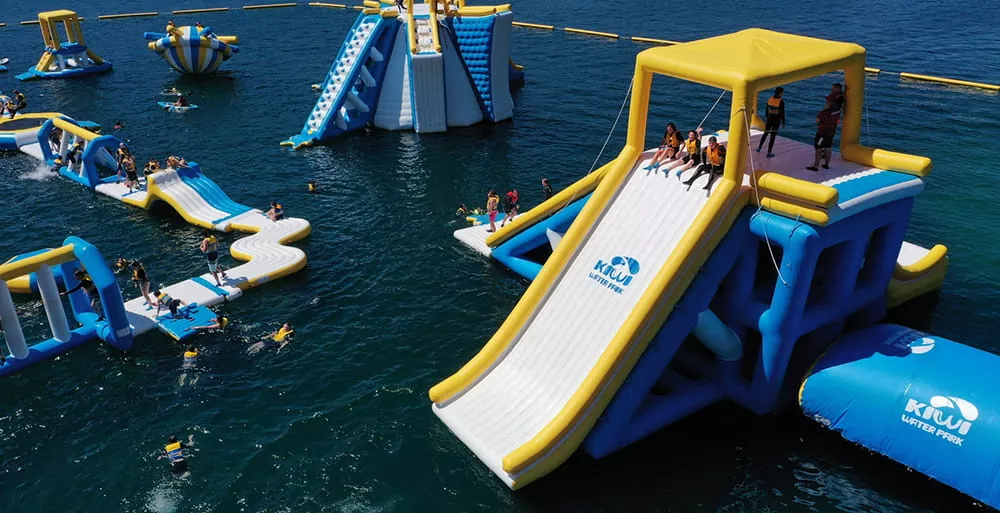
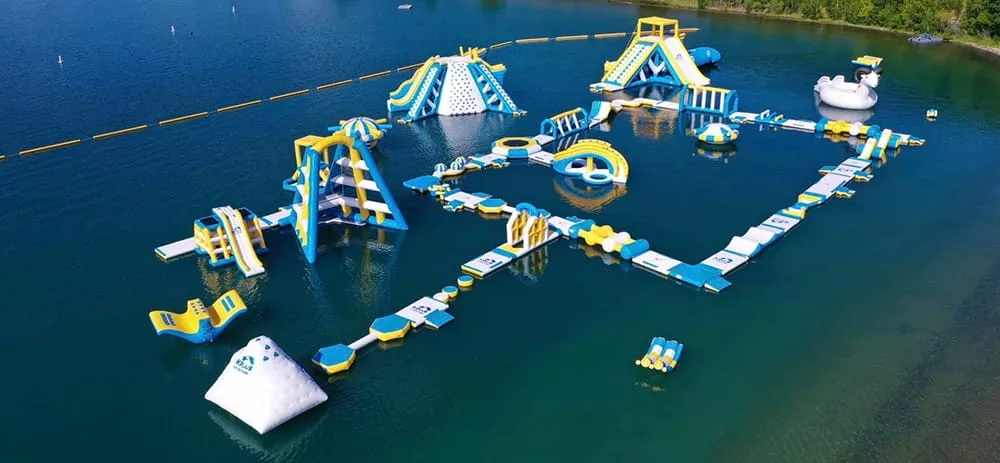
Kiwi-commercial-inflatable-water-park-aerial-view
Kiwi commercial inflatable water park
Based on the real operational experience of Kiwi Water Park, this article shares 13 practical lessons learned from running a commercial inflatable water park. These lessons cover five important areas: planning before opening, improving guest experience, safety management, operational efficiency, and increasing profitability.
Quick Answer:

Successful commercial inflatable water park operators focus on five key areas: choosing the right installation conditions, designing better visitor experiences, maintaining strict safety management, optimizing daily operations, and creating additional revenue opportunities beyond ticket sales.

Part 1: Planning Before Opening

Before opening a water park, operators need to carefully evaluate the installation environment. Factors such as wind conditions, water depth, and anchoring systems directly affect safety, stability, and long-term operation.

Lesson 1: Evaluate Wind Conditions Before Installing Large Inflatable Structures

Large inflatable attractions, especially towers and high platforms, require careful consideration of the local weather environment.
Operators should understand:
  • How strong the wind can be;
  • How frequently strong winds occur;
  • Whether the water area is exposed or protected.
For larger products installed in windy locations, additional anchoring preparation may be necessary. Based on Kiwi Water Park’s experience, large structures should use sufficient anchor points with evenly distributed positioning to improve stability.
Kiwi-commercial-inflatable-water-park-slide-anchor-installation
Kiwi commercial inflatable water park slide installed with reinforced anchoring
For example, some large water towers at Kiwi Water Park used multiple concrete blocks for anchoring, with each tower supported by eight 2-ton concrete blocks.
This type of practical experience highlights an important part of Commercial Inflatable Water Park Management: installation planning should consider real operating conditions, not only standard installation requirements.

Lesson 2: Choose the Right Water Depth and Installation Area

Water depth is another important factor when planning an inflatable water park.
Operators need to consider:
  • Attraction height;
  • Jumping activities;
  • Water movement;
  • Safety requirements around the attraction.
Different attractions may require different installation conditions. For example, large jumping attractions and towers require more careful evaluation because visitors may enter the water from higher positions.
Before installation, operators should evaluate:
  • Water depth around the attraction;
  • Available space for visitor movement;
  • Emergency access areas.
Choosing the correct location helps reduce operational risks after opening.

Lesson 3: Use Suitable Anchoring Methods for Different Water Conditions

Anchoring is not a one-size-fits-all solution.
Depending on the environment, operators may need different approaches, including:
  • Anchor plates;
  • Concrete blocks;
  • Additional reinforcement methods.
For large framed attractions, Kiwi Water Park’s experience showed that operators can combine different fixing methods when additional stability is required.
Kiwi-commercial-inflatable-water-park-frame-reinforcement
Kiwi commercial inflatable water park attraction with additional anchoring methods
For example, some structures can use straps around the frame combined with chains and concrete blocks to provide additional support.
A reliable anchoring system is one of the foundations of a safe and efficient commercial inflatable water park.
Choosing the right attraction configuration is also important during the planning stage. Different projects may require different layouts and combinations of attractions, so operators should evaluate suitable inflatable aquapark solutions based on their water area, capacity requirements, and business goals.

Part 2: Improving Guest Experience

A successful water park is not only about having exciting attractions. Layout design and visitor flow also influence how guests experience the park.

Lesson 4: Place Slides Strategically to Improve Visitor Experience

Slides are among the most attractive features in an inflatable water park, but their placement can influence how visitors interact with the attraction.
One practical lesson from Kiwi Water Park is that large slides can sometimes be placed separately instead of directly connected to the main layout.
This creates several benefits:
  • Visitors naturally move through the attraction area;
  • Water carried by visitors helps keep the slide surface wet;
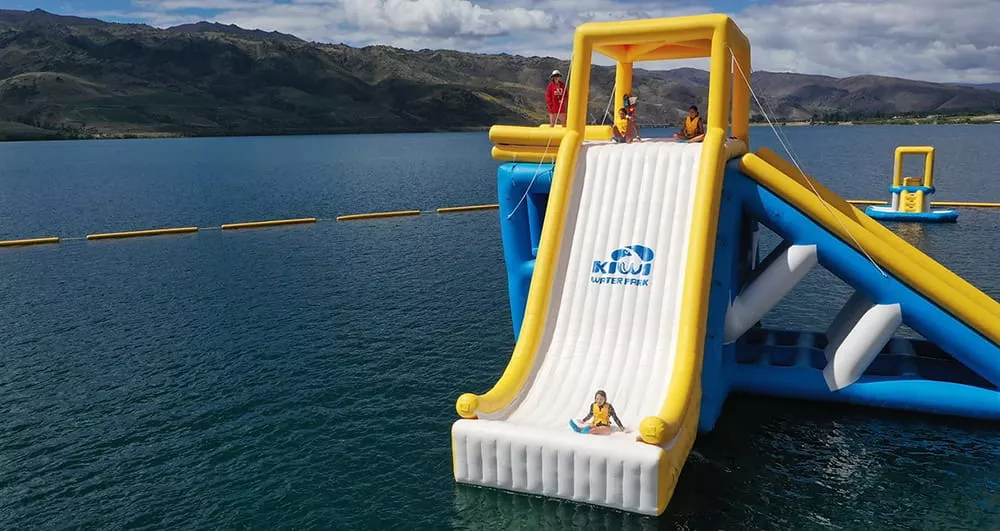
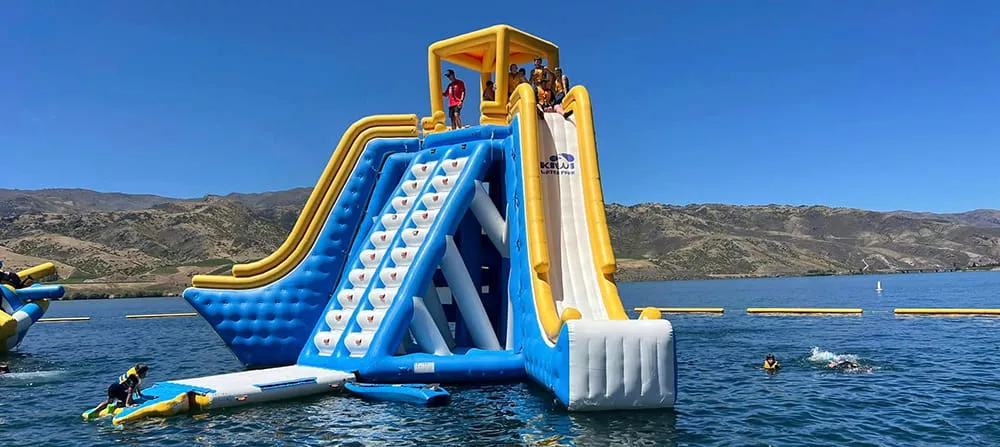
Kiwi-commercial-inflatable-water-park-independent-slide
Kiwi commercial inflatable water park with a separately placed slide
  • Crowding around connection points can be reduced.
Small layout decisions can have a significant impact on daily operation.

Lesson 5: Design Layouts to Improve Visitor Flow

Visitor flow is an important part of commercial inflatable water park operation.
Poor layouts may create:
  • Crowded climbing areas;
  • Long waiting times;
  • Uncomfortable visitor movement.
Operators should consider:
  • Where visitors enter;
  • Where they queue;
  • How they move between attractions;
  • How different age groups use the park.
A well-planned layout improves both safety and customer satisfaction.

Part 3: Safety Management

Safety management is one of the most important responsibilities for commercial operators.
A successful inflatable water park needs clear rules, trained staff, and suitable safety equipment.

Lesson 6: Create Strict Rules for High-Risk Attractions Like Blob Activities

Attractions involving jumping require professional supervision.
For blob-style attractions, operators should establish clear rules, including:
  • Age restrictions;
  • Health requirements;
  • Proper jumping techniques.
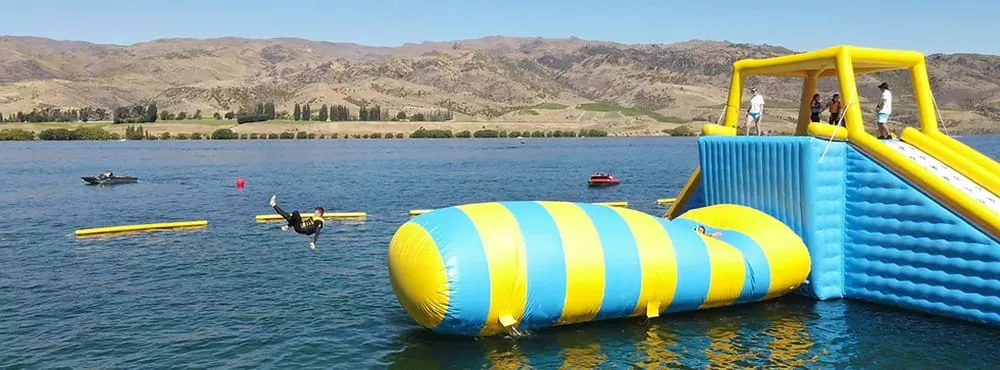
commercial-inflatable-water-park-blob-attraction
Commercial inflatable water park featuring a blob jumping attraction
Kiwi Water Park’s operational experience showed that visitors should practice landing techniques before using the attraction.
For example, visitors should learn to land with their body position controlled, rather than landing feet-first, which may increase the risk of injury.

Lesson 7: Match Lifeguard Coverage with Safety Requirements

The number of lifeguards required in a commercial inflatable water park should be determined by visitor volume, attraction types, and safety requirements.
For example, Kiwi Water Park adjusted lifeguard coverage based on the number of guests inside the park:
  • Around 100 visitors at one time: approximately 3 lifeguards;
  • Around 250 visitors at one time: approximately 7–8 lifeguards.
Rather than using a fixed number of lifeguards every day, operators should adjust staffing levels according to actual visitor flow and attraction usage.
Proper lifeguard coverage helps ensure quick response times and maintain safe operation.

Lesson 8: Use Non-Slip Socks to Improve Safety

Non-slip socks are not only an additional product opportunity. They can also improve visitor safety.
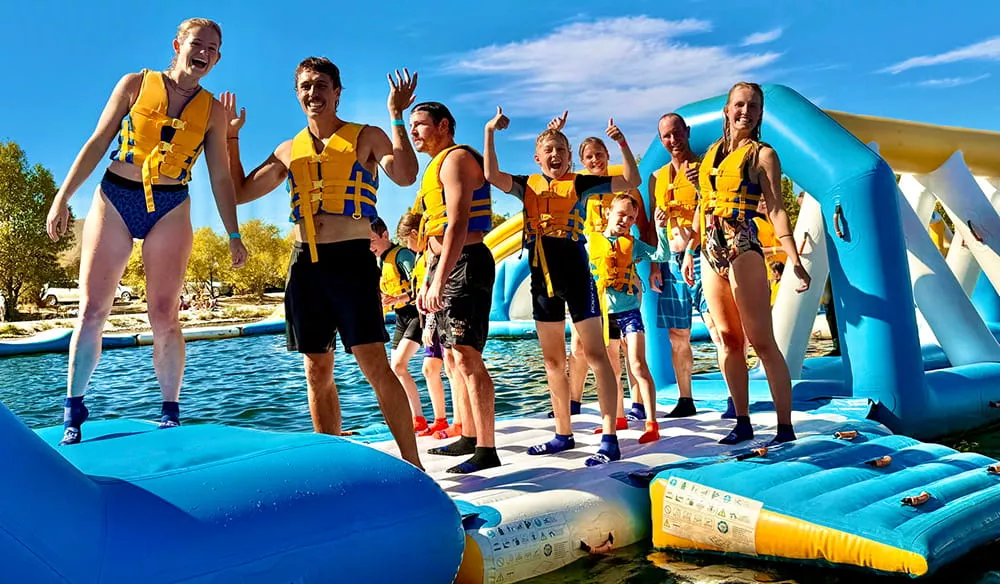
commercial-inflatable-water-park-visitors-wearing-non-slip-socks
Commercial inflatable water park visitors wearing non-slip socks
According to Kiwi Water Park’s experience, introducing non-slip socks significantly reduced ankle injury incidents among visitors.
Before selling non-slip socks, the park experienced many ankle injuries each year. After introducing them, injury numbers were reduced substantially.
For operators, this shows that safety equipment can provide both:
  • Better visitor protection;
  • Additional revenue opportunities.

Part 4: Running the Park Efficiently

Daily operational efficiency directly affects customer experience and operating costs.

Lesson 9: Optimize Overall Workforce Planning

Beyond lifeguards, commercial inflatable water park operators also need to plan their overall workforce, including customer service staff, maintenance teams, and daily operation support.
Kiwi Water Park provides a useful operational reference:
  • Maximum capacity: around 350 visitors;
  • Peak visitor numbers: around 250 visitors;
  • Staff required: approximately 15–20 people.
A complete workforce plan helps operators balance:
  • Safety supervision;
  • Customer service quality;
  • Daily maintenance;
  • Labor costs.

Lesson 10: Adapt Maintenance Methods for Different Attraction Types

Different inflatable attractions may have different operational requirements. Operators should prepare practical maintenance methods based on the product design and usage environment.
For example, Kiwi Water Park found that the drainage speed of their Funcity attraction was slower than expected during operation. Since Funcity is designed as a shallow-water or land-based family attraction, the team developed a simple solution to remove remaining water faster.
Their method included slightly deflating the small entrance step area to create a slope, allowing staff to assist with removing the water more efficiently.
commercial-inflatable-water-park-Funcity-drainage-solution
Commercial inflatable water park Funcity using step deflation for drainage.
This example shows that successful Commercial Inflatable Water Park Management often requires operators to understand the characteristics of each attraction and develop practical solutions for daily operation.

Part 5: Increasing Profitability

Successful operators often generate revenue beyond admission tickets.

Lesson 11: Sell Additional Safety and Rental Products

Additional products can increase revenue per visitor.
Common examples include:
  • Non-slip socks;
  • Life jackets;
  • Wetsuits.
These products are directly related to visitor needs and can become an additional income stream.
Some operators can also sell related equipment to customers outside the park, such as other local water activity businesses.

Lesson 12: Consider Insurance as Part of Operating Costs

Insurance is an important consideration for any commercial recreational project.
Operators should include insurance expenses when calculating business costs.
For reference, Kiwi Water Park’s insurance cost was approximately USD 12,000 per year.
Understanding operational costs before opening helps investors create more realistic financial plans.

Lesson 13: Build Long-Term Profitability Through Better Operations

Profitability is not only determined by ticket prices.
Successful operators improve financial performance by:
  • Reducing safety incidents;
  • Improving visitor experience;
  • Managing staff efficiently;
  • Creating additional sales opportunities.
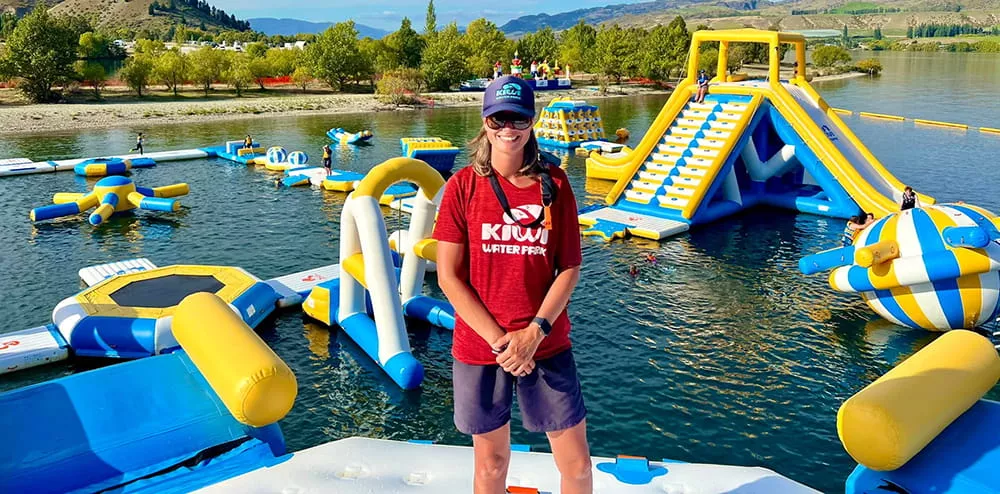
Kiwi-commercial-inflatable-water-park-operation-staff
Kiwi commercial inflatable water park operated by a trained team
A well-managed commercial inflatable water park can achieve better long-term performance when operational decisions are based on real experience and continuous improvement.

Conclusion

The lessons from Kiwi Water Park demonstrate how commercial operators can improve daily management by focusing on practical details, from anchoring systems and visitor flow to staffing and additional sales.
For investors and operators planning a new project, understanding these operational lessons can help build a safer and more efficient water entertainment business.
If you are planning a commercial inflatable water park project, choosing suitable equipment and working with an experienced manufacturer is an important first step.

FAQ

How many staff members are needed to operate an inflatable water park?

Staff requirements depend on park capacity and visitor numbers. For example, Kiwi Water Park operated with around 15–20 staff members, with peak visitor numbers of approximately 250 guests and a maximum capacity of about 350 visitors.

What safety measures should inflatable water park operators provide?

Operators should provide trained lifeguards, clear attraction rules, appropriate safety equipment, and visitor guidance. Equipment such as non-slip socks and life jackets can help improve visitor safety.

How can inflatable water parks increase revenue?

Besides ticket sales, operators can increase revenue through additional products such as non-slip socks, life jackets, wetsuits, and other water activity equipment.

What factors affect inflatable water park installation safety?

Important factors include wind conditions, water depth, anchoring methods, attraction height, and local environmental conditions. Proper planning before installation helps reduce operational risks.

GET IN TOUCH WITH US

If you want to learn more about us or our products, welcome to leave a message below.

error: Content is protected !!