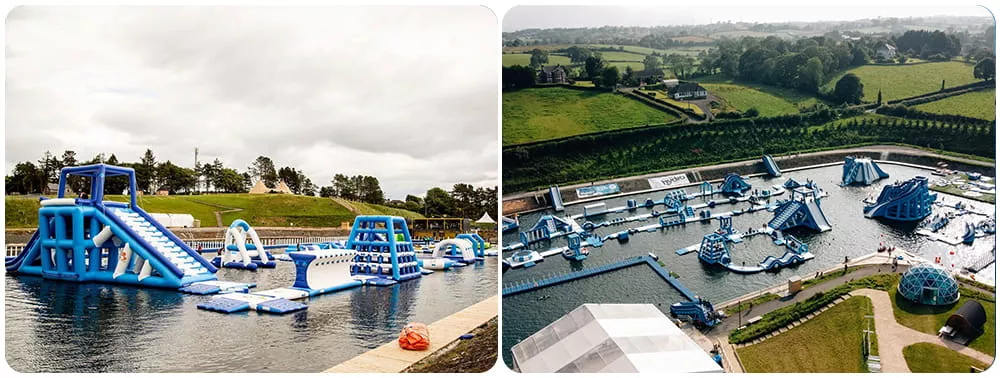
Welcome to Bouncia - Your Expert in Inflatable Water Parks and Diverse Sports Equipment

Bienvenue chez Bouncia - Votre expert en parcs aquatiques gonflables et en équipements sportifs divers.

Bienvenido a Bouncia - Tu Experto en Parques Acuáticos Hinchables y Equipamiento Deportivo Diverso

The 5-Year Growth Stages of a Commercial Inflatable Water Park

For most investors, purchasing a commercial inflatable water park is only the starting point, not the key factor that determines success. What truly affects ROI and long-term profitability is how the project performs and adapts in the following years. A successful project usually goes through stages of launch, stabilization, optimization, upgrade, and expansion. Understanding this 5-year growth cycle helps investors plan resources, reduce risks, and maintain strong market attraction over time.
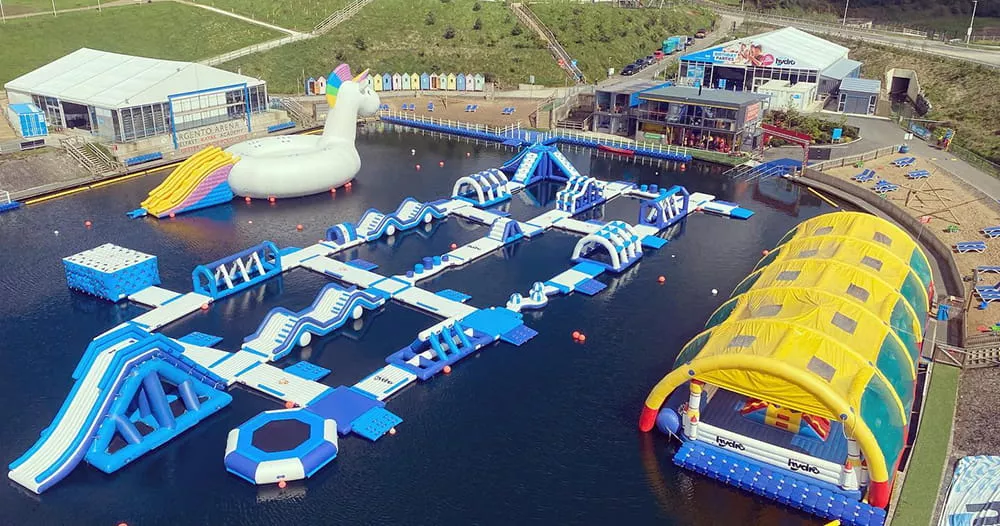
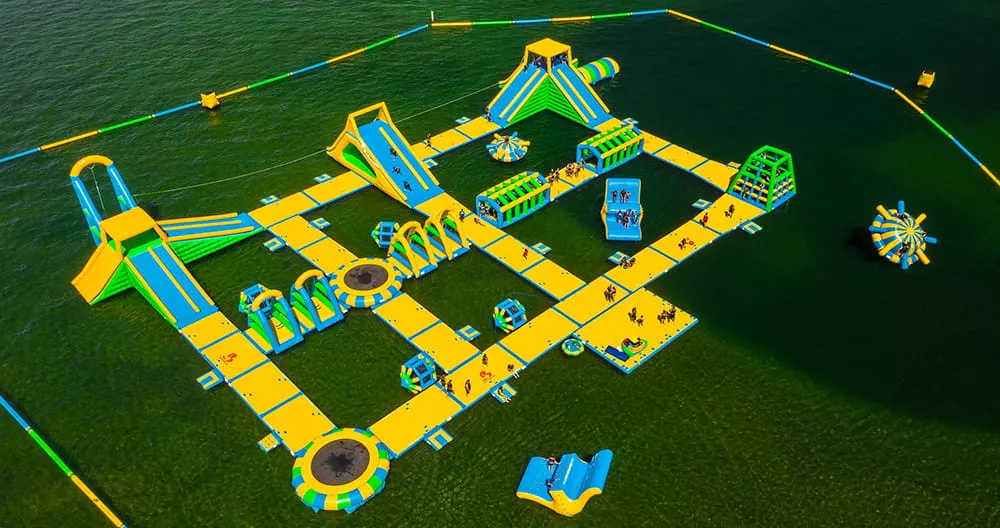
commercial-inflatable-water-park-overview-of-complete-layout
Commercial inflatable water park overview showing full park layout

Year 1: Launch Phase

Keywords: Smooth Opening + Initial Attraction
The first year not only determines whether the project can open successfully, but also directly affects the adjustment space and operational ceiling for the next 3–5 years. Many problems that are difficult to fix later often come from decisions made in the first year.
At this stage, the focus is not just size, but whether the initial design supports sustainable operation:
  • Whether site size and water depth allow long-term use and adjustments
  • Whether the layout flow is smooth (avoiding congestion or dead zones)
  • Whether the park has strong visual impact (for photos and early marketing)
commercial-inflatable-water-park-sustainable-layout-for-long-term-operation
Commercial inflatable water park with sustainable layout design
Common issues in Year 1:
  • Scattered design with no clear highlight, making it hard to create memory points
  • Weak interaction between modules, reducing user stay time
  • Fixed structure that limits future adjustments
Key judgment: Does the initial design support future adjustment and expansion?

Year 2: Stabilization Phase

Keywords: Stable Traffic + Operational Maturity
In the second year, the project shifts from “new experience” to “stable operation”.
Typical changes:
  • Visitor flow becomes stable with clear peak and off-season patterns
  • Staff operations become more efficient (safety, ticketing, guidance)
  • Daily maintenance becomes routine (cleaning, air pressure checks, connection system)
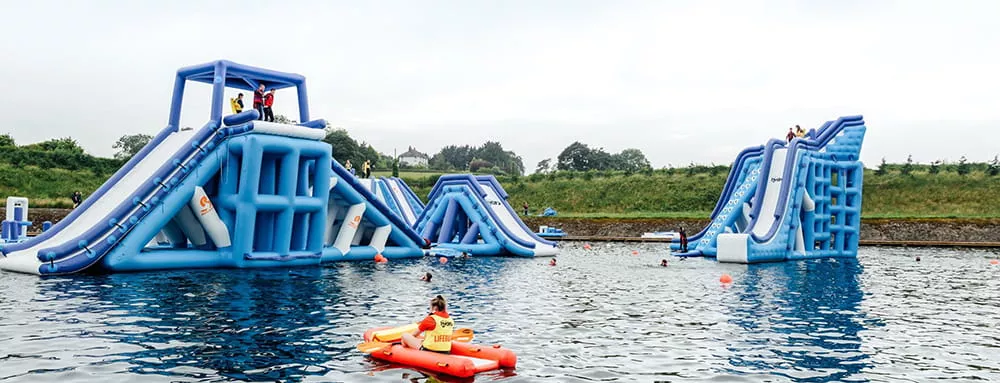
Commercial inflatable water park with lifeguard monitoring operations
Key focus:
  • Is the repeat visitor rate increasing?
  • Is the customer experience consistent?
  • Are complaints and safety issues under control?
Key judgment: Can the project operate sustainably, not just rely on novelty?

Year 3: Optimization Phase

Keywords: Growth Bottleneck + Declining Attraction
In the third year, a common situation appears: slower growth and higher marketing cost.
Main reasons:
  • Local market has been initially covered
  • Social media exposure decreases
  • Lack of new content or fresh experience
The focus is not expansion, but optimization:
  • Adjust part of the layout to improve interaction
  • Add more challenging or fun elements
  • Enhance visual design (color, shape, photo spots)
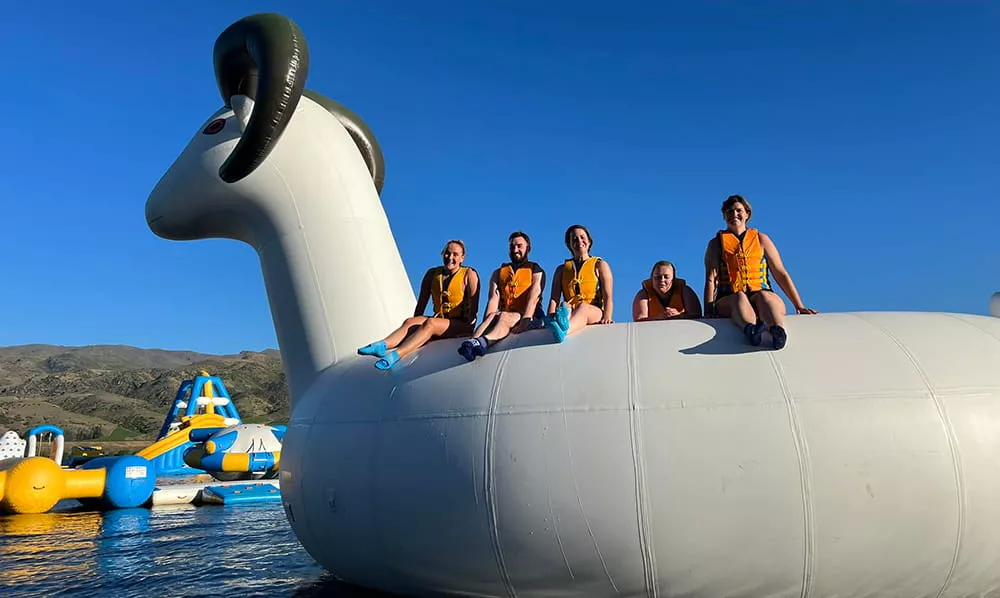
an-interactive-and-visual-commercial-inflatable-water-park-attraction
Commercial inflatable water park with interactive and visual attraction
A key question: Is your commercial inflatable water park still attractive enough for photos and sharing?
Key judgment: Does the project have the ability to continuously attract new visitors?

Year 4: Upgrade Phase

Keywords: Attraction Decline + Market Competition
In the fourth year, the core issue is not only equipment aging, but overall attraction decline.
This comes from two aspects:
1. Attraction Level (Core Issue)
  • Reduced visual freshness
  • Lower social sharing value
  • Decreased repeat visits
2. Equipment & Market Level (Symptoms)
  • Material aging affects appearance
  • High-use areas show wear
  • New competitors enter the market
At this stage, a key decision is required: whether to invest in upgrades.
Upgrade options:
  • Replace key modules to restore freshness
  • Introduce more interactive or challenging features
  • Adjust overall layout to improve flow and experience
commercial-inflatable-water-park-growth-before-and-after-upgrade-comparison
Commercial inflatable water park growth shows before and after upgrade
Important logic: Upgrade is not because the equipment “cannot be used”, but because it is “no longer attractive enough”.
Key judgment: Can structural and content changes reactivate market attraction?

Year 5: Brand & Expansion Phase

Keywords: Brand Building + Long-Term Operation
If the project is well managed in the first four years, Year 5 marks a shift from “equipment operation” to “brand operation”.
Advantages at this stage:
  • Established local awareness
  • Stable customer base
  • Mature operation team
Possible development directions:
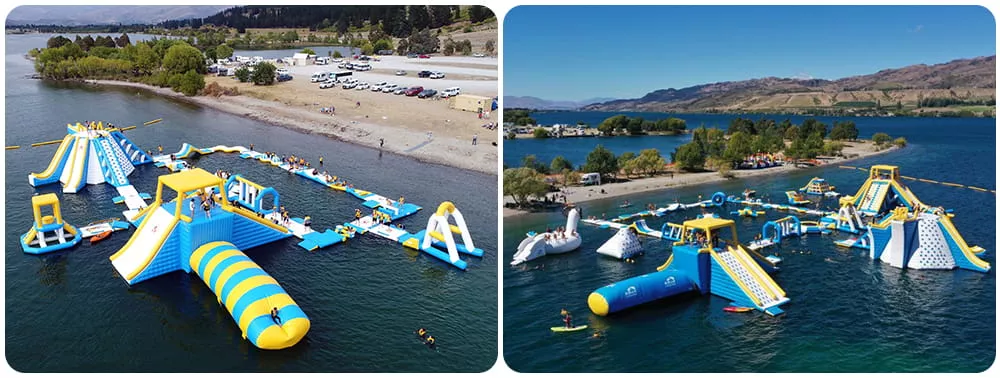
commercial-inflatable-water-park-growth-expanded-with-new-zones
Commercial inflatable water park growth shows expanded layout and zones
  • Expand park size or add new zones
  • Introduce additional water activities (towables, kids area, etc.)
  • Build brand events or membership systems
Core goal: Increase long-term value, not just seasonal profit.

Common Decision Mistakes Across the 5-Year Growth

In real projects, many problems are not caused by one stage, but by mismatched decisions across stages. These issues often become more serious in Years 2–4.
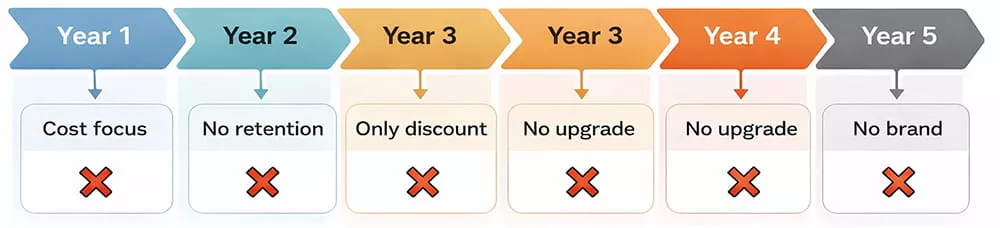
commercial-inflatable-water-park-growth-common-mistakes-diagram
Commercial inflatable water park growth mistakes across five stages

Year 1 Mistakes

  • Focus only on purchase cost, ignoring design flexibility
  • Lack of core highlights in initial layout

Year 2 Mistakes

  • Over-reliance on first-year popularity
  • Ignoring process optimization, leading to unstable experience

Year 3 Mistakes

  • Using promotions only when traffic drops
  • Ignoring social sharing value (photo and content design)

Year 4 Mistakes

  • Avoiding upgrade investment despite aging equipment
  • Competing only on price instead of differentiation

Year 5 Mistakes

  • Still focusing on equipment instead of brand
  • No clear expansion strategy
Common issue: Using the previous stage’s thinking to make current decisions.

Summary of Key Stages

Stage
Core Challenge
Key Strategy
Year 1
Attract first users
Strong design + visual impact
Year 2
Stable operation
Process optimization + experience
Year 3
Growth slowdown
Content update + layout change
Year 4
Attraction decline
Module upgrade + differentiation
Year 5
Market maturity
Branding + expansion
The success of a commercial inflatable water park is not decided by a single purchase, but by continuous management across its growth stages. From launch to expansion, each phase requires different strategies. Only when future optimization and upgrade paths are considered from the beginning can the project maintain attraction and achieve stable returns. If you are planning a commercial inflatable water park, the Bouncia team can provide practical, experience-based solutions to support your long-term success.

GET IN TOUCH WITH US

If you want to learn more about us or our products, welcome to leave a message below.

error: Content is protected !!