Welcome to Bouncia - Your Expert in Inflatable Water Parks and Diverse Sports Equipment

Bienvenue chez Bouncia - Votre expert en parcs aquatiques gonflables et en équipements sportifs divers.

Bienvenido a Bouncia - Tu Experto en Parques Acuáticos Hinchables y Equipamiento Deportivo Diverso

Commercial Inflatable Water Park Liability Risk: How to Reduce Legal Exposure

When investing in a commercial inflatable water park , the biggest concern is often not cost or visitor flow, but liability:
If an accident happens, who is responsible—and could it lead to shutdown or legal action?
This article explains how to reduce commercial inflatable water park liability risk through compliance, operations, and professional design.

1. A Critical Issue: Operating Without Government Approval Creates Extremely High Legal Risk

In real cases, one of the most overlooked — but most dangerous — issues when operating a commercial inflatable water park is whether the park has obtained written approval from government authorities.
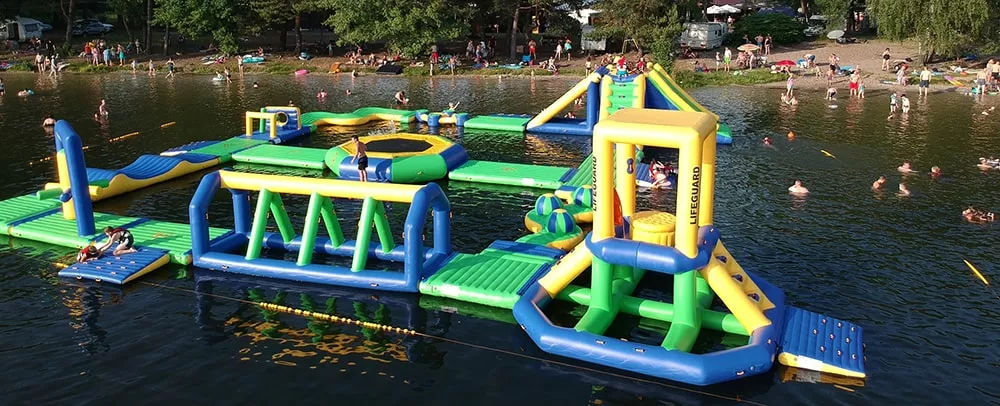
licensed-commercial-inflatable-water-park
A commercial inflatable water park operating with license.
(1)In most countries and regions, a commercial inflatable water park involves:
  • Special amusement facility management
  • Water activity safety supervision
  • Public venue business permits
  • Temporary or seasonal project approvals
(2)If operations begin without official written permits, the operator may face:
  • Immediate forced shutdown after an accident
  • Permanent closure with no chance to reapply
  • Administrative or even criminal liability for investors or operators
  • Insurance refusal or invalid claims
(3)Important note:
If the park operates without permits, even when the accident is not directly caused by equipment or management, the operator may still be identified as the primary responsible party. Therefore, the first step to reducing legal risk is not buying more expensive equipment, but:
  • Clearly identifying local regulatory authorities
  • Completing all required approval procedures
  • Keeping verifiable written permits available for inspection

2. Accidents Do Not Equal Automatic Liability: The Key Is “Duty of Reasonable Care”

Many liability disputes arise not from the accident itself, but from unclear answers to questions such as:              
  • Were visitors clearly informed of the rules?
  • Did obvious violations occur?
  • Did on-site staff intervene in time?
  • Did the operator have executable and traceable procedures?
From a legal perspective, responsibility is often based on one core principle: Has the operator fulfilled its duty of reasonable care and management?

3. Clear Visitor Rules Help Define Responsibility Boundaries in Advance

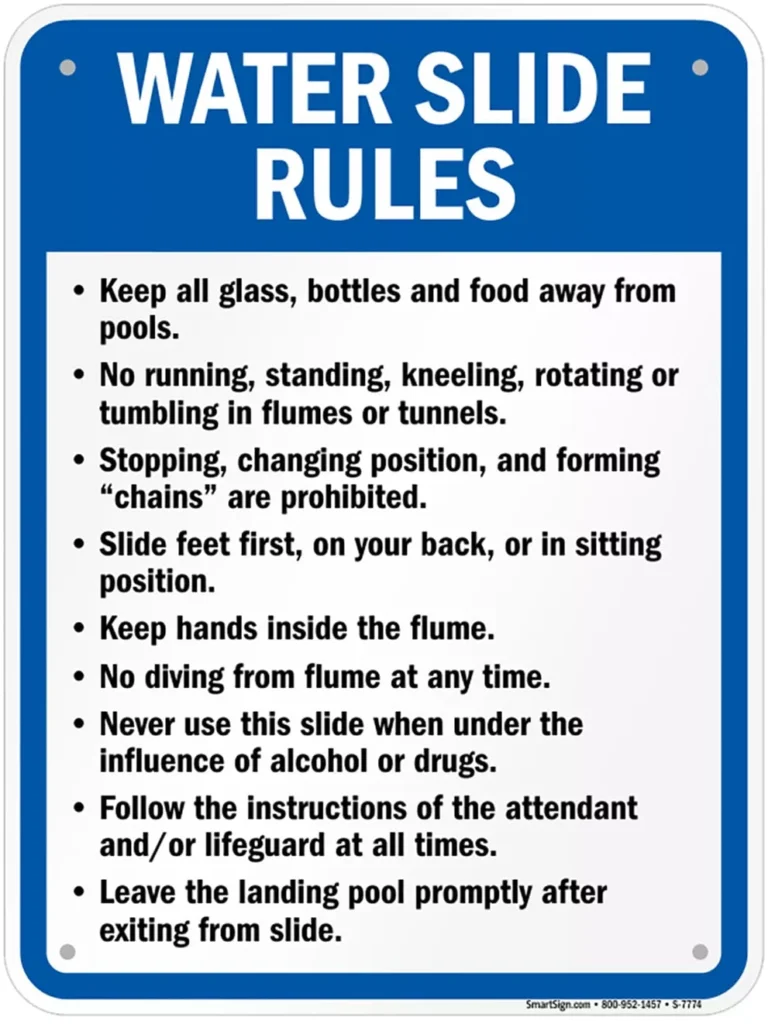
commercial-inflatable-water-park-safety-rules-displayed
Safety rules displayed for visitors in a commercial inflatable water park
Clear, understandable, and enforceable visitor rules are the first line of defense for liability control. Key rules should clearly define:
  • Participation limits (age, height, weight, health conditions)
  • Explicitly prohibited high-risk behaviors
  • Situations where staff may intervene or ask visitors to leave
These rules are not only for reminding visitors. More importantly, they serve as critical evidence when determining responsibility during disputes.

4. SOPs Are Legal Evidence, Not Just Internal Management Tools

Experience that cannot be proven is often treated as non-existent in legal situations. A practical standard operating procedure (SOP) should at least cover:
  • Daily pre-opening inspection procedures
  • Visitor entry and zone management rules
  • Staffing arrangements during peak hours
  • Violation handling processes
  • Internal emergency response mechanisms
The real value of an SOP lies in one question: Can you prove that the park was operating according to established procedures?

5. Professional Safety Design Also Affects Legal Responsibility

Beyond systems and procedures, inflatable water park layout design also influences emergency response ability and liability judgment. One professional yet often overlooked design solution is the use of hollow arch bridge structures inside the park. This design provides dual benefits:
hollow-arch-bridge-for-inflatable-water-park-safety
A hollow arch bridge for commercial inflatable water park
  • Upper level: normal visitor movement and play
  • Lower hollow passage: fast access route for lifeguards or staff
In emergencies, lifeguards can reach incident areas faster without detours or passing through crowded zones — reducing response time and secondary risks.
From a legal standpoint, this design helps demonstrate that the operator considered emergency access and rescue efficiency during the planning stage.

6. Staff Training Is a Critical Link in the Responsibility Chain

During liability investigations, common questions include:
  • Did staff give warnings on site?
  • Were dangerous behaviors stopped in time?
  • Did personnel have basic judgment and response ability?
lifeguard-monitoring-safety-at-commercial-inflatable-water-park
A lifeguard supervising visitor safety at a commercial inflatable water park
Therefore, training should focus not on formality, but on ensuring that staff:
  • Understand their management responsibilities
  • Know which behaviors require intervention
  • Know how to record and report abnormal situations

7. Evidence Retention Is an Important Protection Tool for Operators

Many operators are placed in a passive position during disputes—not because of poor management, but because they cannot provide evidence. It is recommended to establish at least:
  • Video records of play zones
  • Written records of incidents or abnormalities
  • On-site staff handling report
These records are not meant to blame visitors, but to protect the operator’s legitimate rights when disputes arise.
For a commercial inflatable water park, mature operation does not mean chasing “zero accidents”. It means operating legally and compliantly, establishing professional systems in procedures, park design, and daily management, and maintaining clear responsibility boundaries with traceable evidence.
Based on real project experience across multiple countries, Bouncia has found that when these foundations are in place, operators can respond to unexpected incidents with greater confidence, stability, and legal protection — significantly reducing commercial inflatable water park liability risk over the long term.

GET IN TOUCH WITH US

If you want to learn more about us or our products, welcome to leave a message below.